


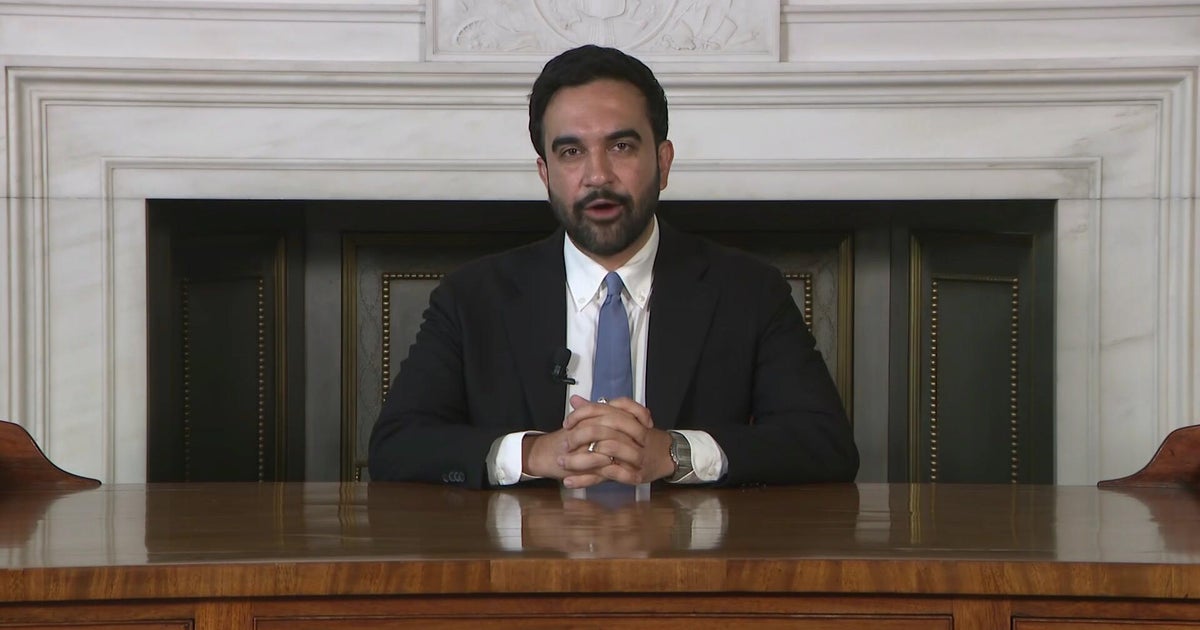
New York City Mayor Zoran Mamdani delivered a powerful address criticizing the Trump administration while celebrating America’s 250th anniversary. His speech highlighted the importance of immigration and America’s unique identity.
Seated at George Washington’s desk in City Hall, Mamdani was surrounded by newly naturalized citizens, a poignant setting for a discussion he holds close to his heart. As a naturalized citizen himself, he emigrated from Uganda to the United States at the age of seven. While expressing gratitude for his journey to the U.S., he also voiced significant criticisms of President Trump’s policies, never naming him directly.
This speech took place just hours before Trump’s own address titled “America 250” in South Dakota. “When I sit here in City Hall behind George Washington’s desk, I don’t see all of America. But like many who came before me, I see New York City. Today’s city looks far different from the one that welcomed George Washington,” Mamdani remarked, emphasizing the changing identity of the city.
Mamdani emphasizes America’s Promise
Mamdani began his remarks by reflecting on the journey of immigrants to New York City, viewing it as a gateway to new opportunities. He stated, “The tradition of generations of Americans who have asserted the right to life, liberty, and the pursuit of happiness is not a relic of the past.” He recalled his family’s arrival, noting, “I didn’t come by boat, but I glimpsed the Statue of Liberty from an airplane window. Even at that distance, I could see the promise of America—a continued effort to align with its founding ideals every year.”
Mamdani reflects on American exceptionalism
Mamdani then addressed the concept of American exceptionalism. He explained, “Conventional wisdom suggests that American exceptionalism grants us greater freedom, explaining historic achievements like the Erie Canal and westward expansion. Many children from distant lands dream of one day calling this country home.” However, he critiqued the narrative that often overlooks the contributions of marginalized groups. “America’s story too often sidelines those labeled as ‘other’ by the powerful,” he said, highlighting the contributions of immigrants from diverse backgrounds who arrive seeking a better life.
He added, “We’re led to believe that America’s strength lies in its wealth and dominance. In truth, America is exceptional because nothing is predetermined here. Our journey to embody the values set forth in the Declaration of Independence is ongoing and inclusive.”
Mamdani addresses division in American society
Mamdani expressed concern over societal divisions, speaking directly to the newly naturalized citizens. “Each of you possesses the power to shape what America stands for. Those in power tend to define America as a sphere of dominance where freedom is reserved for a select few. They want you to believe that America is only for those with ‘the right accent and skin color,'” he stated. Mamdani asserted, “This divisive rhetoric is a tactic that history has shown can be overcome by the forces of progress, just as it was defeated 250 years ago.”
Mamdani on asylum seekers and the current political climate
Referencing Thomas Paine, Mamdani reminded the audience that America was intended to be an asylum for those seeking civil and religious liberty. He criticized contemporary leaders who fail to uphold this vision, saying, “Too many view our nation not as a refuge but as a place that denies safety to those who seek it.” He depicted a nation rife with contradictions, citing the stark contrast between immense wealth and widespread hunger and inequity in the U.S.
Mamdani remarked, “We are witnessing extremes—children going to bed hungry while millionaires thirst for more. This disparity permeates our society, with dominant corporations controlling industries and unchecked power influencing elections.” He noted, however, that despite these challenges, hardworking Americans embody the nation’s promise.
Mamdani challenges the notion of dissent
The mayor addressed the common refrain directed at those advocating for change: “love it or leave it.” Mamdani responded emphatically, stating, “Patriotism is not about ignoring a country’s flaws. It manifests in every act of righteous dissent and in each protest that challenges the status quo. Our commitment to this nation is deep-rooted in our love for it.” He affirmed that the ideals upon which America was built hold the potential to withstand authoritarianism, so long as citizens strive for improvement and strive to make the nation a better place.
