


LAMPEDUSA, Sicily — Pope Leo XIV addressed the Trump administration’s immigration policies during a visit to Lampedusa, a focal point in Europe’s ongoing migration crisis. On Independence Day Saturday, he commemorated the thousands who perished while attempting to reach Europe in pursuit of freedom and prosperity.
While the United States celebrated its 250th anniversary with various festivities, Pope Leo, the first American-born pope, toured the Sicilian island of Lampedusa. He prayed at an immigrant cemetery and held a solemn Mass for both the island’s residents and recent arrivals.
Lampedusa, a 9-kilometer-long (5.6-mile) rocky island closer to Africa than to mainland Italy, serves as a primary entry point into Europe for countless migrants undertaking perilous boat journeys from Libya and Tunisia, often facilitated by human traffickers.
After meeting migrants at the port, Leo walked along the pier, contemplating the ocean as the wind billowed his cassock and dislodged his zucchetto. Before presiding over the Mass, he dedicated a plaque at the docks to Pope Francis, who visited the island in 2013.
With this visit, Leo delivered a poignant message to both the United States and Europe: it is a Christian duty to uphold the dignity of all individuals, particularly immigrants. He reminded attendees that America’s foundation is rooted in the experiences of immigrants.
In a July 4 letter to Americans, Leo emphasized that safeguarding the lives of the unborn includes “welcoming, protecting, and assisting immigrants,” asserting that their hopes and contributions have been essential to the nation’s history. He stated, “Receiving them with compassion is not merely charitable; it is a recognition of each individual’s inherent dignity.”
Lampedusa as the Epicenter of Europe’s Migration Debate
In recent years, Lampedusa has emerged as a critical battleground in Europe’s migration discourse. The island faces the challenge of tightening security measures while fulfilling its legal obligations to accept refugees fleeing conflict, climate-induced disasters, and poverty.
During his homily, Leo expressed gratitude to Lampedusa’s residents for their “miracle of mercy” in assisting migrants and called on European leaders to meet their obligations with responsibility and compassion. “Before any intellectual or ideological considerations, we are called to draw closer to those who have lost everything,” he said, donning a vestment adorned with a wave motif.
From this pivotal “corner of Europe,” Leo urged leaders to adopt a holistic approach to address migration, combining immediate assistance with long-term strategies that support migrant integration while simultaneously fostering development in their home countries to halt forced migration.
He lamented the plight of many migrants, stating, “I’ve seen countless individuals fall prey to robbers who strip them of everything.” Some have tragically lost their lives during the journey, yet their presence lingers, challenging us just as much as those who arrived needing care.
Despite a decline in arrivals, with the Italian Interior Ministry reporting just 14,464 migrants this year compared to 30,598 during the same period last year, the International Organization for Migration has recorded over 35,000 missing migrants in the Mediterranean since 2014. The true number of fatalities is believed to be significantly higher due to unrecorded shipwrecks.
Leo has consistently advocated for the protection of immigrants’ dignity, particularly in light of the Trump administration’s mass deportation policies affecting Chicago. Recently, he visited Spain’s Canary Islands to admonish leaders indifferent to the fate of migrants and to deliver a stark warning to smugglers exploiting their desperation.
Pope Leo Honors the Memory of Migrants and Reflects on Francis’ Legacy
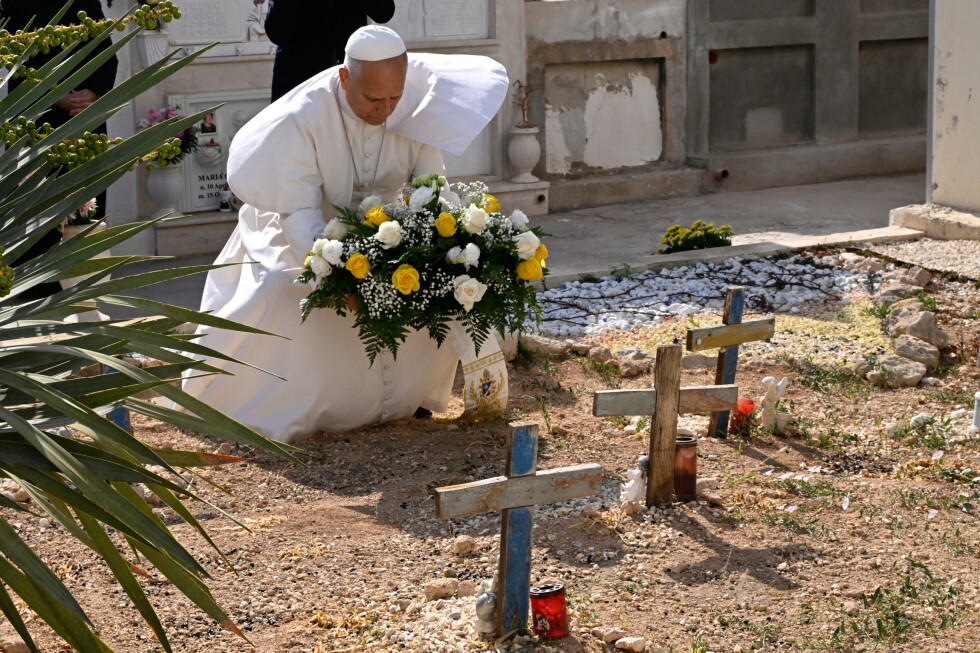
Upon arriving at Lampedusa, Leo paid tribute to those who perished during their treacherous journeys by laying wreaths of yellow and white flowers at the island’s migrant cemetery, marked by simple wooden crosses crafted from shipwreck debris.
Tareke Brahane, an Eritrean migrant and president of the October 3rd Committee—founded by families of victims from a 2013 shipwreck that claimed 368 lives—expressed that Leo’s visit sent a “strong message” of solidarity. “There is still no official register of the deceased, making this a powerful symbol in our fight for recognition,” he informed The Associated Press.
Leo emphasized the importance of honoring the deceased while conveying a message of hope to their families, many of whom continue to suffer uncertainty. His visit mirrors that of Pope Francis, who prioritized the issues faced by migrants throughout his papacy and called for compassion towards those escaping hardship.
In July 2013, Francis made his inaugural trip outside of Rome to Lampedusa, commemorating the dead and denouncing the world’s “globalization of indifference” towards immigration.
Salvatore Sortino, head of the IOM’s Italy and Malta mission, noted that while migrant arrivals have decreased, the proportion of deaths has risen, indicating persistent vulnerability. “The pope’s visit serves as an essential reminder of this ongoing crisis,” he said.
