


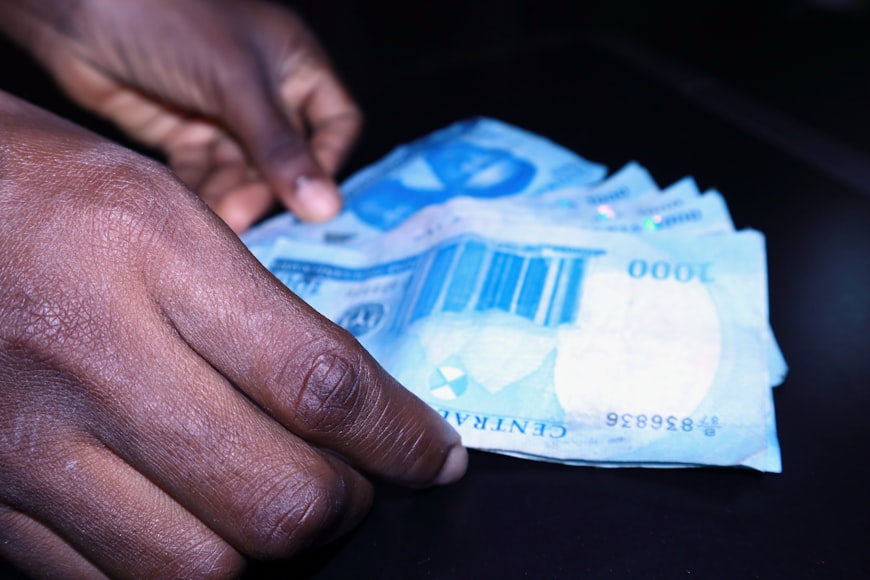
Naira Rebounds Amid Growing Foreign Exchange Reserves
This week, the naira made a notable recovery in the official foreign exchange (FX) market, bouncing back from last week’s decline. The rebound is largely attributed to a steady increase in Nigeria’s foreign exchange reserves, which is bolstering investor confidence and enhancing liquidity conditions across the market.
Naira Appreciates Against the Dollar
According to the Central Bank of Nigeria (CBN), the naira appreciated by 10.74 naira on a week-on-week basis. As of Friday, the dollar exchange rate at the Nigerian Foreign Exchange Market (NFEM) was 1,370.19 naira, marking a 0.78% increase from last week’s rate of 1,380.93 naira.
Parallel Market Dynamics
In the parallel market, commonly referred to as the black market, the naira closed at 1,400 naira per dollar on Friday, reflecting a slight decline of 3 naira from the opening rate of 1,397 naira.
Foreign Exchange Reserves on the Rise
Nigeria’s foreign exchange reserves, which empower the CBN to defend the naira and fulfill its external obligations, continued their upward trajectory, reaching $51.45 billion as of June 30, 2026. This represents an increase of $14.24 billion, or 38.27 percent, from $37.21 billion during the same period in 2025, as reported by the CBN.
Increased Market Activity
While NFEM sales and trading data were not available on Friday, the initial business days of the week showed robust market activity. The number of transactions rose to 1,377, a 10.96% increase from the 1,241 transactions recorded the previous week.
Sales Figures Reflect Market Strength
Total sales at the NFEM window averaged $543.32 million for the week, a significant 24.30% increase from the prior week’s average of $437.09 million, signaling heightened activity in the foreign exchange market.
Interbank Market Developments
Interbank market transactions also saw an upswing, with the number of transactions rising from 614 to 714, marking a 16.29% increase week-on-week. However, total interbank transactions on Friday fell by 43.30% to $70.43 million, compared to $124.22 million in the previous week.
Mohammad Sani Abdullahi, in a personal statement during the last Monetary Policy Committee (MPC) meeting, expressed optimism regarding the subdued exchange rate pressures, attributing this stability to improved market liquidity and decreased speculative activity. He emphasized the importance of maintaining robust foreign exchange market depth and liquidity to enhance market resilience against potential shocks.
Fellow MPC member Murtala Sabo Sagagi highlighted the resilience of Nigeria’s external sector, supported by the strengthened foreign exchange reserves. As of May 15, 2026, total external reserves stood at $49.49 billion, compared to $48.35 billion at the end of March 2026, sufficient to cover approximately 9.04 months of imports. This reserve buffer significantly boosts investor confidence and supports exchange rate stability.
Mustapha Akinkunmi, another MPC member, attributed the growing stability in the foreign exchange market to Nigeria’s transparent and market-oriented exchange rate framework. Notably, as of May 15, 2026, the naira was trading at 1,371.04 naira to the dollar in the official market, reflecting an appreciation of over 15 naira compared to January 2026. He expressed that these developments illustrate improved market confidence and the effectiveness of policy measures designed to enhance macroeconomic stability.
