


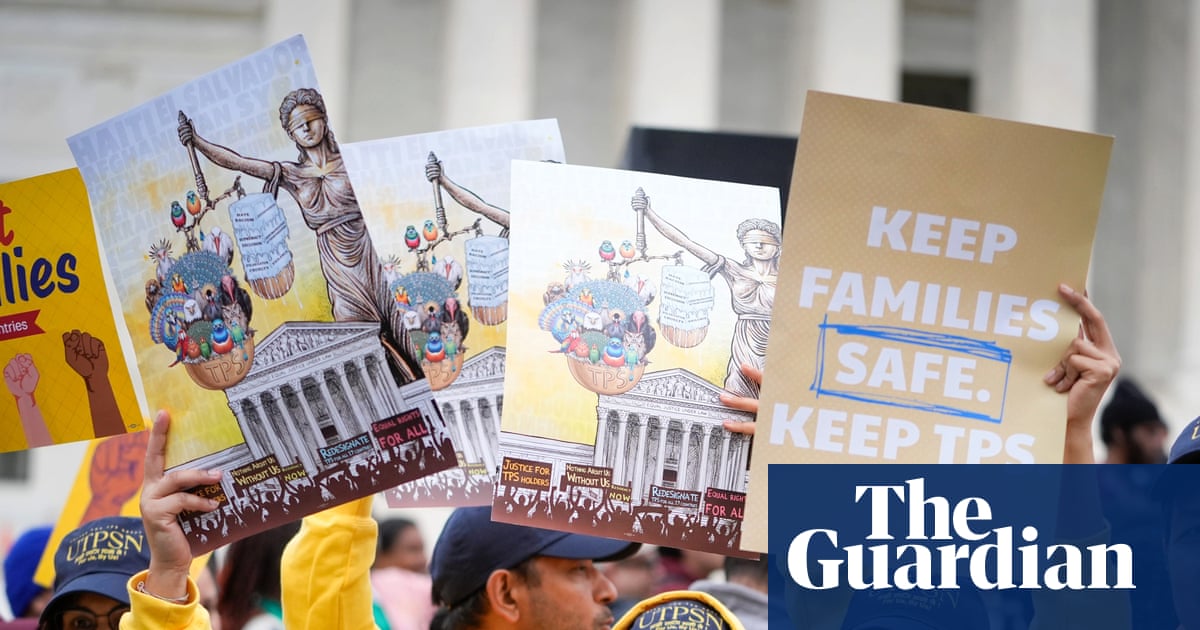
The U.S. Supreme Court has significantly impacted the lives of approximately 1.3 million immigrants in the U.S., many of whom have resided legally for decades. This ruling facilitates the Trump administration’s ability to terminate temporary deportation protections for these individuals.
Understanding Temporary Protected Status (TPS)
Temporary Protected Status (TPS) was introduced by Congress in 1990 to provide refuge for individuals already in the United States during disasters in their home countries that hinder safe return. Countries may receive TPS designation due to natural disasters, epidemics, armed conflicts, or other significant and temporary circumstances. Initially granted for a minimum of six months and a maximum of 18 months, TPS allows successful applicants to obtain work permits and deportation protection. Importantly, individuals with serious criminal records are typically ineligible.
Before the TPS designation for a country expires, the Secretary of Homeland Security must determine whether to extend, redesignate, or terminate the TPS based on the country’s improved conditions. If no decision is made by the deadline, the TPS designation is automatically extended for an additional six months.
Supreme Court’s Significant Ruling
In a 6-3 ruling, the Supreme Court’s conservative majority declared that decisions made by the Secretary of Homeland Security regarding TPS are generally not subject to judicial review. The only exception pertains to constitutional claims involving fundamental rights, such as equal protection, but only if they have substantial grounds.
The justices considered a claim regarding racial bias against Haitians motivating TPS termination, yet Justice Samuel Alito noted that it appeared “unlikely to succeed on its merits.” In her dissent, Justice Elena Kagan raised concerns that the majority decision allows the Secretary of Homeland Security to publicly announce TPS changes without consulting anyone or evaluating the situation in designated countries, effectively granting the court no authority to intervene.
Who Faces Consequences?
The Supreme Court ruling affects over 300,000 individuals from Haiti and thousands from Syria. Upon the ruling’s implementation, these individuals will likely lose their TPS status, along with their work permits, even if legal cases continue. In Kagan’s assessment, this ruling means that many could be sent “on the next plane” back to unstable environments, particularly if they lack the means or eligibility to seek alternative forms of immigration relief, such as asylum.
Current Secretary of Homeland Security Markwayne Mullin has advised that TPS holders should pursue permanent residency or consider leaving the country, despite the absence of a clear path to a green card from TPS. Notable cases among TPS holders include individuals like Fritz Emmanuel Leslie Miot, a Haitian Alzheimer’s disease researcher with type 1 diabetes, and Laila Do, a Syrian behavioral technician who fears for her safety if forced to return home.
State Department’s Position on Syria and Haiti
The U.S. State Department has assigned the highest level of travel advisory to both Syria and Haiti, categorizing them as “Do Not Travel” destinations. Risks in Syria encompass terrorism, insurgency, crime, and armed conflict, with no area deemed safe. Similarly, in Haiti, violent crime is rampant, fueled by gangs and organized crime, with threats such as robbery, sexual assault, and kidnappings increasing. Local law enforcement capabilities are severely limited in responding to serious crimes.
Statements from Donald Trump Regarding Haiti
Former President Trump made disparaging comments about Haiti, labeling it as a “shitty country” and making derogatory assertions about its residents. He has used inflammatory language to characterize Haitian immigrants, further exacerbating the racial undertones surrounding the Trump administration’s immigration policies. His remarks have prompted significant backlash and raised critical concerns about the motivation behind TPS terminations.
Current TPS Designations and Countries Affected
Active TPS designations include individuals from various countries facing crises, such as Myanmar, El Salvador, Ethiopia, and Yemen, among others. Since taking office, the Trump administration has systematically rescinded TPS designations for several nations, affecting hundreds of thousands of individuals. The removal of protections can lead to severe implications for those who have made the U.S. their home.
Logistics of Removing TPS Holders
The loss of TPS places individuals at risk of arrest and deportation proceedings, much like other undocumented immigrants. Many could face detention and lengthy deportation processes, even if legal avenues for relief are pending. This situation could result in individuals being barred from returning to the U.S. for years, further complicating their precarious status.
Exploring Alternatives for TPS Holders
While some TPS holders may qualify for alternative humanitarian protections like asylum, these paths often prove challenging. Asylum requires proof of persecution, a burden many TPS holders cannot fulfill. The Trump administration’s policies have also made accessing asylum increasingly difficult, undermining potential support for individuals from several countries currently designated for TPS.
State Department Warnings for Other TPS Countries
The State Department continues to advise against travel to numerous TPS-designated countries due to critical security threats. For instance, Afghanistan has been deemed unsafe due to risks related to terrorism and civil unrest. Similar caution applies to Myanmar and Sudan, where violent conflicts and severe crime present considerable dangers to travelers and residents alike.
Economic Ramifications of TPS Termination
TPS holders contribute significantly to the U.S. economy, paying over $7.8 billion in taxes annually and injecting an estimated $262 billion since 2001, according to Fwd.us. Many work in essential industries experiencing labor shortages, including construction and healthcare. Specifically, 13,000 Haitian TPS holders serve as nursing assistants, caring for approximately 65,000 patients daily. The potential loss of these workers could destabilize numerous sectors reliant on their skills.
Moreover, the Supreme Court ruling could complicate the removal process for TPS holders. It grants the administration greater latitude to implement restrictive immigration policies, directly affecting vulnerable populations. As the legal landscape evolves, the implications for these individuals continue to raise significant concerns about human rights and economic stability.
