


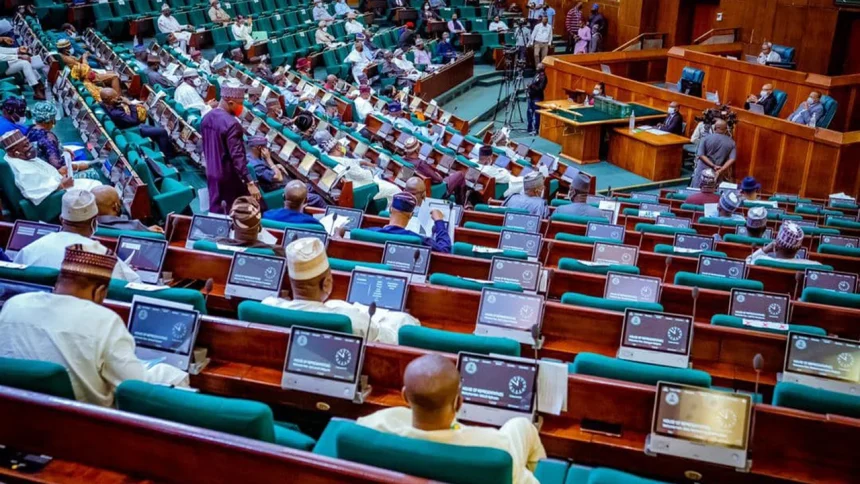
House of Representatives Urges Action Against Financial Networks Supporting Crime in Nigeria
The House of Representatives has called for unified efforts to dismantle the financial networks that enable kidnapping, robbery, and terrorism in Nigeria. Lawmakers are pressing the federal government to enhance oversight of Bureau de Change (BDC) operators and point-of-sale (POS) systems, bolster the coordination of financial intelligence, and rigorously enforce anti-money laundering laws.
Alarming Ransom Payments Highlight Crime Funding
This resolution arises amid growing concerns that organized crime syndicates are becoming more entrenched and that the country’s security situation is deteriorating. Legislators noted that between January 2021 and June 2025, Nigerians paid an estimated ₦2.23 trillion in ransom to kidnappers, underscoring the financial momentum behind such criminal activities.
Legislative Action Initiated by Local Representatives
The motion, spearheaded by Mr. John Johnson, a member representing the Somolu Federal Constituency in Lagos State, emphasized the urgent need for coordinated executive action to eliminate the ransom cash economy in Nigeria. It seeks greater cooperation among financial intelligence bodies and calls for strict compliance with existing anti-money laundering laws.
Financial Insights Cited in Parliamentary Discussions
Mr. Johnson referenced research from the Nigerian Financial Intelligence Unit (NFIU), the National Bureau of Statistics, and an independent security agency, highlighting that the staggering ransom payments over recent years are a primary funding source for banditry and terrorism. He stressed that addressing the financial roots of these criminal activities is necessary, rather than solely relying on military responses.
Existing Laws Offer Framework to Combat Crime
According to Mr. Johnson, the government has a constitutional obligation to protect citizens and maintain Nigeria’s economic sovereignty. He pointed out that there are already legal structures in place aimed at curbing illicit financial flows associated with organized crime. This includes the Money Laundering (Prevention and Prohibition) Act of 2022 and the Terrorism (Prevention and Prohibition) Act of 2022, which require financial institutions and relevant governments to monitor and report suspicious transactions.
Exploits in Financial Systems Undermine Security Efforts
Research from the National Counterterrorism Center revealed that certain POS operators and financial channels are being misused to facilitate ransom payments, complicating investigations and the recovery of assets. Lawmakers expressed alarm over how criminal organizations are increasingly utilizing both formal and informal financial systems—including exchange bureaus, hawala networks, and cryptocurrency platforms—to launder illicit proceeds and integrate them into the legitimate economy.
Call for Comprehensive Oversight and Monitoring Enhancements
Members of the House emphasized that persistent weaknesses in financial intelligence and the inadequate enforcement of anti-money laundering regulations heighten security risks across Nigeria. In response, they urged President Bola Ahmed Tinubu to establish an inter-agency framework that strengthens collaboration between law enforcement, regulatory bodies, and financial institutions. Further, they called for enhanced financial monitoring and audits of high-risk POS transactions, with a focus on preventing their misuse in ransom payment scenarios.
Addressing the Complexity of Ransom Payments
While the motion garnered wide support, not all lawmakers agree on the blanket ban on ransom payments. Representative Ahmed Jaha from Borno State cautioned that families often face dire choices when loved ones are abducted. He argued that, in some cases, even the Federal Bureau of Investigation has been known to pay ransoms to safeguard lives. Jaha additionally urged the government to provide support to those rescued from captivity, emphasizing the need for rehabilitation and psychosocial assistance.
