


California Allocates $15 Million for Unaccompanied Immigrant Children’s Program
California’s initiative supporting unaccompanied immigrant children is set to gain $15 million in state funding, following a request from local Assemblyman Greg Hart to Governor Gavin Newsom for inclusion in the upcoming fiscal budget.
Julissa Peña, executive director of the Santa Barbara Immigration Legal Center, a nonprofit involved in the initiative, emphasized the urgent needs of these vulnerable children. “These children, who often confront fears and hardships that surpass those endured by adults, require our immediate attention,” she stated. The fund will significantly enhance support for the center, which has been operational since autumn of last year.
While the program mainly relies on state resources and private contributions, it was initially omitted from the finalized budget for the next fiscal year. The Children’s Holistic Immigrant Representation Project, managed by the Department of Human Services, fosters collaboration among organizations like Peña’s center, ensuring that unaccompanied children receive essential legal representation, coupled with food, housing, and mental health support.
Thanks to the new funding, Peña anticipates assisting approximately 100 unaccompanied migrant children across the three Central Coast counties this year. Unaccompanied minors are defined as individuals under 18 who immigrate to the United States without parental guidance or legal status.
Peña recounted the anxiety faced by these children as they navigate a complex legal system. “We regularly encounter frightened children who enter our office, anxious about court appearances and immigration enforcement check-ins,” she explained. “They worry that compliance with the law could lead to detention and separation from those who have become their surrogate families.”
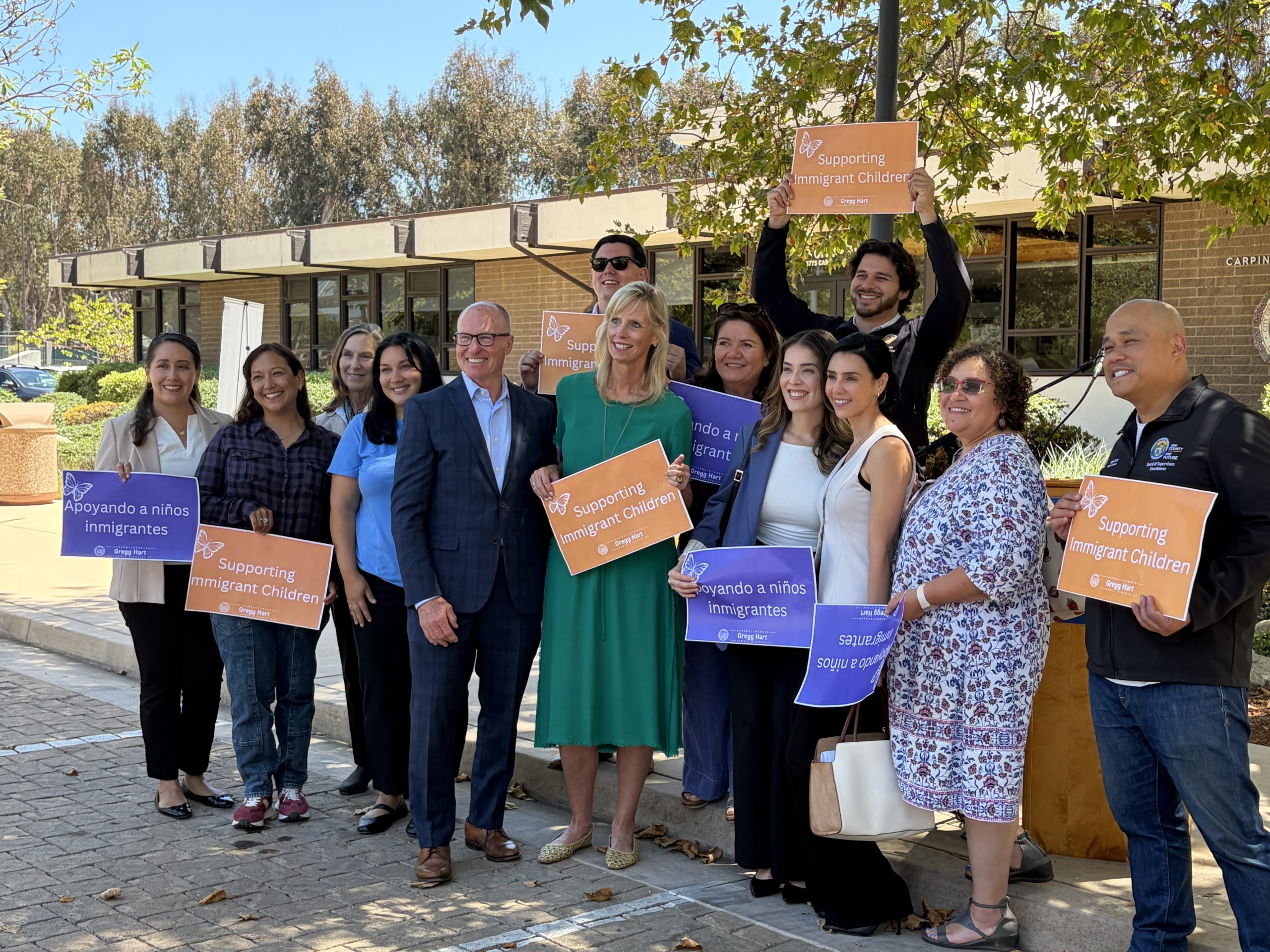
During an event outside Carpinteria City Hall, Peña, along with Ventura County Supervisor Vianney Lopez and Assemblyman Hart, rallied with community leaders to express solidarity with immigrant children. Lopez noted the timing of this funding is particularly poignant, coinciding with the one-year anniversary of an immigration enforcement operation that caused trauma in Carpinteria and Ventura County.
Hart highlighted the necessity of this funding, asserting that it addresses the dire circumstances faced by many impoverished children. He had previously advocated for the Child Holistic Immigrant Representation Project’s inclusion in the state’s 2026-2027 budget, thereby ensuring critical support for vulnerable young immigrants.
Having joined the state program in October 2025, the Santa Barbara Immigration Law Center was required to represent at least 90 children to qualify for funding. “We are assisting children as young as three, which poses its own set of challenges, especially in conveying complex immigration laws to such young minds,” Peña remarked.
According to Hart, this one-time funding will extend until June 2029, benefiting community organizations throughout California that provide aid to unaccompanied migrant children. Peña encapsulated the essence of their mission: “Justice is only meaningful if it is accessible.”
