


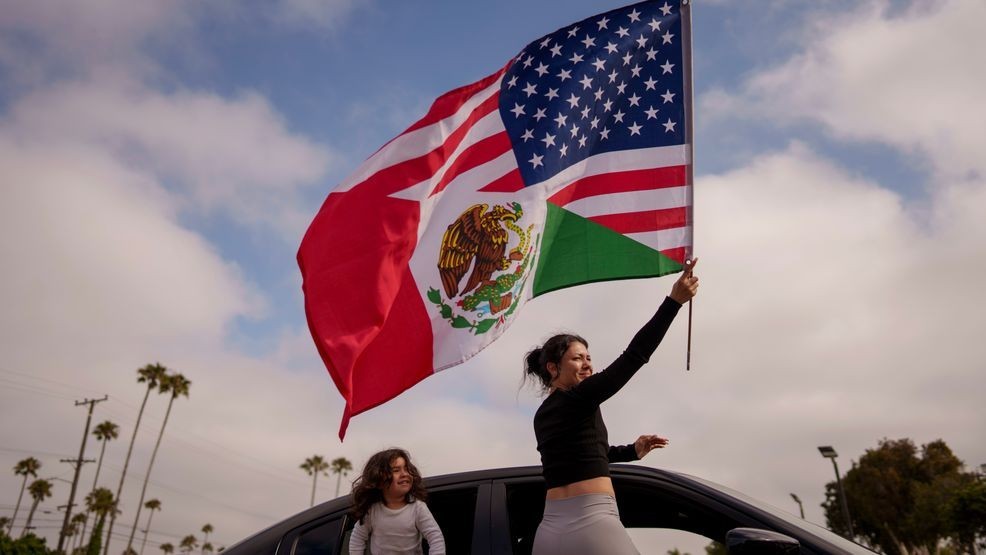
(TNND) — While a majority of Americans view immigration positively, the nuances of public sentiment reveal deeper complexities. As political expert Ernest Sagas notes, the situation often lies well away from the surface perceptions.
Recent data from Gallup indicates that 73% of Americans believe immigration benefits the country, even with a slight decline from last year’s peak of 79%. Notably, this figure has shown resilience, with approval ratings climbing to 64% in 2024.
This trend highlights a contrasting landscape among political affiliations. Support for immigration has notably increased amongst Democrats, with an impressive 91% now favoring immigration’s positive impact. In contrast, Republican support has experienced more volatility, fluctuating from 39% in 2024 to 64% in the previous year, and landing at 50% this year.
Sagas emphasizes that, despite the harsh rhetoric surrounding immigration during Donald Trump’s presidency, the idea of the United States as a nation built on immigration remains a strong sentiment. However, as Rice University political scientist Mark Jones points out, Republicans tend to differentiate sharply between legal and illegal immigration.
Jones adds that while immigration was a potent campaign issue for Republicans during Trump’s presidential run, its relevance has waned in the current election cycle. The Trump administration once celebrated “historically low border crossings,” aided by a surge in border enforcement personnel.
Survey results regarding immigration often reflect current political climates and real-time developments at the border and within communities. For instance, Republicans’ attitudes toward immigration softened significantly as border crossings declined from previous surges.
Overall, there is a shared belief among Republicans that orderly, legal immigration is beneficial to the United States. Meanwhile, Democrats advocate for the cultural and economic advantages that all forms of immigration can provide.
A Gallup poll indicates broad support for pathways to citizenship for unauthorized immigrants, particularly those brought to the U.S. as children, given they meet specific requirements over time. However, opinions vary on immigration policy, with 35% preferring to maintain current immigration levels, while 31% wish to see an increase and 29% advocate for a decrease.
Legal immigration plays a vital role in addressing workforce shortages exacerbated by an aging population, primarily filling low-wage job positions. Many Americans also recognize that immigration contributes significantly to tax revenues, thereby benefiting public programs and enhancing the availability of skilled workers in the technology sector.
Furthermore, perceptions of immigration shape the self-identities of Hispanics, a significant segment of the immigrant population in the U.S. A recent Pew Research Center study revealed differing perspectives among Hispanic Americans regarding their heritage. While 60% consider being Hispanic an essential part of their identity, only one-third feel it hampers their advancement, with others seeing no impact or even a potential advantage.
The study indicates that political affiliations strongly influence these self-perceptions and experiences of discrimination. Notably, Hispanic Democrats are more likely to view their ethnicity as a barrier compared to their Republican counterparts, many of whom see their identity as neutral in terms of societal advancement.
Hispanic Republicans often align with traditional narratives of assimilation, whereas Hispanic Democrats, especially those closer to the immigrant experience, emphasize the ongoing challenges of discrimination. Pew’s findings also show that Hispanics prefer to identify as “Hispanic” rather than “Latino,” with over half choosing to use labels tied to their specific country of origin, such as “Mexican.” In this rapidly evolving conversation, the complexities of identity and political belief are as pronounced as ever.
