


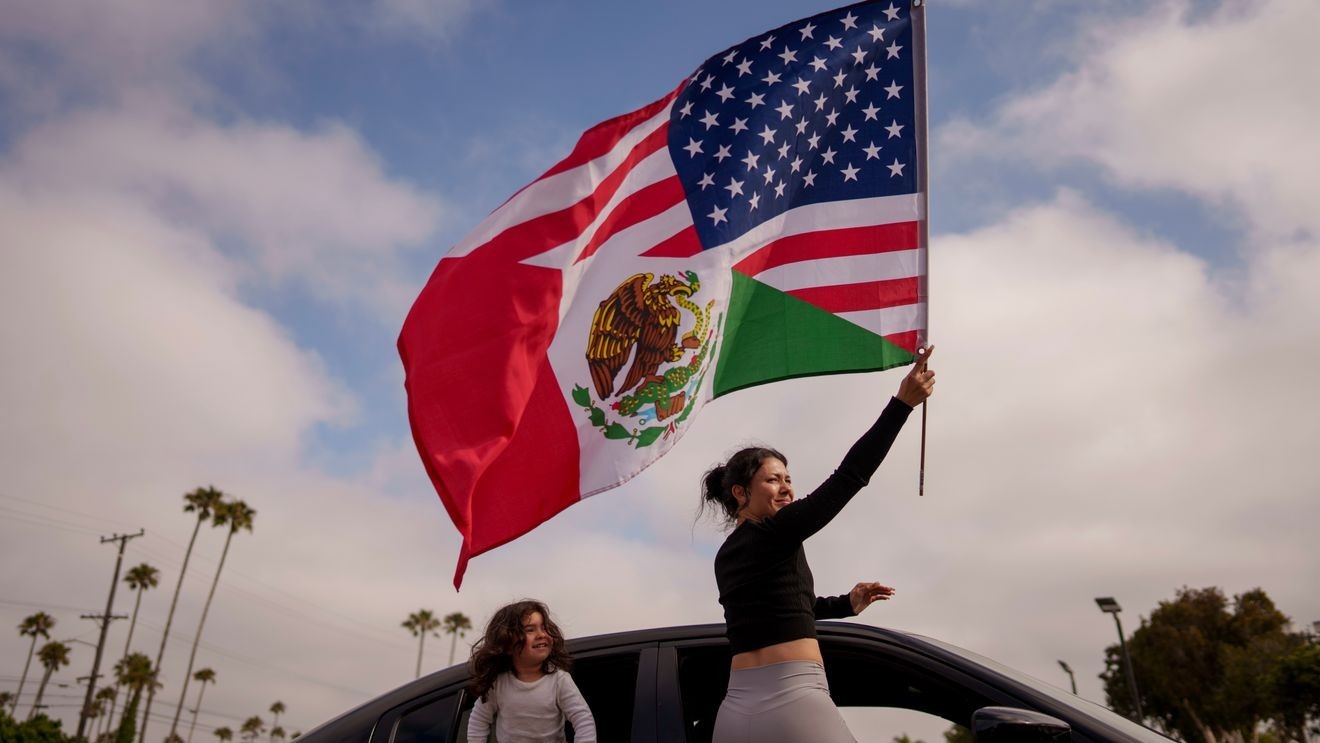
Public Opinion on Immigration Reveals Complex Sentiments
Recent findings indicate that a significant majority of Americans hold a favorable view of immigration, though nuances in public opinion highlight underlying partisan divisions. Political expert Ernest Sagas, a professor at Colorado State University, notes that while immigration is commonly supported, the complexities of the issue often create contention. “It is the very nature of immigration that causes partisan division,” Sagas observes.
Poll Results Show Broad Support for Immigration
A Gallup poll has revealed that 73% of Americans believe immigration is beneficial to the country, despite a slight decrease from a record-high approval rate of 79% last year. Interestingly, approval has remained strong, with 64% of Americans expressing positive views in 2024.
Shifts in Political Sentiment
Democratic support for immigration is particularly robust, with 91% affirming its benefits. In contrast, Republican opinions exhibit more fluctuation, ranging from 39% in 2024 to 64% and then dropping to 50% this year. Sagas asserts that regardless of the harsh rhetoric surrounding immigration during Donald Trump’s presidency, the foundational idea that the United States is a nation of immigrants continues to resonate strongly.
Legal vs. Illegal Immigration Perspectives
Mark Jones, a political scientist at Rice University, highlights a notable distinction among Republicans, who tend to differentiate between legal and illegal immigration. While immigration was a pivotal issue for Republicans during Trump’s campaign, its relevance appears diminished in the current election cycle. Jones notes that the previous administration celebrated “historically low border crossings,” which has contributed to a shift in sentiment as immigration rates have declined.
Public Attitudes Towards Immigration Policies
Americans show diverse opinions on immigration policies, with many favoring a pathway to citizenship for undocumented immigrants, particularly those brought to the U.S. as children. Polls indicate mixed responses regarding measures such as banning sanctuary cities or increasing Border Patrol agents. Notably, 58% of Americans oppose the deportation of all undocumented immigrants.
Immigration’s Economic Impact and Labor Needs
Many Americans recognize the critical role of legal immigration in addressing labor shortages, especially as the aging population continues to retire. The influx of immigrants is seen as essential in filling low-wage job vacancies, contributing to the economy’s growth. Additionally, immigration is viewed positively for its role in bolstering tax revenues and supplying skilled workers in science and technology fields.
Hispanic Identity and Perceptions of Discrimination
The views of Hispanic Americans regarding their identity are multifaceted, shaped by both the national discourse on immigration and individual experiences. According to a recent Pew Research Center study, over 60% of Hispanic individuals identify their heritage as a significant aspect of their self-concept. However, experiences of discrimination, such as being criticized for speaking Spanish, are also prevalent, with one-third of respondents reporting such incidents.
Political Affiliations and Identity Complexities
Political viewpoints significantly impact how Hispanic individuals perceive their identity. Among Hispanic Democrats, 41% feel their ethnicity is more of a hindrance to success, while only 22% of Hispanic Republicans share this sentiment. Sagas points out that Hispanic Republicans may adhere more closely to traditional narratives of assimilation, often downplaying systemic discrimination, whereas Hispanic Democrats are more likely to recognize ongoing challenges. The Pew Research Center’s report indicates a wide array of labels used by Hispanics to define themselves, with many preferring “Hispanic” over “Latino,” and a majority emphasizing their country of origin in defining their identity.
