


Military Personnel Stepping into Immigration Court Roles
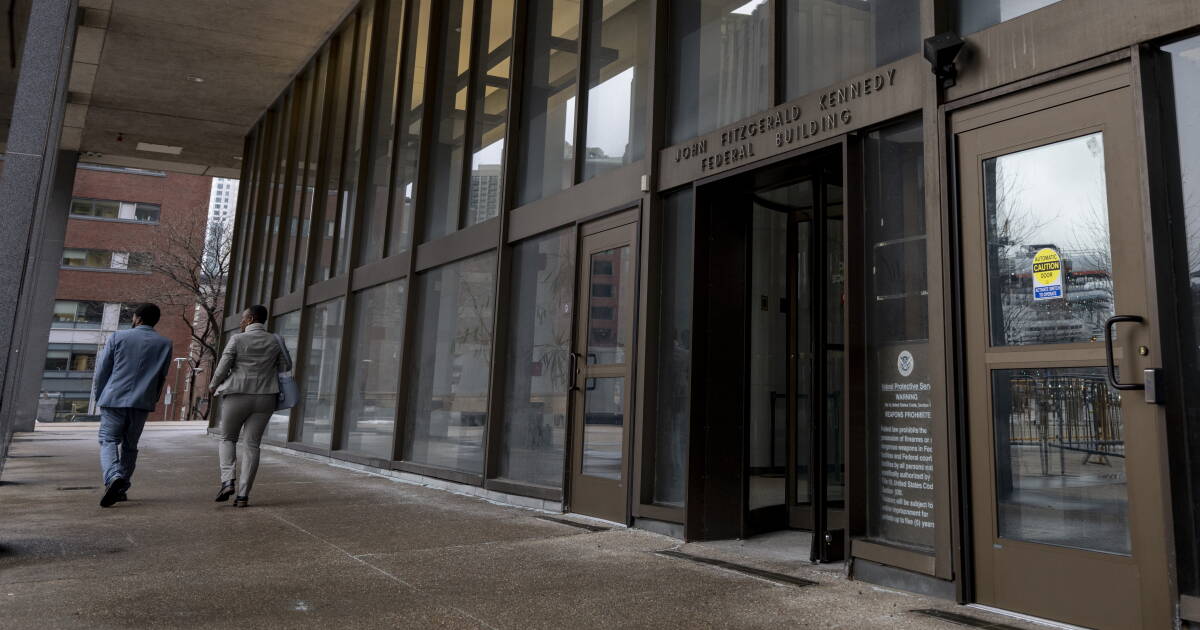
On a rainy and foggy day with temperatures in the 70s, discussions surrounding immigration justice are heating up. Recently, Pentagon officials announced plans to appoint up to 600 active-duty military personnel as temporary immigration judges. This move comes in the wake of the Trump administration’s decision to dismiss or furlough approximately 100 immigration judges across the nation, further complicating an already sluggish judicial system as migrants await determinations on asylum claims, bail, and deportation.
The American Civil Liberties Union (ACLU) of Massachusetts is seeking clarity on the qualifications and appointment processes for these military members serving in judicial roles. A lead attorney at the ACLU, Dan McFadden, expressed concerns that these personnel may not solely be reservists, but rather activated on official duty orders via the Department of Defense, complicating their implementation as judges and raising significant legal issues.
Impact of Supreme Court Ruling on Temporary Protected Status
A vital development in immigration policy came after the Supreme Court ruled that the Trump administration could terminate Temporary Protected Status (TPS) for Haitians and Syrians. Many employers, particularly in the healthcare sector, are now laying off or furloughing Haitian workers who have lost their legal immigration protections. This includes around 1,500 nursing home employees, a workforce already in short supply.
Michelle Fraser, director of employee relations at Vinfen, highlighted the potential ramifications of job loss for these employees: “We work with some of the most vulnerable populations in the state. The compassionate care provided by our staff is critical to the services we offer. Interruptions can significantly impact the continuity and quality of care.”
Legislative Moves to Protect Immigrants
With the formal adjournment of the state Legislature approaching, Governor Maura Healey is advocating for the passage of a bill aimed at preventing federal immigration agents from conducting arrests within Massachusetts courthouses. The proposed legislation, known as the PROTECT Act, is expected to receive a vote this week.
Healey emphasized the importance of this initiative during a recent broadcast, stating, “It’s about protecting our residents and communities against significant constitutional violations and what I perceive as un-American actions by the Trump administration.”
Innovative Solutions for Sustainable Energy
Boston’s engineers and business leaders are exploring innovative methods for utilizing thermal energy from local waterways to regulate heating and cooling in buildings. The primary focus is on large institutions such as universities and hospitals to implement this sustainable system. As part of this initiative, the Green Ribbon Commission aims to ensure the project is technically feasible and economically sound.
Lindsay Butler, the commission’s executive director, stated, “We see large institutions as essential early adopters of this technology. Our goal is to create a system that not only functions effectively but also meets regulatory and permitting standards.”
Public Health Advisory on Cyclospora Outbreak
Massachusetts public health officials are closely monitoring the 18 reported cases of Cyclospora, a parasitic gastrointestinal disease, noting that these instances do not seem linked to a larger national outbreak. Surgeon General Dr. Robbie Goldstein urged residents to remain vigilant about the origins of their produce.
“Consumers should be aware of what products are being recalled and keep track of their recent shopping habits,” Goldstein remarked. He added that although Cyclospora tends to decrease with cooler temperatures in the fall, the risk persists into late summer and early autumn.
Insights on Nolan’s Film Adaptation of ‘The Odyssey’
Emily Wilson, renowned for her translation of Homer’s ‘The Odyssey,’ has shared her thoughts on Christopher Nolan’s recent film adaptation. In a conversation with Culture Show host Jared Bowen, Wilson discussed the intricacies of translating ancient Greek poetry for modern audiences and the challenges of adapting such a rich narrative for the IMAX screen.
Wilson conveyed her admiration for Nolan’s visual storytelling, emphasizing the careful considerations necessary in literary translation. “Literary translators must determine which elements of the original work to prioritize while striving for the essence, even when working with different words,” she explained. She criticized the film for not fully utilizing its stellar cast, questioning the depth of the script.
