


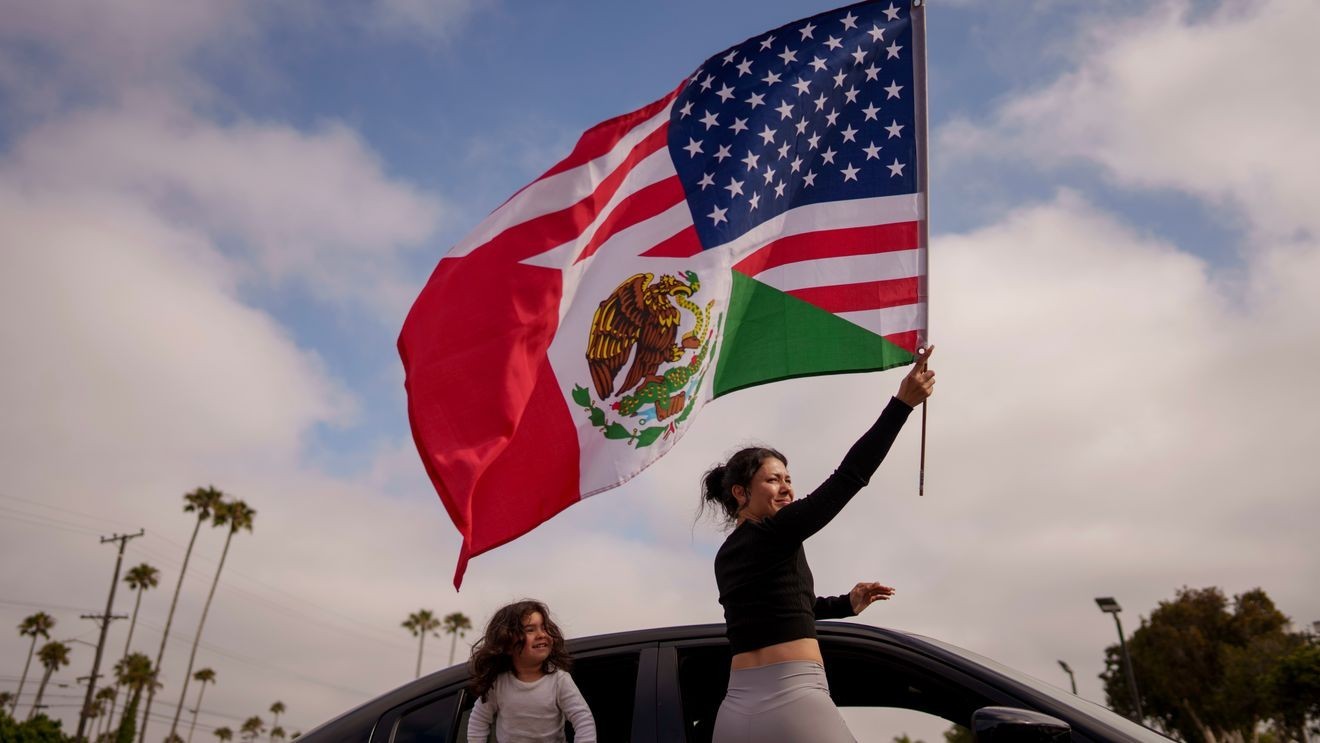
Public Sentiment on Immigration Remains Strong Among Americans
Most Americans view immigration positively, although, as one political expert notes, the nuances of this topic often lead to partisan divisions. Ernest Sagas, a professor of ethnic studies at Colorado State University, highlights that while general support for immigration is evident, it’s the specifics that fuel debate.
Poll Findings Reveal Broad Support for Immigration
A recent Gallup poll indicates that 73% of Americans believe immigration is beneficial for the country. While this figure has dipped from a record high of 79% last year, it reflects a steady increase, with 64% approval projected for 2024.
Fluctuating Republican Attitudes Toward Immigration
The landscape of support among Republicans shows notable variability. While 91% of Democrats express pro-immigration sentiments, Republican approval has oscillated—from 39% in 2024, up to 64% last year, and down again to 50% this year.
Impact of Political Rhetoric and Border Policies
Sagas attributes this shifting perspective to the enduring notion that America is a nation built by immigrants, despite rhetoric from former President Donald Trump aimed at vilifying them. Political scientist Mark Jones from Rice University notes that Republicans distinguish more sharply between legal and illegal immigration.
Changing Context Influences Immigration Views
Jones believes that immigration, once a rallying point for Republicans during Trump’s presidential campaign, has become less pivotal in the current election cycle. The Trump administration’s emphasis on lowering border crossings—citing historical lows and sustained efforts by border agents—has altered Republican perceptions towards immigration.
Complexities and Varied Opinions on Immigration Policy
According to recent surveys, most Americans advocate for a path to citizenship for undocumented immigrants living in the U.S., particularly for those brought illegally as children—provided certain criteria are met over time. However, opinions diverge regarding sanctuary cities and the desired size of the Border Patrol.
Economic Contributions of Immigrants Highlighted
The positive perception of legal immigration stems largely from its role in addressing labor shortages created by an aging population. Legal immigrants are increasingly seen as vital to filling low-wage job gaps, contributing to public tax revenue, and bolstering the science and technology workforce.
Hispanic Identity and Its Impact on Perception
The national conversation surrounding immigration also affects how Hispanics, a significant portion of the immigrant community, view themselves. According to a recent report by the Pew Research Center, over 60% of Hispanic Americans identify their heritage as a key aspect of their self-concept. However, the same report reveals differing opinions on whether being Hispanic enhances or hinders their opportunities for success in the U.S.
Many Hispanic Democrats perceive their ethnicity as a barrier, with 41% expressing this concern, compared to 22% of Hispanic Republicans who feel similarly. Sagas emphasizes that Hispanic Republicans often embrace traditional assimilation narratives, while Hispanic Democrats may have a more nuanced understanding influenced by their proximity to the immigrant experience.
Diverse Perspectives on Hispanic Identity
The Pew Research Center’s findings also reveal that many Hispanics prefer identifiers reflecting their cultural heritage, with 53% favoring nationality-based terms such as Mexican or Mexican American, while 27% opt for broader labels like Hispanic or Latino. Only 18% identify primarily as American, showcasing the complex interplay between heritage and identity among Hispanics in the United States.
