


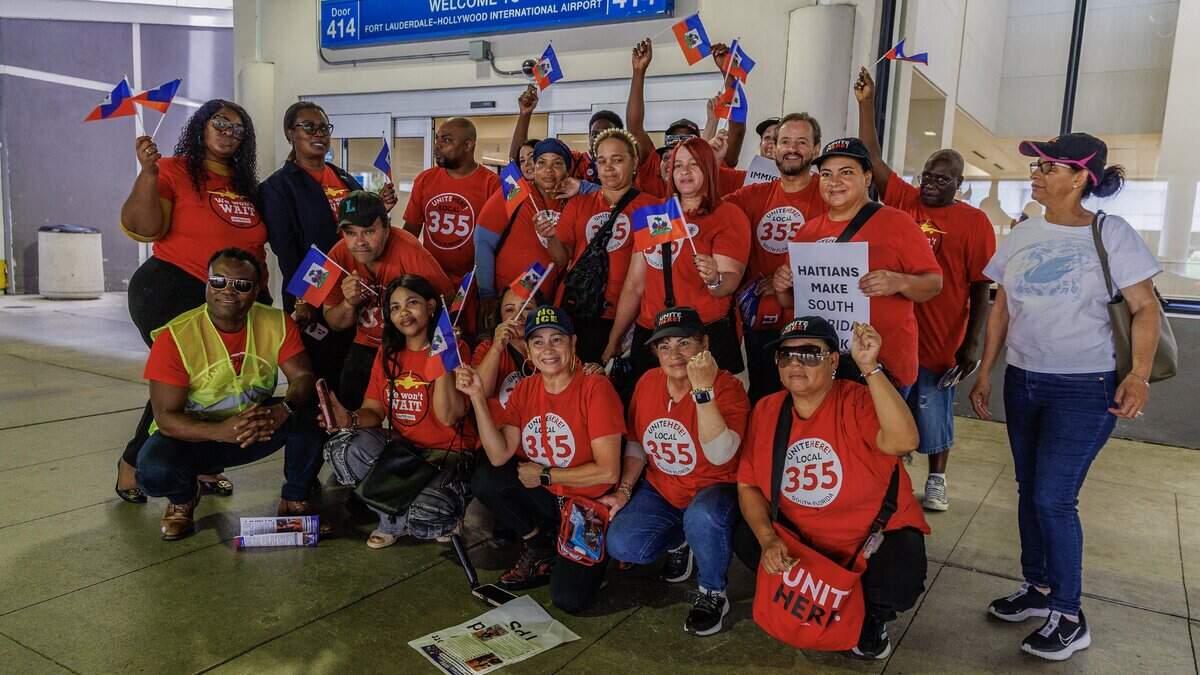
Airport Workers Rally for Temporary Protected Status Extension
On Friday, dozens of airport workers, labor organizers, and community leaders convened at Fort Lauderdale-Hollywood International Airport as the work permits for thousands of Haitian immigrants in South Florida face expiration. With over 32 million passengers passing through the airport last year, approximately 170 employees—including those responsible for terminal cleaning, assistance for travelers with disabilities, and various store and restaurant roles—are at risk of losing their legal work authorization.
Temporary Relief from the Administration
On the very day that work permits for Temporary Protected Status (TPS) beneficiaries from seven countries were set to expire, the Trump administration announced a two-week extension. This brief reprieve has provided some relief to affected workers, but businesses, labor advocates, and local communities are still grappling with the uncertainty of what comes next. Numerous employees have already received warnings or temporary leave from their positions at the airport and other local establishments.
Call for Extended Protections
Affected workers and their advocates gathered to advocate for extended protections for more than 350,000 Haitians and other TPS holders. They argue that losing these essential employees would not only deplete the airport’s knowledgeable workforce but also jeopardize the livelihoods of hundreds of families who depend on their jobs for stability.
Impact on Workers and Families
Wendy Walsh, vice president of Unite Here—a labor union representing around 300,000 workers in the airport, food service, and hotel industries—highlighted the tough situation many TPS holders are facing. Walsh noted that several members at Fort Lauderdale International Airport have already been terminated or placed on leave subsequent to losing their work permits. The anxiety this situation has created is palpable, affecting both work environments and household lives.
Real Stories of Fear and Uncertainty
Among the workers is Michelle, who identified as a Haitian-American citizen. She shared that many of her co-workers, including her aunt, are TPS holders. Her aunt, who arrived in the U.S. under a previous parole program, now grapples with stress and anxiety about her future in the country. The deepening fear surrounding deportation has left her feeling trapped, unable to leave her house and constantly reliant on Michelle for support.
The Broader Implications of TPS Expiration
The expiration of TPS work permits for Haitians, alongside similar expirations for Syrians, arrives shortly after the U.S. Supreme Court upheld the Trump administration’s authority to terminate TPS for over 350,000 individuals from these nations. While the Court indicated that the decisions made by the executive branch are largely insulated from judicial review, this ruling has raised fears about the potential loss of protections for other vulnerable populations.
Economic Contributions and Dependency
Currently, approximately 90,000 Haitian TPS holders reside in Florida, with nearly half living in the Miami metropolitan area and serving in crucial roles in healthcare, education, and entrepreneurship. The impact of losing their status extends beyond individual families; studies indicate that TPS holders collectively contribute around $5.4 billion to the U.S. economy annually and pay $1.5 billion in taxes. With the Department of Homeland Security set to evaluate TPS extensions for around 170,000 Salvadorans—many of whom have U.S. citizen children—the stakes remain high for families relying on these essential workers.
