


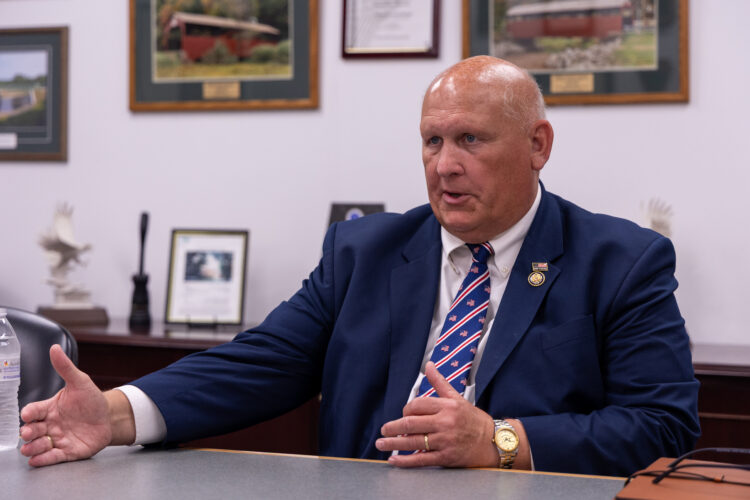
Karen Bibert Kennedy/Sun-Gazette U.S. Rep. GT Thompson speaks at the Williamsport Sun-Gazette’s recent editorial board meeting.
Addressing Agricultural Labor Shortages
U.S. Representative Glenn Thompson, R-Howard, and chairman of the House Agriculture Committee, recently raised the pressing issue of unharvested crops and the challenges faced by dairy farmers stemming from limitations on the nonimmigrant workforce. In a discussion with the Sun-Gazette Editorial Board, he introduced the proposed Security Agricultural Workforce Act of 2026 (SAWA).
Overhaul of the H-2A Visa Program
This initiative marks the first significant reform of the H-2A temporary agricultural worker visa program since its inception 40 years ago under the Immigration Reform and Control Act of 1986. The legislation aims to address ongoing labor shortages that pose a threat to the United States food supply chain.
Expanding Worker Access and Reducing Burdens
Thompson’s proposal seeks to broaden access to legal foreign labor, streamline regulatory processes, and permit continuous employment for year-round agricultural and livestock operations that have historically been excluded. The existing H-2A program has been confined to “seasonal” and “temporary” labor contracts lasting no more than 10 months, inadvertently sidelining vital sectors such as dairy, pork, and poultry.
Removing Seasonal Restrictions
Under the new bill, the restrictions limiting agricultural labor to seasonal obligations would be lifted, allowing workers to engage in contracts lasting up to 350 days. Additionally, this expansion encompasses environmentally controlled agriculture, forestry, aquaculture, and livestock farming.
Support from Agricultural Groups
Thompson noted that the bill has garnered the support of 50 co-sponsors, including representatives from various agricultural sectors as well as over 400 agricultural organizations. These groups are emphasizing the necessity for federal relief as they face ongoing labor challenges. However, the proposed legislation will be reviewed by the Judiciary Committee rather than the Agriculture Committee.
Facilitating a Transition for Existing Workers
The bill aims not only to improve access for new workers but also facilitates a pathway for current unauthorized agricultural laborers to transition legally into the H-2A program. Participants will be required to pass a background check and complete an in-person interview. It’s important to note that while the legislation aims to regulate labor, it does not provide a route to citizenship for participants.
Streamlining Labor Operations and Enhancing Food Security
To alleviate bureaucratic delays across the Departments of Labor, Homeland Security, and State, SAWA proposes the establishment of a centralized online portal for all employer-related interactions. The measures include the possibility of multi-year labor certifications and home inspections. Thompson emphasized the critical nature of ensuring a stable food supply, arguing that disruptions pose a significant national security risk.
