


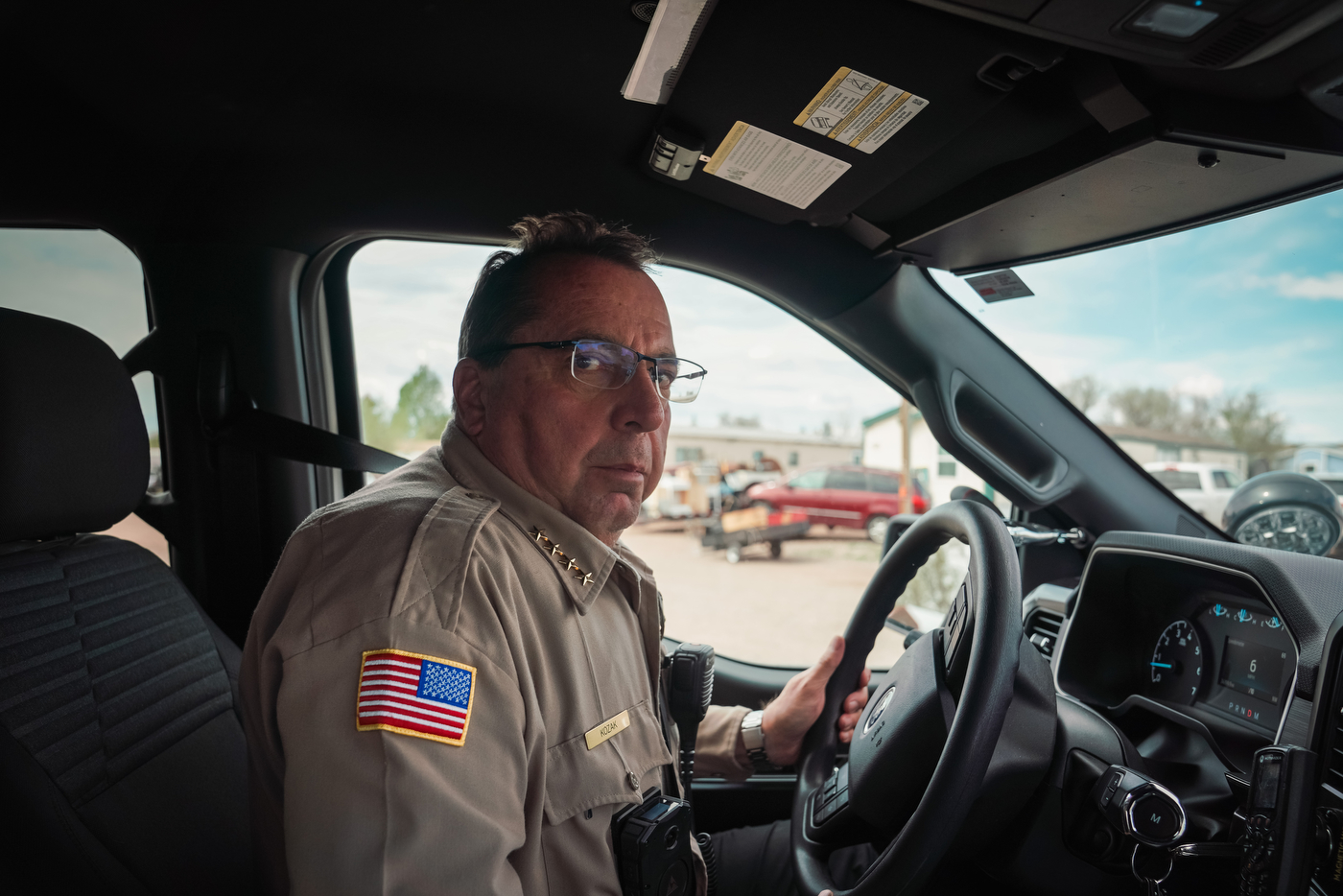
Sheriff Addresses Lawsuit Over Record Access in Deportation Case
Sheriff Brian Kozak has publicly responded to a lawsuit filed by a Colorado law firm that seeks access to records essential for an ongoing deportation case. The sheriff argues that the plaintiffs have not substantiated their claim to represent the individual featured in the video footage they are requesting.
However, the plaintiffs contend in a court filing that neither law enforcement nor the county attorney’s office prompted them for further evidence regarding the records requests they submitted on behalf of their client.
The plaintiffs’ filing states, “Despite the charges against him, Defendant Kozak continues to withhold evidence pertinent to two judicial proceedings.” They assert that ongoing delays are causing prejudice in the legal process.
When initially approached for comment following the lawsuit’s filing, Sheriff Kozak stated that body camera footage does not fall under the category of public records according to Wyoming law. While current regulations do not mandate the release of such recordings, agencies have significant discretion in deciding when to release them. Notably, the Johnson County Sheriff’s Office recently made a video of a state deputy’s arrest public, and two years prior, the Campbell County Detention Center provided media access to footage of an inmate’s death.
On Friday, Kozak had not yet responded to an inquiry from Wyofile regarding the latest filing by the plaintiffs.
The lawsuit was initiated last month by Denver-based Richter Immigration, along with Kevin Lewis, a Laramie County resident serving as an investigator for the firm. They accuse the sheriff’s office of obstructing access to records after allegedly disseminating a false report concerning the arrest of Mario Fabian Valenzuela Robles, a long-term Mexican national resident of Laramie County with three children.
Although Immigration Richter and Mr. Ruiz acquired a revised version of the report, they still seek video footage of Valenzuela Robles’ arrest, asserting that this evidence is crucial for his ongoing immigration proceedings.
The plaintiffs are represented by Cheyenne attorney Drake Hill, who previously served as the Wyoming Republican Party chairman and is married to former Wyoming Public Instruction Superintendent Cindy Hill. Notably, Lewis was affiliated with Cindy Hill during her tenure as state superintendent.
In a video addressing the allegations, Sheriff Kozak stated that inconsistencies in the report stemmed from a copy-and-paste error. He emphasized that he withheld the footage because the sheriff’s office had not received a letter indicating that the law firm was officially representing Valenzuela Robles.
However, new court documents state that neither the plaintiffs nor Hill have received any formal request from the county attorney. Although the law firm did not send the letter directly to the sheriff’s office or the county attorney, Lewis claimed to have shared it with both offices. The sheriff’s office records clerk reportedly accepted this as representation evidence and subsequently filed both an initial and a “corrected” report, while the county attorney also determined that the evidence provided by the deputy was sufficient.
Laramie County Attorney Mark Voss declined to comment on the matter as it involves ongoing litigation.
Discrepancies in Arrest Report Raise Concerns
In their most recent filing, the plaintiffs argue that a mere “cut-and-paste error” cannot adequately account for the “multiple inconsistencies” present in the arrest reports related to Valenzuela Robles. The new documents indicate that reports containing inaccuracies jeopardize public trust in the legal system.
The plaintiffs assert, “Defendant Kozak’s revised explanation is either maliciously untrue or points to a remarkable level of incompetence in one of law enforcement’s core responsibilities: the production of accurate contemporaneous reports.”
Even after corrections were made, the plaintiffs note that both sets of reports failed to include crucial metadata, such as creation dates, which would indicate whether the documents were generated authentically or altered retroactively.
Evidence from the scene of Valenzuela Robles’ arrest indicated the presence of two sheriff’s vehicles, three officers, and ICE agents. The corrected report identifies the deputies involved by name and confirms the presence of ICE officials.
The court filing argues that the investigation necessitates reviewing dashcam footage from two vehicles and body camera footage from at least three law enforcement officers. The plaintiffs contend that the report should specify the available digital evidence and explain any omissions.
Additionally, the immigration law firm seeks clarity on how authorities established “probable cause” for Valenzuela Robles’ arrest. Reports indicate that a deputy stopped Valenzuela Robles for alleged traffic violations and that the New Mexico driver’s license he presented was not a REAL ID, failing to meet federal standards.
According to the report, ICE agents subsequently questioned Valenzuela Robles and “established probable cause” for his unauthorized entry into the country, though specifics regarding the interrogation were not provided.
The plaintiffs are demanding answers: “How was probable cause determined? On what basis? No charges were ever filed, so what was the probable cause?”
