


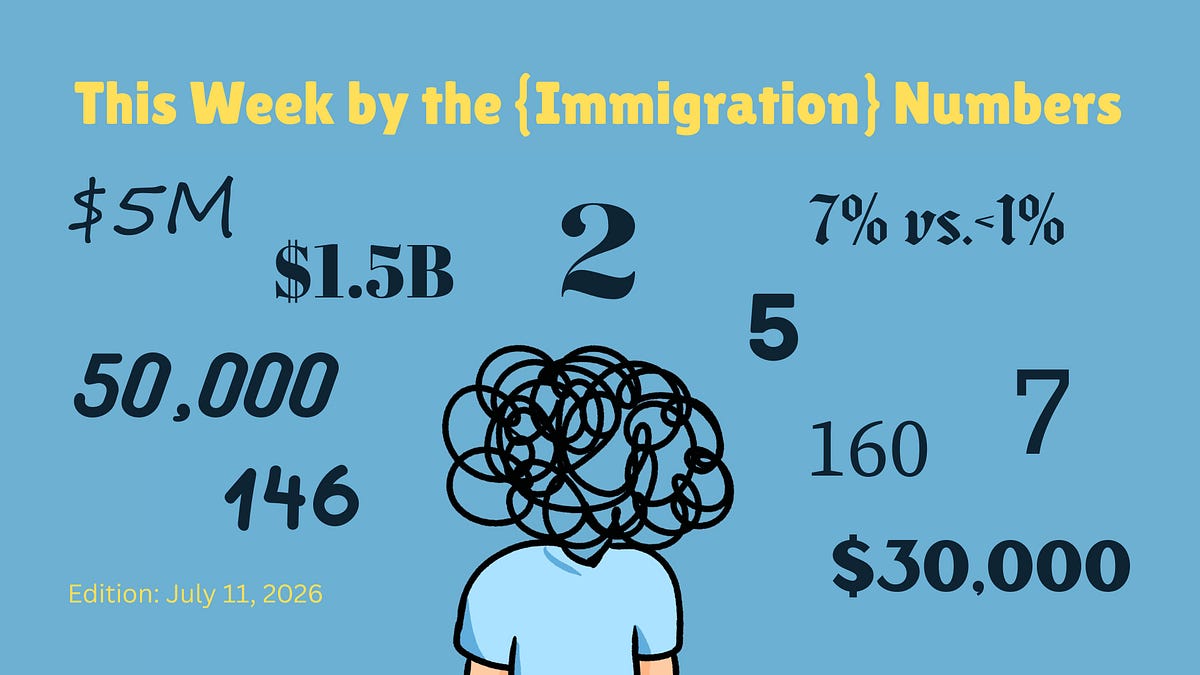
This Week’s Immigration Insights by the Numbers
Welcome to our weekly feature dedicated to immigration statistics and their significance. This week, we highlight key developments in immigration enforcement and judicial decisions, focusing on a unique approach. Instead of a straightforward summary, we’ll showcase diagrams that effectively illustrate these issues, explain their implications, and share resources for further exploration. Your feedback and additional insights on these numbers are welcome in the comments section.
Federal Court Ruling Challenges ICE Detention Practices
A federal judge in Nevada has ruled against Immigration and Customs Enforcement (ICE), emphasizing that the agency continues to detain immigrants under policies deemed illegal. Judge Richard Boulware II previously determined that ICE could not automatically detain individuals facing deportation, a decision that the ACLU of Nevada believes could allow approximately 60 people per week to seek release post-arrest. In light of recent findings, Boulware accused the government of “lawlessness” for disregarding binding judicial orders. The ruling stemmed from a lawsuit involving seven individuals who were arrested without valid warrants and denied bail, leading to their ordered release until their cases are resolved.
Federal Acquisition of Immigrant Detention Centers Raises Concerns
The federal government recently completed a $1.5 billion acquisition of two significant immigrant detention facilities in California from CoreCivic, a private prison operator. The purchase included the Otay Mesa Detention Center and the California City Detention Center, both critical components of the country’s immigration detention infrastructure. CoreCivic will continue to manage these facilities under an existing contract with ICE that runs through late 2029. This federal acquisition is part of a strategic move to bolster capacity and potentially limit oversight by state and local authorities, as California legislation allows for inspections of immigrant detention centers.
ICE Arrest Moratorium Challenges at Immigration Courthouse
A federal judge’s moratorium on ICE arrests at the Immigration Courthouse in Manhattan has heightened concerns regarding the welfare of detained individuals. Following a court order in May, immigrant rights lawyers reported at least five arrests occurred, including two men who remain in custody as they await decisions on their habeas corpus petitions. Such arrests have raised alarm bells, with advocates arguing they violate court directives and may dissuade individuals from attending their hearings. The Justice Department attempted to shield the reasons for these arrests, while ICE’s inspector general suggested that court arrests are safer than those conducted on the streets.
Disparities in Legal Representation for Immigrant Children
Recent statistics highlight a troubling disparity in legal representation for children facing deportation. Among those who completed their cases, only 7% of children with attorneys were granted legal relief, in stark contrast to less than 1% of those without legal assistance. This significant gap underscores the challenges young immigrants face in navigating a complex legal system often stacked against them. The data reveals a system that disproportionately favors those with proper legal support, showcasing the critical need for accessible legal representation for all immigrants, particularly vulnerable children.
Ongoing Concerns Over GPS Surveillance by ICE
Legal advocates recently filed a lawsuit challenging the expansive implementation of ICE’s GPS surveillance program, which now monitors nearly 50,000 individuals. While proponents argue electronic monitoring serves as a humane alternative to detention, experiences shared by individuals under surveillance paint a different picture, describing it as an intrusive form of oversight resembling custody. The scale and implications of such surveillance demand scrutiny, raising questions about privacy and civil liberties for those involved.
Immigrant Detention Facility’s Inadequate Mental Health Care Scrutinized
Reports have surfaced regarding deficiencies in medical and mental health care at a Texas immigration detention center, following the tragic death of Gerardo Lunas Campos, a 55-year-old Cuban immigrant. An investigation revealed that Lunas Campos, who had a history of mental health issues, repeatedly requested medication and a transfer to a facility equipped to handle his needs before his untimely passing. The findings suggest a systemic failure to address medical emergencies and highlight the importance of adequate mental health resources in immigrant detention facilities.
Displacement and Injustice Amid Deportation Crisis
Recent reports detail the harrowing plight of over 100 Venezuelans who went missing after being deported from Miami just hours before a devastating earthquake struck their homeland. The deportees were relocated to a severely affected area where survivors recounted harrowing escapes from collapsed structures. This situation raises profound ethical questions about the deportation process and its consequences, revealing the urgency for more humane immigration policies that consider the safety and well-being of individuals returned to unstable conditions.
