


African Data Center Market Poised for Growth
DUBLIN, July 13, 2026 (Globe Newswire) — “Africa Data Center Market Outlook 2026-2031” has been released by ResearchAndMarkets.com, showcasing substantial growth potential within the sector.
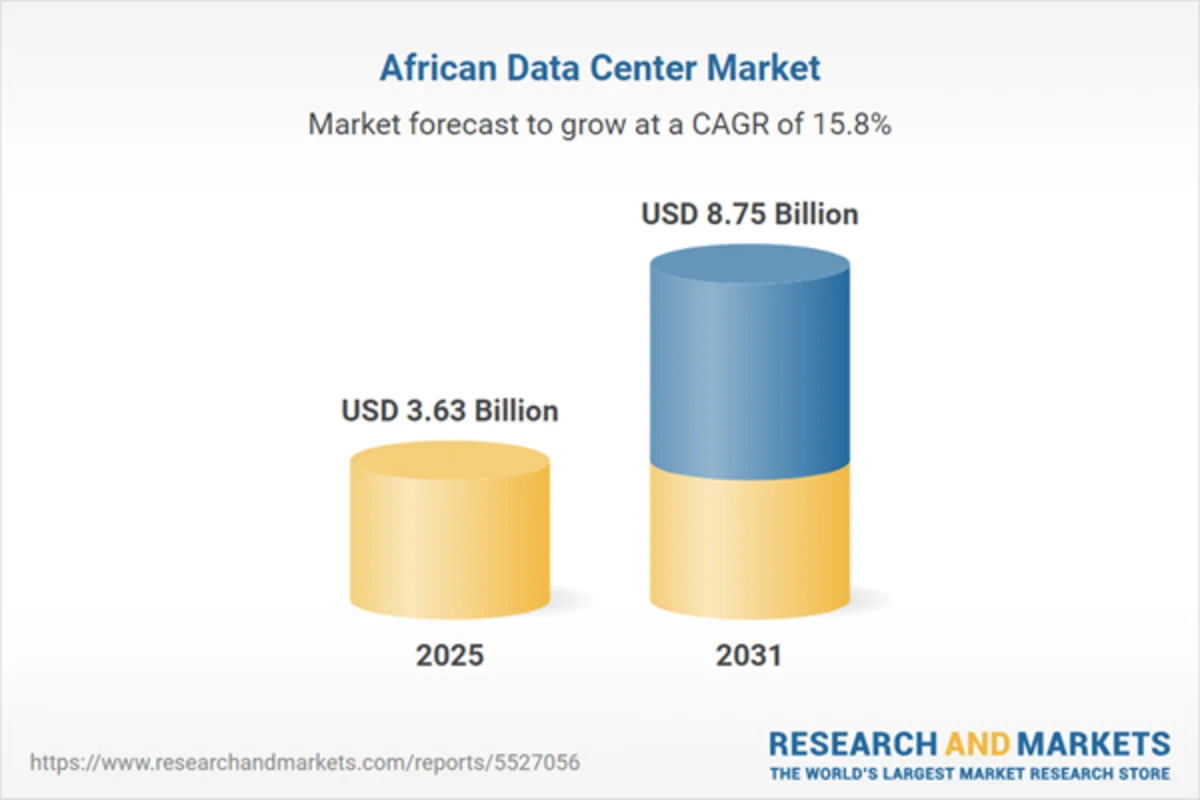
The African data center market is set to experience remarkable expansion, with an expected compound annual growth rate (CAGR) of 15.76% from 2025 to 2031. This upward trajectory underscores Africa’s emergence as a pivotal hub for cloud and artificial intelligence (AI) technologies, bolstered by strategic partnerships and advancements in GPU-centric infrastructures. A notable initiative is NVIDIA’s ambitious plan to establish an AI factory in Kenya powered by 12,000 GPUs.
Emerging Trends in Data Center Infrastructure
African data centers are gradually transitioning from traditional CPU-based architectures to GPU-centric configurations, mirroring global trends in AI data processing. Atlancis Technologies is leading this shift by launching East and Central Africa’s first GPU-powered AI hub through its Servernah cloud platform at iXAfrica data centers.
Historically, air-based cooling systems dominated the region’s data centers. However, the increasing focus on AI-centric facilities is driving a transformation toward liquid and immersion cooling systems to effectively handle demanding workloads. Cloudoon’s Masinga Cloud data center exemplifies this change, employing a water cooling system that integrates hydropower and solar energy to bolster sustainability efforts.
Challenges Posed by Geopolitical Instability
The ongoing conflict in the Middle East presents significant challenges for African economies. As of March 2026, global oil prices have surged over 50%, placing immense pressure on energy-dependent nations. The effects include soaring import bills, depreciated currencies, and heightened external debt costs, which could further aggravate inflation and stifle GDP growth.
Disruptions in global shipping routes due to instability near critical maritime chokepoints have resulted in rerouting through the Cape of Good Hope, contributing to longer transit times and increased freight costs. This situation affects 13% of Africa’s imports, further raising structural import expenses. Additionally, undersea cables in the Middle East face the threat of conflict-related disruptions, potentially compromising global internet traffic and leading to bandwidth congestion.
Investment Trends and Sustainability Initiatives
Amid these challenges, the increases in logistics and construction costs within the data center industry highlight the urgent need for enhanced digital infrastructure in Africa. Investing in renewable energy presents a pathway towards improving energy security and regional self-sufficiency.
As Africa fortifies its digital framework, there is a growing emphasis on sustainability initiatives, particularly the integration of renewable energy sources such as solar, wind, and hydropower. Notable projects include Teraco’s 2025 power purchase agreement in South Africa, which aims to harness wind energy. Complementary government initiatives, like Egypt’s $3.5 billion funding for renewable energy projects, aim to significantly scale up the contribution of renewables to the energy mix by 2026, thus supporting greener data center operations.
AI and Digitalization Accelerate Development
The acceleration toward AI, automation, and digitalization is further fueled by increasing data center capacity and cloud computing. Countries such as South Africa and Egypt are notably investing heavily in digital and AI infrastructure, a commitment evidenced by substantial advancements in technological capabilities. Nigeria is also focusing on AI and digitization alongside innovations in climate research and renewable energy solutions, consistent with the continent’s broader goals for socio-economic development.
Geographical Insights and Market Landscape
South Africa continues to be a key market due to government incentives and the presence of major operators like Teraco and Cassava Technologies. In Kenya, Nairobi is emerging as a data center hub, driven by substantial investments. Meanwhile, Lagos in Nigeria is a focal point for technology growth, characterized by significant capacity expansions from operators such as Rack Center and Open Access Data Centers.
Egypt’s strategic location, particularly in Cairo and other major cities, is fostering robust data center development supported by financial institutions and technology providers. The proximity of Morocco and Tunisia to Europe, complemented by strong cable connections, strengthens their positions as critical gateways for intercontinental data traffic.
Investment Opportunities and Market Potential
Africa’s data center market is witnessing a surge of investments from hyperscale players, including Microsoft, AWS, and Google, enhancing local capabilities and accelerating cloud adoption. This growth is further supported by IT giants such as Arista Networks, Dell, ABB, and Johnson Controls, which provide essential infrastructure solutions through partnerships with national and international contractors. The entry of new investors like Cloudoon and Gulf Data Hub illustrates the exciting potential for developing Africa’s digital ecosystem.
This report highlights the African data center market’s promising growth prospects, driven by technological advancements and strategic initiatives that underline its transformative role in the global digital landscape.
