


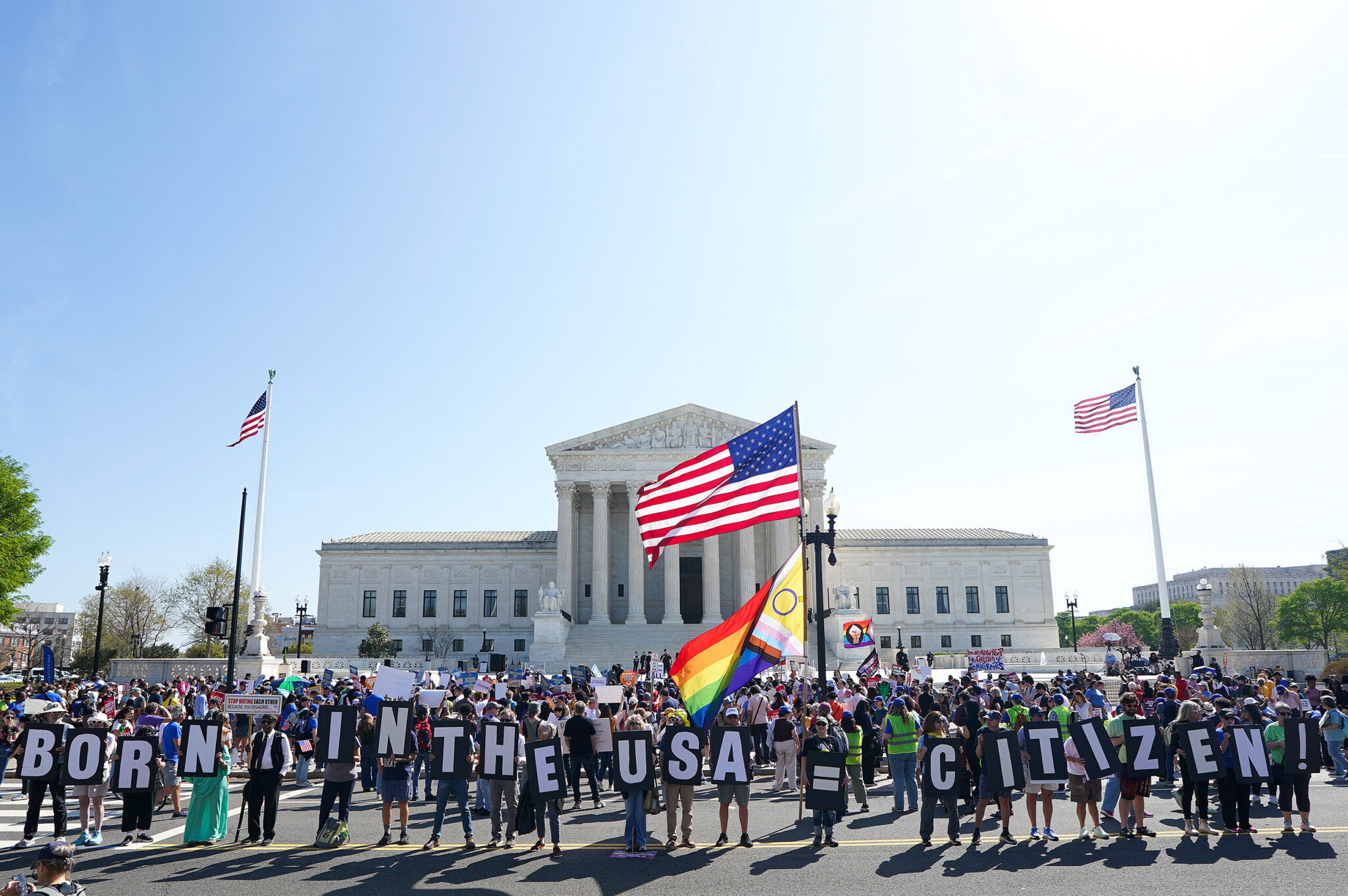
Nevada Republicans Tread Carefully on Birthright Citizenship Debate
Numerous Republican candidates in Nevada, including Governor Joe Lombardo, are hesitating to share their opinions on President Donald Trump’s recent legislative push to limit birthright citizenship. This right, traditionally afforded to children born in the United States, faces new scrutiny amid shifting political winds.
According to the American Immigration Council, immigrants constitute approximately one in five residents in Nevada. An estimated 320,000 children live with at least one immigrant parent in the state, underscoring the importance of this issue in local governance.
The U.S. Supreme Court’s ruling earlier this year highlighted the contentious nature of this topic. On his first day in office, President Trump issued an executive order aimed at restricting birthright citizenship, claiming that Congress could easily pass legislation to eliminate this entitlement. However, this proposition found itself divided among Congressional Republicans.
The Nevada Republican Party, under Lombardo’s leadership, has positioned itself against birthright citizenship in its 2024 platform. This stance remains influential following the party’s inability to establish a new platform at the state convention held in May.
Jill Douglas, chair of the Clark County Republican Party, noted that the issue transcends party lines. “It’s less about the platform and more about the sense of representation that people are craving,” she stated.
Lombardo has consistently refrained from articulating his stance on birthright citizenship. Following Trump’s executive order, Lombardo opted not to comment, leaving constituents in ambiguity as to where he stands on this critical issue that could affect many Nevada families.
The gubernatorial contest between Lombardo and Democratic challenger Attorney General Aaron Ford has attracted considerable attention. Ford criticized Lombardo for his allegiance to Trump, asserting that Nevadans deserve a leader who prioritizes the rule of law and fundamental rights. He expressed his commitment to protecting citizens from potential changes to birthright citizenship, pointing to his actions in support of Nevada’s families amidst the president’s campaign against this long-standing entitlement.
Understanding the Impact of Birthright Citizenship in America
Birthright citizenship for infants born in the U.S. to non-resident mothers remains a rare occurrence. The Centers for Disease Control and Prevention reports around 9,600 such births annually. However, a comprehensive analysis suggests that intentional birth tourism may result in approximately 2,000 to nearly 10,000 births per year, comprising less than 0.3% of over 3.5 million annual births across the country.
The 14th Amendment, ratified in 1868, was originally designed to ensure citizenship for formerly enslaved individuals. Critics, including Trump, argue that birthright citizenship incentivizes illegal immigration and burdens social services. Yet, a survey conducted by Reuters/Ipsos indicates that a majority of Americans—58%—oppose abolishing this right, including substantial support among independents and Democrats.
Immigrants play a significant role in Nevada’s economy, contributing $5.9 billion in tax revenue in 2023 alone. They account for nearly a quarter of the state’s workforce, representing 26.7% of entrepreneurs, 18.2% of STEM professionals, and 30.2% of the nursing workforce, highlighting their critical impact on local communities.
As we approach the upcoming elections, the divide over birthright citizenship presents a notable challenge for Republican candidates. Lisa Mayo DeRiso, a Republican political consultant, emphasized the need for the party to navigate these complexities carefully. “It’s crucial to recognize that the citizens of Nevada are not in favor of limiting birthright citizenship,” she remarked, reflecting the potential political consequences of aligning too closely with divisive national narratives.
