


Historic Rivalry Between England and Argentina
To many within the football world, England and Argentina represent a compelling rivalry that is deeply rooted in history and culture. This relationship is marked by notable events such as the infamous “Hand of God” goal and significant political backdrops, including the British invasions of the early 19th century. The rivalry not only thrives in the realm of sports but also carries weight in historical and political contexts, making it a unique transcontinental derby.
Diego Simeone Reflects on Competitive Spirit
Diego Simeone, the current manager of Atletico Madrid and former player who famously clashed with David Beckham during the 1998 World Cup, has never shied away from the intensity of playing against England. In an interview conducted in 2002, he expressed his admiration for English football, describing it as open, aggressive, and passionate. Recalling a match at Wembley in 1991, he pointed to a scar on his shin, a reminder of a fierce encounter with Stuart Pearce. “It was a great game,” he reminisced.
Memories of the 1998 World Cup Clash
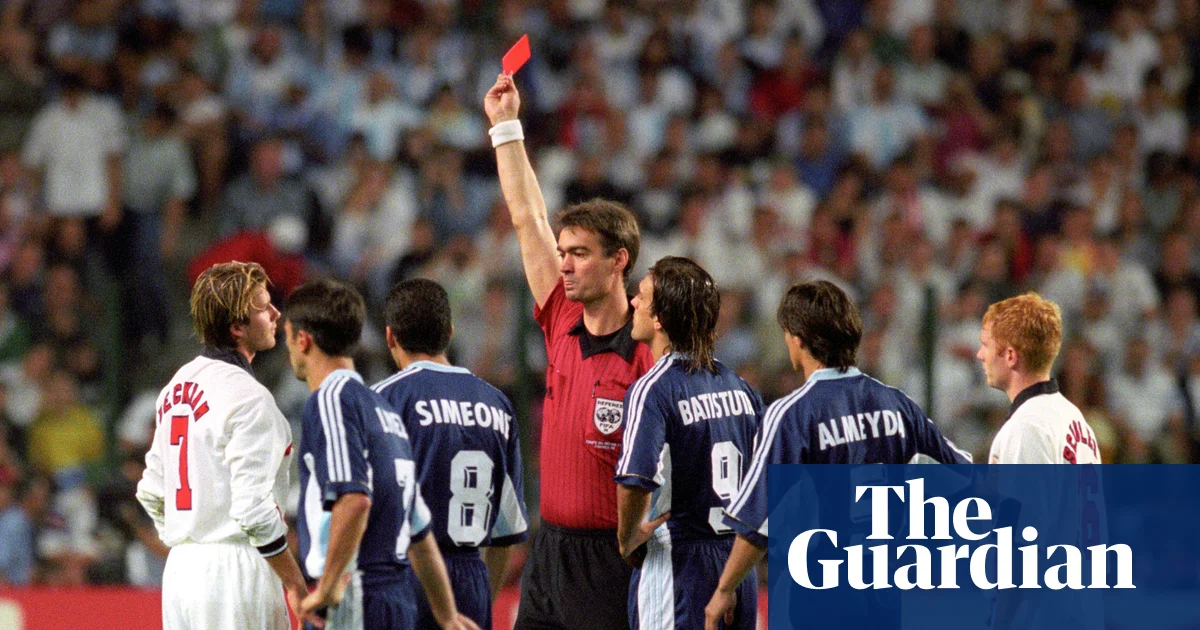
The infamous encounter in the Round of 16 during the 1998 World Cup sits prominently in Simeone’s memory. That match was the first World Cup appearance for both teams after the notorious Hand of God incident, and once again England found themselves outsmarted by Argentine tactics, particularly those orchestrated by Simeone himself. While Simeone acknowledged the brilliance of English players like Alan Shearer and Paul Ince, he viewed that match as one of the best he ever participated in.
The Fallout from Beckham’s Red Card
Simeone’s controversial role in Beckham’s red card sparked an immense media storm, with headlines in the British press painting Beckham as the villain. When reminded of the backlash, Simeone commented, “That’s too much,” recognizing the broader implications of the media narrative. He argued that the blame should not rest solely on Beckham, acknowledging the referee’s role in the situation and asserting that the unfortunate events may have been exaggerated.
Argentina’s Joyous Victory and Its Significance
The emotional weight of defeating England was palpable among Argentine players, as celebrated their victory with exuberance following the penalty shootout win. This triumph was special, especially given the historical animosities that have colored the rivalry. Simeone highlighted the importance of that victory, describing it as a source of great pride, given the complexities of their intertwined past.
A Shift in Power Dynamics: 2002 World Cup Redemption
In a dramatic twist, the 2002 World Cup saw England clinch a 1-0 victory over Argentina, with Beckham redeeming himself through a penalty kick. This time, Michael Owen played a pivotal role, earning the penalty after being fouled by Argentine defender Mauricio Pochettino. Pochettino, reflecting on the incident, humorously admitted that it was a dive, while Owen confessed that he could have avoided falling. Nevertheless, the match symbolized a shift in England’s approach to the game.
The Enduring Legacy of Maradona
No conversation about the England-Argentina rivalry is complete without mentioning Diego Maradona’s “Goal of the Century” during the 1986 World Cup. Simeone, then a young fan, vividly recalls witnessing Maradona’s brilliance alongside his father. He noted the cultural distinction in Argentina, where the game is less about strict regulations and more about artistry and creativity. In his view, dribbling past multiple players is the pinnacle of the sport.
Conclusion: A Rivalry That Continues to Evolve
As each World Cup approaches, the rivalry between England and Argentina remains a hot topic, evoking excitement and anticipation among fans and players alike. The blend of historic animosity, competitive spirit, and remarkable talent ensures that these encounters will continue to captivate audiences for years to come.
