


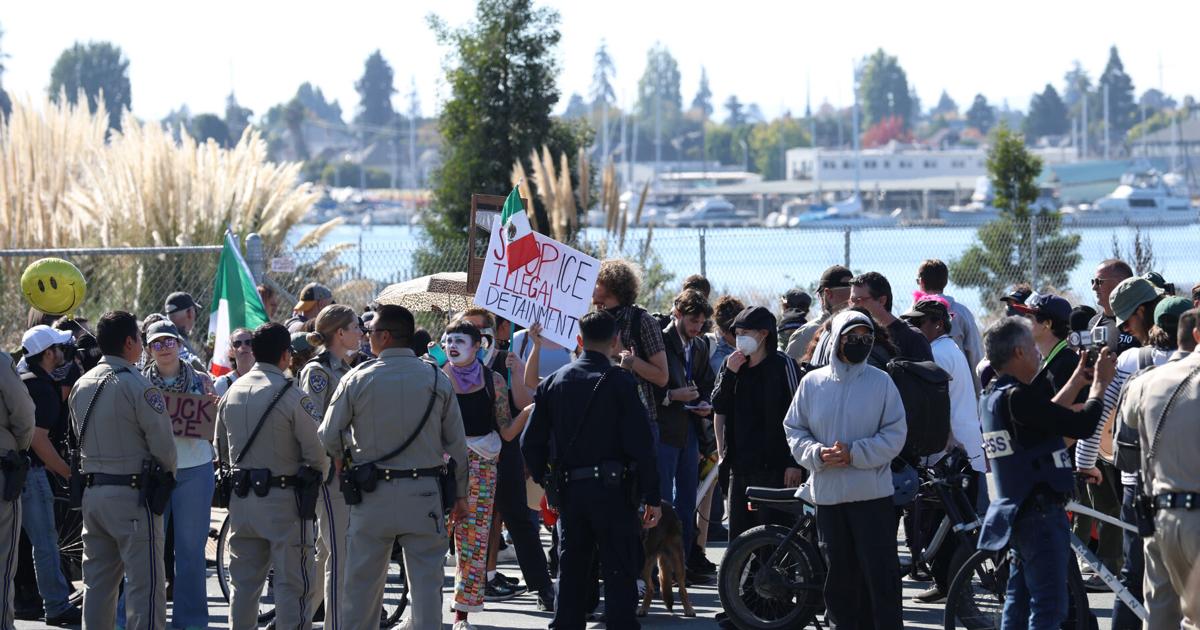
Widespread Misuse of Crowd-Control Weapons Revealed in New Report
Law enforcement and immigration officials have significantly misused crowd-control weapons, including chemical irritants, projectiles, and stun grenades, during protests against immigration enforcement nationwide, according to a recent report issued by the Berkeley Center for Human Rights in collaboration with Physicians for Human Rights.
Analyzing open-source data, including social media activity from 16 U.S. cities between June 2025 and May 2026, researchers identified and confirmed 412 incidents of misuse, resulting in 203 injuries. Notably, 90% of these incidents were concentrated in five major cities: Chicago, Los Angeles, Minneapolis, Newark, and Portland—all of which have seen federal immigration crackdowns that have triggered public protests.
The Berkeley City Council is expected to convene in September to discuss whether to lift restrictions on tear gas usage, following a postponed vote from the previous week. These restrictions were implemented as a health precaution during the COVID-19 pandemic. However, 1st Ward Council Member Rashi Kesarwani has proposed removing the ban to permit the Berkeley Police Department’s special response team to use tear gas in potentially dangerous situations.
Alexa Koenig, director of the Berkeley Human Rights Center Research Laboratory, emphasized that the report highlights the need for local officials to consider the implications of using tear gas and other chemical weapons. She noted that the findings could guide policymakers and law enforcement agencies to implement better training and protocols to prevent misuse of these weapons.
Koenig stressed the importance of acknowledging the report’s findings. She stated that the empirical data presents a clear warning of how misuse of crowd-control weapons can have dire consequences as local governments navigate their policies regarding such tools.
The report revealed a concerning trend: aside from the incidents in Los Angeles, most verified cases of misuse were traced back to the Department of Homeland Security. Injuries reported in these incidents include shrapnel wounds, brain injuries, fractures, and lacerations. In some severe instances, individuals have suffered permanent disabilities, such as hearing loss or partial amputation of limbs.
The research identified three categories of misuse: targeting vulnerable groups, assaulting protected professionals, and misusing weapons contrary to manufacturers’ guidelines or police protocols. Notably, nearly half of all incidents involved vulnerable or protected groups, while 43% of incidents involved journalists, and smaller percentages affected minors and legal observers. The high number of attacks on journalists underscores their role in documenting protests and reporting on incidents of police violence.
Koenig indicated that the 412 verified cases likely represent only a fraction of the actual incidents, as many individuals fear retaliation and hesitate to report their experiences online or to the media. She also mentioned ongoing investigations into factors contributing to the prevalence of misuse, suggesting that federal policies and inadequate training for law enforcement may play critical roles.
Koenig warned that this report merely scratches the surface of the broader issue, particularly as the country approaches a politically charged election. She urged stakeholders to proactively address and minimize violence at future protests to protect individuals’ rights and well-being.
