


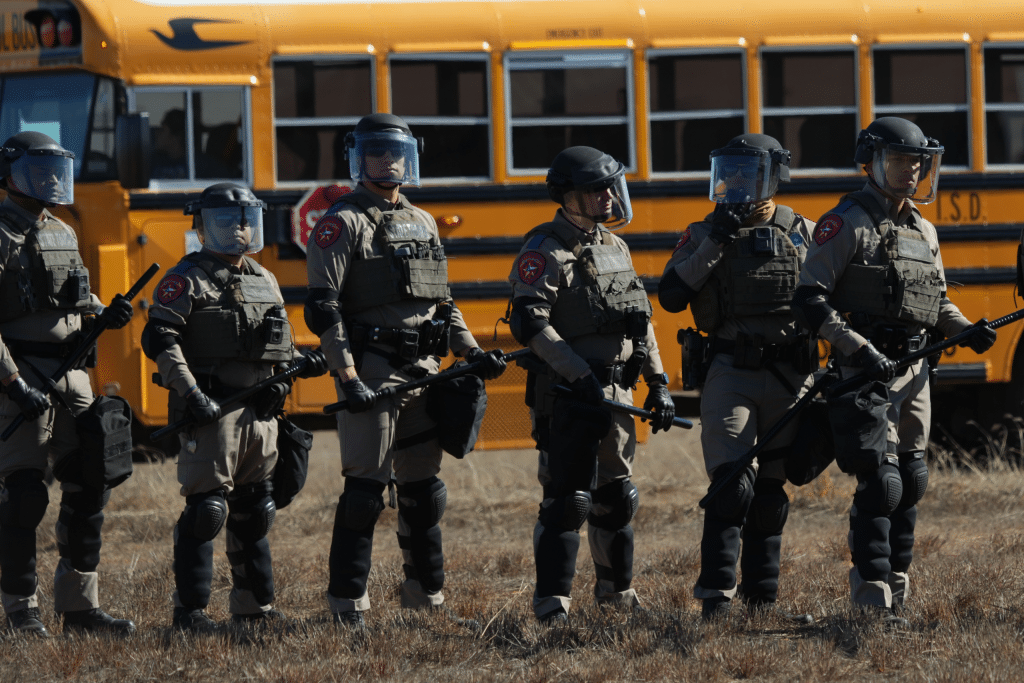
Credit: Eric Gay/AP Photo
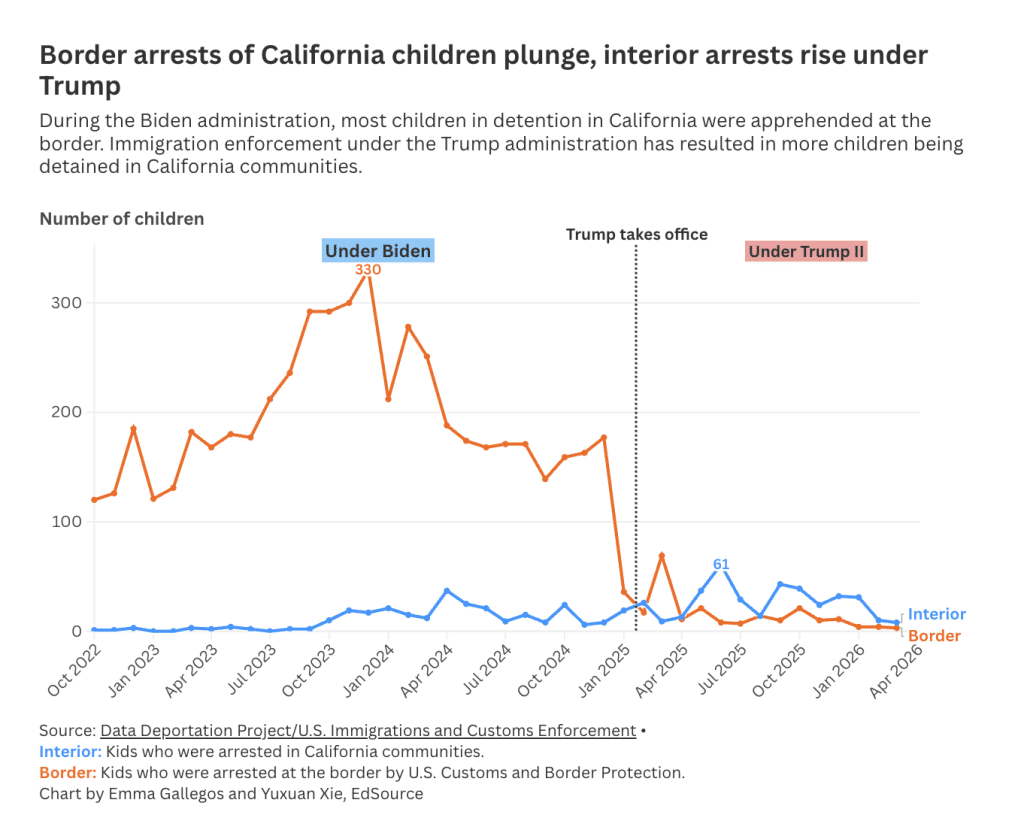
U.S. Immigration and Customs Enforcement (ICE) has detained over 650 children in California during President Donald Trump’s second term, according to an analysis of federal data by EdSource. Most of these arrests occurred within California’s communities rather than at the border, impacting minors who live and attend school in the state.
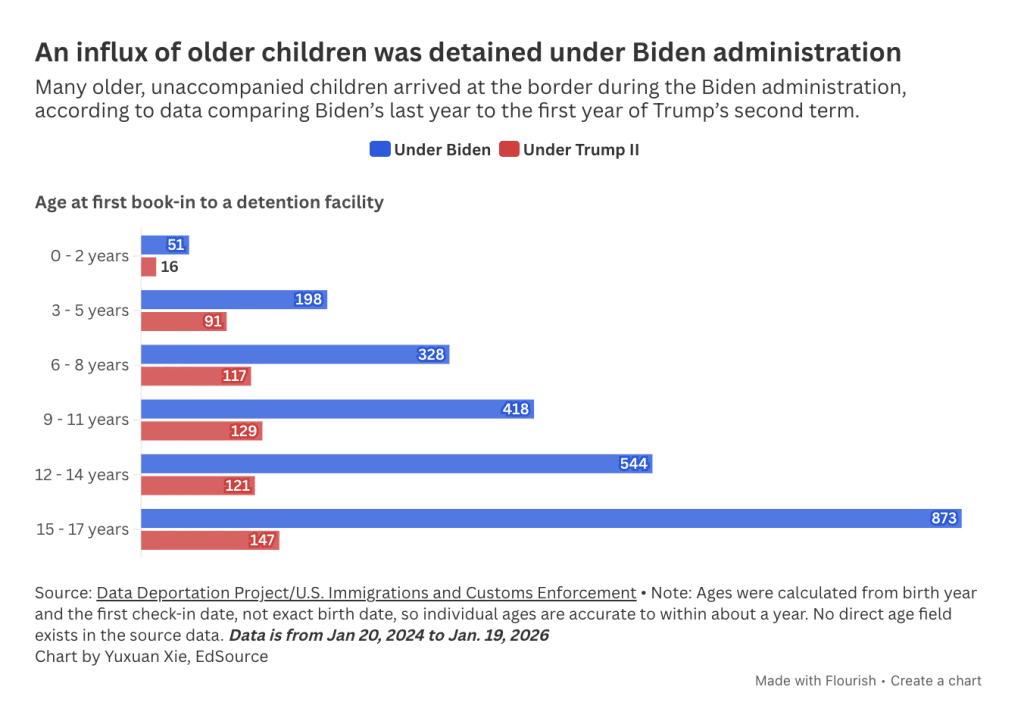
The analysis reveals a startling 90% increase in child detentions in interior states during the first year of Trump’s administration, compared to the Biden administration’s last year. Notably, more than 100 of the detained children were under the age of five.
The surge in child detentions across the U.S. began shortly after President Trump assumed office in January 2025. His administration campaigned on promises of mass deportations, vowing to remove “illegal immigrant criminals, rapists, and drug traffickers” from American streets.
ICE agents escalated enforcement actions throughout 2025, launching large-scale operations in areas with significant immigrant populations. Some children have been detained while accompanying their parents to routine ICE check-ins, raising concerns from state education officials who argue that such practices keep vulnerable students from accessing their education.
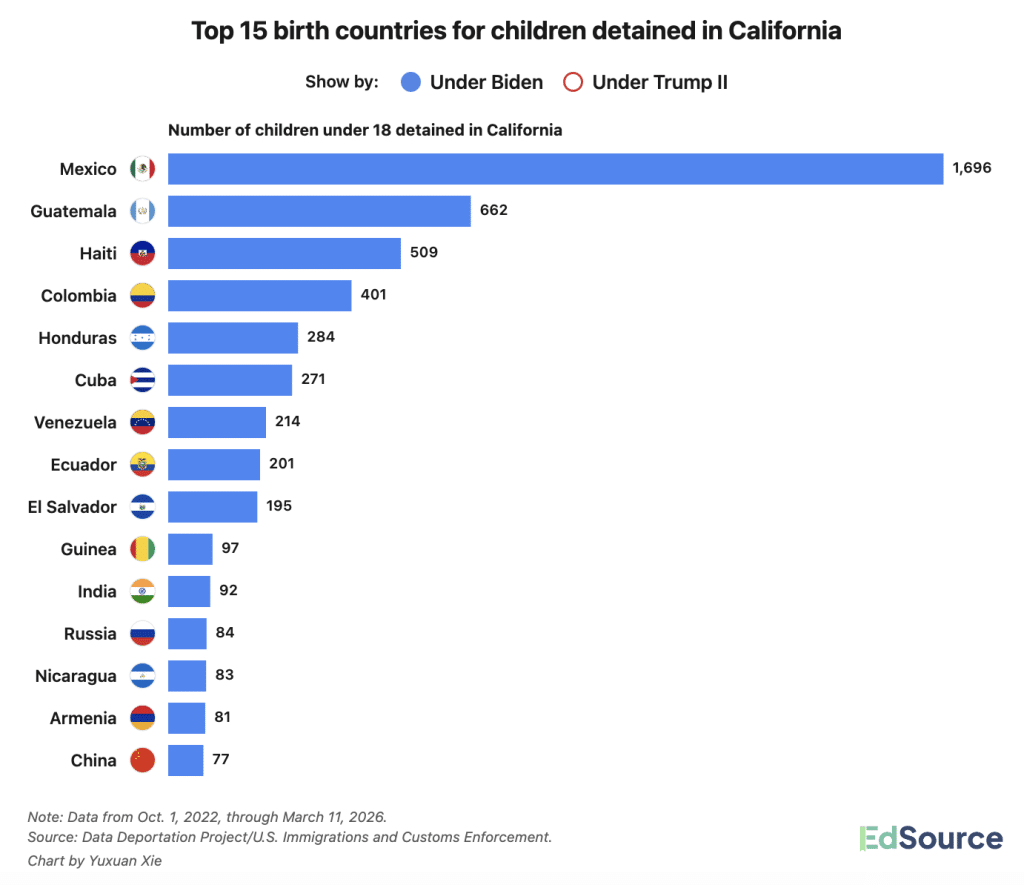
Among the detained children is a 17-year-old honor student from Los Angeles County, who was apprehended in June 2025 and subsequently deported to Guatemala. A 9-year-old boy from Torrance and his father were detained and deported to Honduras during the same month. Additionally, a 6-year-old deaf student was sent back to Colombia without access to her hearing aids, alongside her mother and younger brother, in March.
Experts in child health and advocates strongly condemn any period of detention for minors. A 2016 advisory committee from the Department of Homeland Security recommended the end of family detention, stating that “detention is never in the best interests of children.”
Wendy Cervantes, who oversees research and advocacy for immigrant families at the Center for Law and Social Policy, emphasized the developmental toll on children detained in such facilities, stating that they are losing significant parts of their childhood during their confinement.
A spokesperson for the Department of Homeland Security (DHS) criticized the analysis, claiming the figures were “selected” to “propagate false narratives.” ICE also asserted that children are not specific targets. According to an unnamed DHS spokesperson, parents have the option of being removed with their children; should they decline, ICE claims to place the children with a designated safe individual.

Click to open the full interactive version.
Analysis of Detention Data
The federal detention data, acquired through the University of California, Berkeley and the UCLA Deportation Data Project, indicates that 666 California children were detained under Trump’s administration, with 408 of them, or 61%, facing deportation. In stark contrast, only 8% were deported during the Biden administration. Nationally, children experienced longer detention lengths under Trump—an average of eight days compared to just one day under Biden. As of March 11, 335 children were still in custody.
According to a DHS spokesperson, the Trump administration has focused on apprehending “the worst of the worst,” including individuals with serious criminal backgrounds. However, EdSource’s analysis found that none of the 666 detained children from California had felony or criminal records. Only twelve minors faced pending charges, with limited information regarding the nature of those charges.
During his second term, President Trump reopened family detention facilities, such as the South Texas Family Residential Center and the Karnes County Immigration Processing Center in Texas, resulting in approximately 250 detained children in these facilities in California.
A 12-year-old boy from Los Angeles, identified only by his initials GS, testified in federal court about his family’s 64-day detention at the South Texas Family Residential Center. He described how they were apprehended during a routine check-in in Los Angeles, resulting in loss of their apartment and belongings.
“I feel hopeless being here for so long because it will take a long time for me and my entire family to get back to normal because of the money and education we have lost,” he conveyed in his court declaration. “If I could change one thing here, it would be to close down the entire facility.”
Comparing Trump and Biden Policies
A key difference between the Trump and Biden administrations lies in the number of children apprehended at the border. From October 2022 to the start of Trump’s second term, 94% of the 5,676 children detained in California were captured at the border.
Cervantes noted that the Biden administration has aimed at placing unaccompanied minors with sponsors upon arrival, effectively abolishing the family detention practice reinstated under Trump. This policy aligns with the Flores Settlement Agreement of 1997, which protects immigrant children and limits the duration of detention to no more than 20 days.
In court arguments regarding compliance with the Flores Agreement, lawyers for the Trump administration claimed that conditions in detention facilities had “dramatically improved.” They also contended that the high number of migrants at the border necessitated such measures, alleging that the agreement hinders the government’s capacity to manage the ongoing immigration crisis.
In Trump’s second term, adult detention rates in California’s interior are reported to be more than four times higher than during the last year of Biden’s administration. Meanwhile, child detentions surged by 90%. To combat such trends, California has enacted laws to safeguard educational environments from federal immigration enforcement, preventing ICE agents from entering schools without a judicial warrant.
Communities across California are forming rapid response networks to alert families and children about ICE sightings, helping them navigate potential risks on their daily commutes. While some operations may more frequently target adults, it’s important to note that young people, including those working part-time in seasonal positions, are not exempt from apprehension.
Health professionals warn that any duration of detention poses significant risks to children’s well-being. Shortly after Trump’s second term began, an open letter was sent to him and the DHS Secretary, expressing deep concerns regarding the detrimental health effects of detention on minors. Michelle Branet, the former immigration detention ombudsman under Biden, emphasized the psychological toll of detention, noting severe regressions in behavior among detained children.
EdSource reporter Zaidee Stavely and data journalist Daniel J. Willis contributed to this article.
This story was originally published by EdSource and is republished here with permission.
