


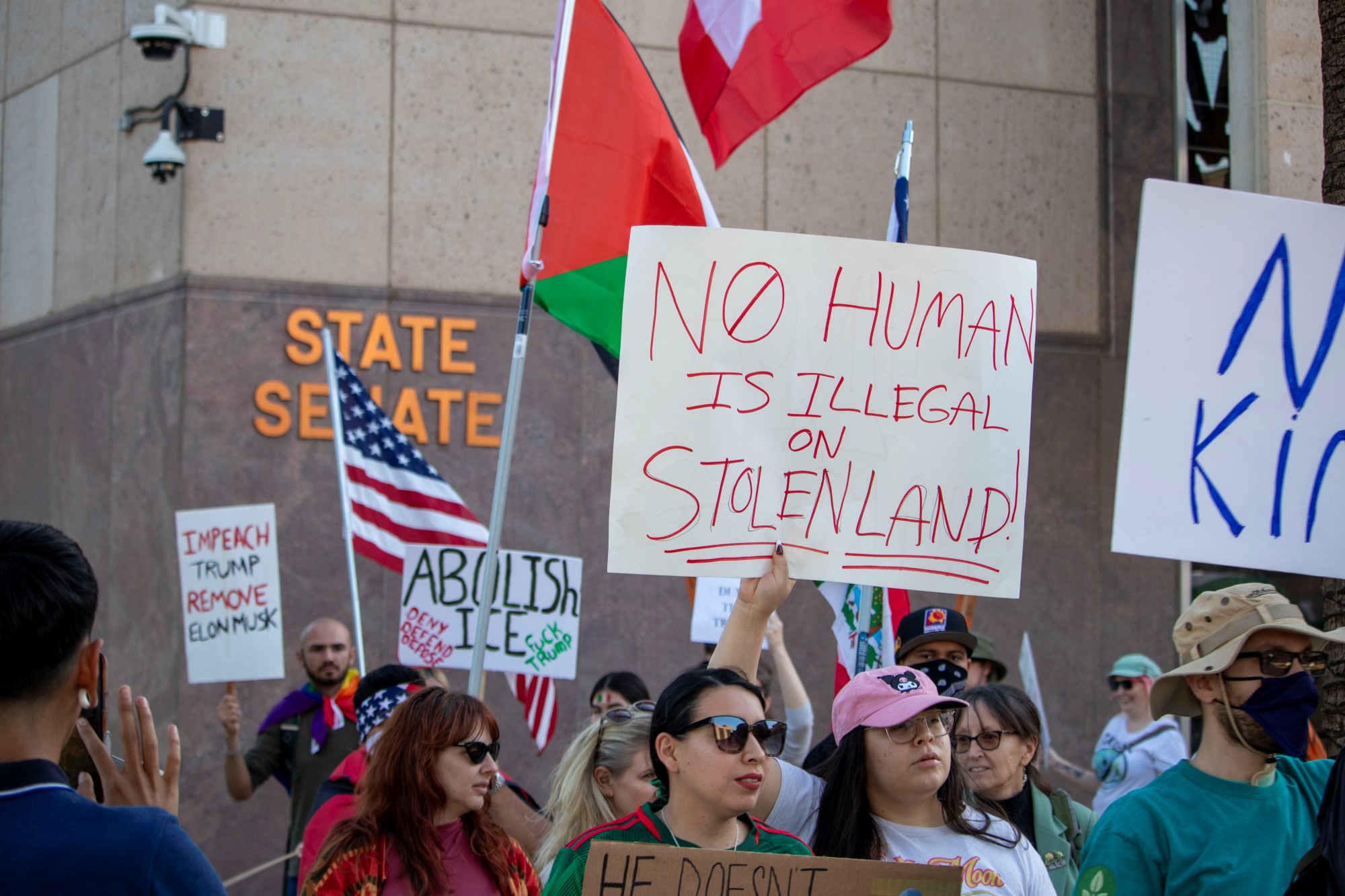
Republican Leaders and Attorney General Unite in Immigration Enforcement Lawsuit
Republican legislative leaders in Arizona have joined forces with Attorney General Chris Mays in a legal battle over the state’s immigration enforcement authority. They are defending a controversial 2024 law that empowers state judges to issue deportation orders and grants local police the authority to arrest immigrants.
Legal Challenge Poses Threat to Arizona’s Immigration Law
Last week, the Florence Immigrant and Refugee Rights Project, which provides legal aid to individuals facing deportation, filed a lawsuit against the proposed measure. The law includes a contentious provision that would classify crossing Arizona’s southern border at locations other than an official port of entry as a state crime, subjecting offenders to fines and possible incarceration.
Enactment Delay Until Similar Law Takes Effect in Texas
In anticipation of legal obstacles, the Republican lawmakers who drafted the ballot measure placed a hold on its enactment, delaying it until 60 days after a similar law was enacted in Texas. A recent ruling by a federal appeals court has reinstated the Texas law as of May 15, which means Arizona’s measure could come into force as early as July 14, according to attorneys for immigrant rights organizations.
Legal Hearing Scheduled Amid Uncertainty
A hearing regarding the potential blockage of the law while litigation is pending is scheduled for July 24. However, questions remain about whether the law is enforceable in the interim. A spokesperson for Attorney General Mays, Richie Taylor, refrained from commenting on the law’s current applicability.
Constitutional Arguments Planned by Arizona Officials
Attorneys representing the Florence Immigrant and Refugee Rights Project contend that the Arizona law violates the U.S. Constitution’s Supremacy Clause, which prioritizes federal law over state law. In response, Mays, along with Arizona Senate President Warren Petersen and House Speaker Stephen Montenegro, is preparing a defense arguing for the law’s constitutional validity.
Concern Over Attorney General’s Commitment
Petersen and Montenegro, who were instrumental in the creation and passage of Proposition 314, have sought permission to intervene in the case. They have expressed skepticism about Mays’ ability to defend the law adequately, citing her previous reluctance to support policies she opposes. A motion filed by attorney Brun W. Roysden III articulated this concern, highlighting Mays’ past criticisms of the law.
Historical Context of Arizona’s Immigration Laws
During debates over the voting bill, Mays referred to it as a “political distraction” and cautioned that it might overburden local law enforcement agencies while facilitating discriminatory practices. She compared it to the notorious SB1070, passed 14 years ago, which aimed to penalize unauthorized immigrants. That law was ultimately struck down by the U.S. Supreme Court in 2012 for infringing upon federal enforcement authority.
Commitment to Defense Despite Political Differences
Despite Mays’ criticism, Taylor asserted that she is “well prepared” to defend the law, which received 61% voter approval in the 2024 elections. He dismissed concerns from Petersen and Montenegro, arguing that Mays’ prior stances would not impede her ability to fulfill her legal responsibilities. “Warren Petersen and Steve Montenegro may not understand the distinction between policy disagreements and the attorney general’s obligation to defend the law in court,” Taylor stated in a written response.
