


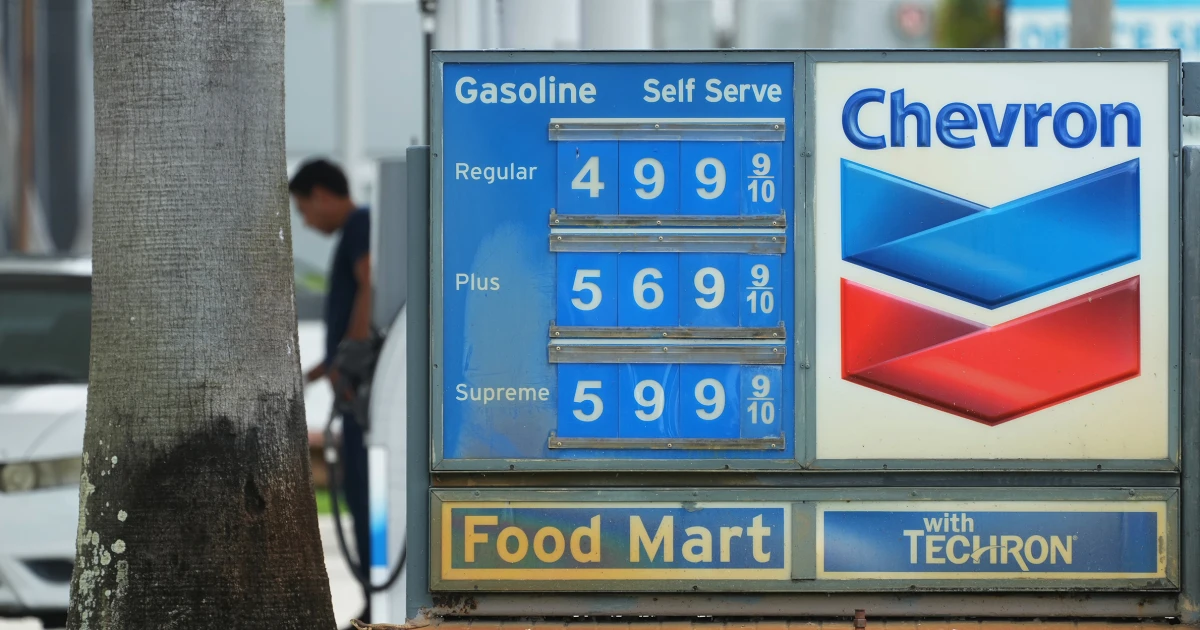
National Gasoline Prices Surpass $4 Amid Geopolitical Tensions
The national average price of regular gasoline has once again exceeded $4 per gallon, marking a significant disruption in energy markets linked to the ongoing conflicts involving Iran, Ukraine, and Russia.
This is the first occasion since June 17 that the national average has been above this critical threshold. On Friday, U.S. crude oil closed at $82.49 per barrel, while international Brent crude oil settled at $88.10.
After experiencing a decline in recent weeks, where prices dipped to as low as $3.79 on July 7 and 8, gasoline prices have been on the rise again over the past fortnight. This upward trend can be attributed to escalating attacks between the United States and Iran over the strategically vital Strait of Hormuz.
Crude oil prices have risen for the second consecutive week, with both U.S. and international Brent crude experiencing increases of over 15% in the past week alone. Over the last two weeks, prices have surged by more than 20% as tensions sharpen.
The climb in oil prices can be traced back to the U.S. withdrawal of sanctions exemptions for Iranian oil on July 7. The following day, President Donald Trump declared the ceasefire with Iran to be “over,” prompting further volatility in the market.
Days later, prices saw another spike after Trump indicated plans to “reopen the blockade of Iran” within the Strait of Hormuz, a significant international shipping route. The U.S. military described this blockade as targeting vessels entering or leaving Iranian ports.
Amid this climate of uncertainty, President Trump announced intentions to seek a “20% refund” on all shipments, a move quickly condemned by shipping companies and the International Maritime Organization as a breach of international law. Despite these developments, oil prices continued to soar due to almost daily U.S. attacks on Iran and subsequent retaliations.
The ongoing struggle for control over the Strait of Hormuz, through which 20% of the world’s energy supplies typically transit, has drawn significant attention. Natasha Kaneva, a commodity analyst at JPMorgan Chase, noted that rather than pursuing a full shutdown, the Iranian government seems focused on establishing authority over navigation through mandatory transit protocols and fees.
Ship traffic through the strait has also been affected, with the MarineTraffic and Kpler data indicating a drop last week to its lowest levels in three weeks. Just eight vessels crossed the waterway on Thursday, a stark contrast to the pre-war average of 130 vessels daily.
The Russia-Ukraine conflict has further exacerbated the situation, as highlighted by HSBC commodity analysts. On July 8, Russia, the world’s second-largest exporter of diesel, imposed a ban on key refined product exports until the end of July following a decline in Ukraine’s refining capacity amid escalating energy infrastructure attacks. This restriction adds pressure to already strained gasoline and jet fuel supplies.
Since the year’s beginning, prices for both U.S. crude oil and Brent crude have risen by approximately 45%. In the midst of this trend, Russia has been attempting to import its own diesel, intensifying the supply-demand imbalance in the global market. Jet fuel prices have also seen a resurgence, climbing nearly 43% from $2.50 per gallon earlier in the year to approximately $3.57 per gallon, according to the Argus US Jet Fuel Index.
