


Goodluck Jonathan Reflects on Risky Peace Negotiations in Niger Delta
Former President Goodluck Jonathan recently recounted the high-stakes decision he made to enter a militant camp in the Niger Delta without armed security, characterizing it as a pivotal moment in the quest for stability in Nigeria’s oil-rich region.
Jonathan’s journey in the oil sector began in his youth, when he observed the establishment of oil facilities in what is now Bayelsa State. This early exposure to the industry influenced his later career, which transitioned from academia to environmental management; he engaged in scientific research focused on the impacts of oil exploration in the Niger Delta.
These insights were shared during his address at the De Mangrove Conversation, hosted at the NCDMB Conference Hall in Yenagoa. The event was a collaborative effort featuring the Bayelsa State Government, the Niger Delta Development Commission, the Nigeria Content Development and Monitoring Commission, Renaissance Africa Energy, and the Goodluck Jonathan Foundation.
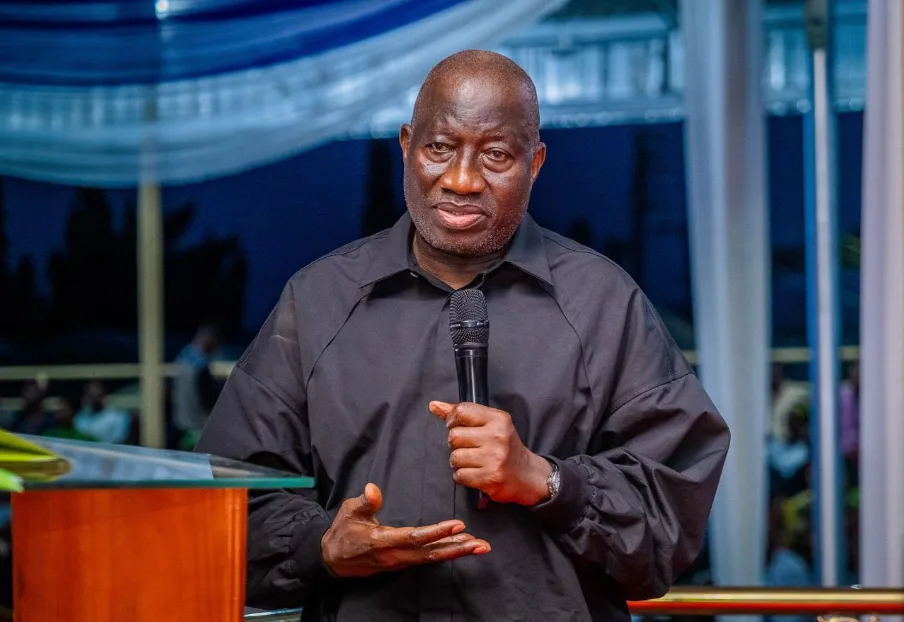
Drawing upon his unique experiences as a scientist, governor, vice president, and president, Jonathan emphasized the complex challenges facing the region. He vividly recalled leading negotiations with militants during his time as vice president and insisted on visiting their camp without an armed escort, despite significant concerns from security officials.
He stated that this bold choice played a crucial role in fostering trust and enabling dialogue that would be instrumental in the peace process and the implementation of the Niger Delta Amnesty Program. Emphasizing the need for prioritizing the development of the region, Jonathan pointed out that lasting peace hinges on addressing the environmental degradation and longstanding neglect it has endured.
Jonathan detailed his commitment to peace during his vice presidency, recounting how he negotiated access to militant camps, including the well-known Camp No. 1. He shared how, upon arriving at the waterfront in Warri, the militants communicated their conditions for a peaceful reception, necessitating the absence of armed personnel.
Despite objections from security officials, he resolutely proceeded with only his Chief Security Officer and Assistant Detail Officer. He instructed them to relinquish their weapons to the local police and security services, reinforcing his commitment by stating that they would reclaim their guns only if they returned safely. This strategic move ensured that he was received by the militants amid a tense atmosphere.
During a negotiation that spanned approximately an hour and a half, Jonathan successfully engaged with the militants, leading to the establishment of an enduring amnesty for them—an initiative that has had significant implications for peace in the Niger Delta. Reflecting on these events, he noted that these initial discussions catalyzed the region’s movement toward stability and development.
