


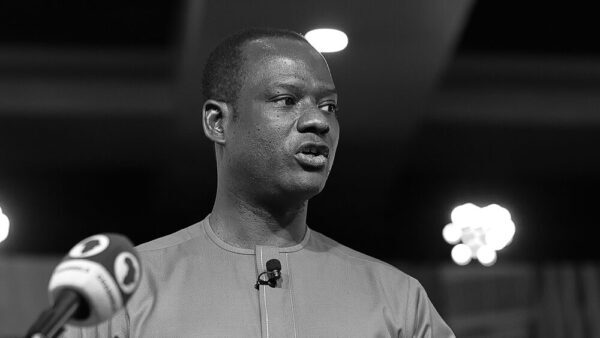
Nigerian Finance Minister Addresses Rising Public Debt Concerns
Taiwo Oyedele, Nigeria’s Minister of Finance and Coordinating Minister for Economic Affairs, clarified that the country’s escalating public debt is primarily a result of exchange rate depreciation and accounting adjustments, rather than extensive new borrowing by the current administration.
During a Senate Finance Committee briefing on Monday, Oyedele responded to inquiries from congressional members regarding the soaring national debt. His comments were particularly prompted by a statement from Senator Adamu Aliero, who cited claims that President Bola Tinubu’s government had borrowed around 80 trillion naira, adding to an inherited public debt of approximately 75 trillion naira.
Oyedele emphasized the importance of contextualizing the debt figures, cautioning against simply comparing the debt from the start of the administration to current levels without recognizing the impact of the naira’s devaluation. He stated, “When this government took office, the public debt was around 75 trillion naira. Many people compare this with today’s outstanding debt, erroneously concluding that substantial new borrowing has occurred.”
Impact of Exchange Rate on Debt Valuation
The minister elaborated that because Nigeria reports its public debt in naira, the depreciation of the local currency has artificially inflated the naira value of external debt. He noted that the value of public debt alone has risen by over 40 trillion naira due to exchange rate fluctuations.
Additionally, Oyedele explained that another significant contributor to the rising debt figures is the securitization of revenue advances from previous administrations, which received parliamentary approval. About 33 trillion naira of pre-existing debt has now been officially registered, which the minister stressed should not be viewed as new borrowing.
“These factors are often overlooked, resulting in a misperception that our public debt is considerably higher than it actually is,” he remarked. Oyedele also mentioned that a large portion of the government’s domestic borrowing is allocated to refinancing maturing debt rather than incurring new debt.
Prudent Borrowing Strategy Emphasized
The minister clarified that refinancing involves replacing existing debt to meet repayment obligations, which should not be misconstrued as an increase in debt level. He reiterated that the Tinubu administration is committed to a balanced borrowing strategy focused on financing infrastructure projects, fostering long-term economic growth, and ensuring debt remains at sustainable levels.
Oyelede stated, “We think of debt as leverage. Each borrowed naira or dollar is expected to generate more value than the amount borrowed.” This strategic approach aims to alleviate concerns over rising public debt while supporting essential development initiatives.
Concerns Over Budget Implementation
In addition to discussions of public debt, senators expressed their frustrations regarding delays in executing the capital component of the 2026 budget. Senate Majority Whip Tahir Monguno and Senator Aliero stressed the urgency in accelerating project execution to ensure economic progress.
In a subsequent closed-door session with ministers and the economic management team, Senate Finance Committee Chairman Sani Musa assured lawmakers that the government is taking steps to enhance budget performance. He indicated that both the Executive and Parliament are studying the current budgeting framework to optimize results and prioritize impactful projects.
Moreover, Musa mentioned the potential shift to a results- and priorities-based budgeting system and reforms in contractor payment processes to enhance project delivery and overall fiscal accountability. The rapid increase in Nigeria’s public debt reflects a complex interplay of fiscal deficits, currency fluctuations, and the formal acknowledgment of previously outstanding debts.
Debt Management Amid Market Liberalization
Following the liberalization of the foreign exchange market in 2023, the naira has depreciated sharply against major currencies, further inflating the external debt’s naira value even without significant new borrowings. The federal government continues to assert that its borrowing strategy is designed to finance essential infrastructure, support economic reforms, improve revenue collection, and maintain sustainable debt levels.
This strategy remains under scrutiny as lawmakers and economic analysts keep a close watch on the nation’s fiscal landscape, evaluating debt service obligations and the ongoing implementation of the budget.
