


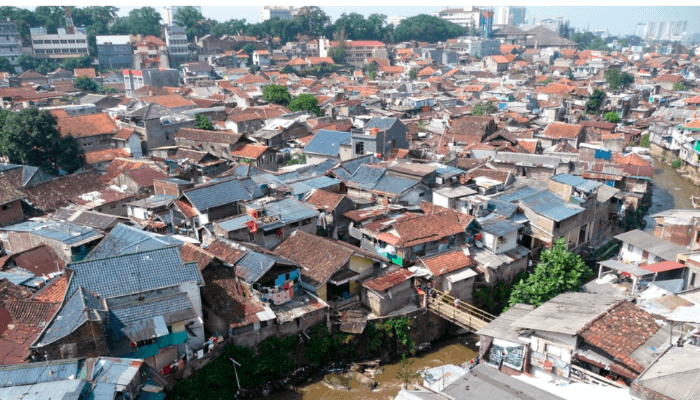
Global Informality: A Barrier to Economic Mobility
Elena Panaritis, an institutional economist and global policy advocate, has highlighted the struggles faced by nearly 70 percent of the world’s population living in informal settlements. This situation perpetuates a cycle of poverty, homelessness, insecurity, and economic exclusion, posing significant threats not only to developing nations but also to the global middle class.
Documentary Spotlight on Economic Realities
Her remarks were delivered at a private screening in Lagos for the international documentary “70 Percent Informal,” which seeks to expose the human and economic repercussions of global informality. Panaritis emphasized that countless individuals lack formal property rights, legal status, and access to economic opportunities, leaving families vulnerable to slums, child labor, and severe hardship. She asserted that informality is seldom a choice, but rather a circumstance many are born into due to inadequate governmental structures.
The Growing Impact on the Middle Class
“Informal practices are disrupting the stability of the middle class,” Panaritis stated. “It’s unfortunate to see families without basic shelter and children forced into labor. Policymakers often lack the necessary tools to address these issues, as they overlook the underlying causes of informality.” She underscored that being born into such environments is not a matter of choice.
Missteps in Government Response
Panaritis critiqued the government’s approach to the crisis, arguing that it typically fixes its gaze on the housing shortage without addressing critical institutional flaws that hinder land ownership and formal property rights. She pointed out that Nigeria is grappling with an estimated shortage of over 28 million housing units, compounded by a growing distrust and lack of dignity among its citizens.
Rethinking Solutions for Informality
“Evicting people from slums will not resolve the slum problem,” she cautioned. “Establishing land rights is crucial for empowering individuals towards prosperity. For example, China’s investment in rural infrastructure and granting land rights drastically transformed its economic landscape.” Panaritis raised concerns over an emerging system dominated by a privileged minority controlling land and assets while excluding millions from wealth creation, warning that only 20 percent currently have land rights.
Successful Property Rights Reforms as a Model
Panaritis cited Peru as a successful case study of how property rights reform can alleviate poverty and stimulate economic growth. She noted that restoring formal rights and streamlining property systems enabled low-income citizens to transition into the middle class while significantly reducing poverty levels over time.
Addressing Institutional Bottlenecks
“A pragmatic solution lies in conducting a reality check analysis,” Panaritis explained, referring to identifying and removing bottlenecks in the institutional framework. Ending informality cannot be accomplished through superficial policies; it necessitates an in-depth understanding of the systemic complexities at play. Simplifying access to land titles can facilitate large-scale private investments and promote public-private partnerships for housing projects targeting low-income individuals.”
Urgency for Systemic Reforms in Nigeria
Lanre Coker also highlighted the pressing issue of rising urban poverty in Nigeria, attributing it to years of poor institutional planning and an exclusionary economic framework. He warned that without reforms to integrate informal communities into the formal economy, poverty and insecurity will only escalate. Coker emphasized the need for land administration reform, improved infrastructure, and easier access to legal documents to address the nation’s housing and economic challenges effectively.
