


Challenges in Containing the Ebola Outbreak in the Democratic Republic of the Congo
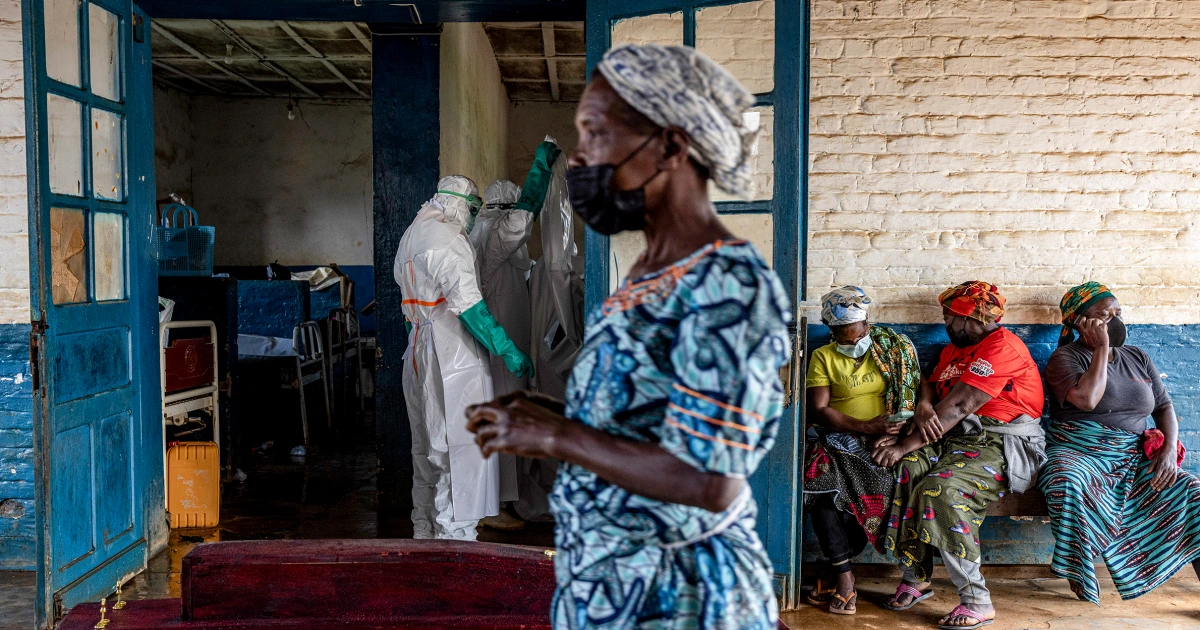
The Democratic Republic of the Congo is currently grappling with an escalating Ebola outbreak. Rose Chwenko, the country’s director for the humanitarian organization Mercy Corps, recalls that one of the initial cases involved a health worker whose family opted to care for him at home rather than seek hospital treatment.
Chwenko noted that the family’s first instinct was to connect the illness to traditional beliefs or witchcraft, highlighting the cultural factors that complicate healthcare responses. This case was managed almost entirely within the family, involving caregivers, religious leaders, and community figures, which ultimately may have contributed to the spread of the virus.
Tragically, the patient succumbed to the disease and was buried according to traditional practices, further risking viral transmission. His wife, who cared for him, also became infected. “Unfortunately, misinformation persists surrounding Ebola,” Chwenko stated, emphasizing the need for community education to dispel myths about the virus and address concerns about humanitarian organizations.
The situation intensified when, on Thursday, protests erupted in the town of Rwanpara over restrictions on retrieving bodies for burial. Bodies can remain contagious for several days after death, making traditional funeral practices a significant factor in the spread of infection.
As of Friday, the World Health Organization reported 750 confirmed infections and 177 fatalities due to what is now the 17th outbreak of Ebola in Congo. This outbreak has exceeded expectations, as it continues to spiral out of control, compounded by misinformation and stigma surrounding humanitarian efforts. Kai Lu, president of the International Medical Corps, expressed concern that this could potentially become the worst outbreak to date.
Unlike previous outbreaks that were swiftly identified, this one appears to have gone undetected for weeks. Standard Ebola tests initially returned negative results, even for patients who later died from the virus. Alan Gonzalez, director of operations for Médecins Sans Frontières, explained that the tests failed to identify a rare strain known as Bundibugyo, which has been confirmed by the WHO as the cause of the outbreak. Due to this oversight, the medical community is scrambling to catch up.
Currently, tests are being sent to a laboratory in Kinshasa, causing delayed diagnoses that hinder timely interventions. As an emergency response, suspected cases are now isolated, regardless of test outcomes. Unfortunately, there is no vaccine or established treatment for Bundibugyo, leaving medical professionals with limited options to curb the infection chain.
Efforts to establish treatment centers and testing units are urgent, especially with increasing case numbers. The US State Department announced an initial $23 million in aid for response measures. This funding will support the activities of the International Medical Corps as they deploy rapid response teams and begin constructing new facilities in impacted regions.
However, logistical challenges persist, particularly in areas affected by conflict. The epidemic zone is marred by instability, with many regions controlled by armed groups, complicating access for medical teams. Greg Lamb, country director for Save the Children, noted diminished humanitarian aid this year compared to previous years, exacerbating the crisis as essential supplies become scarce.
