


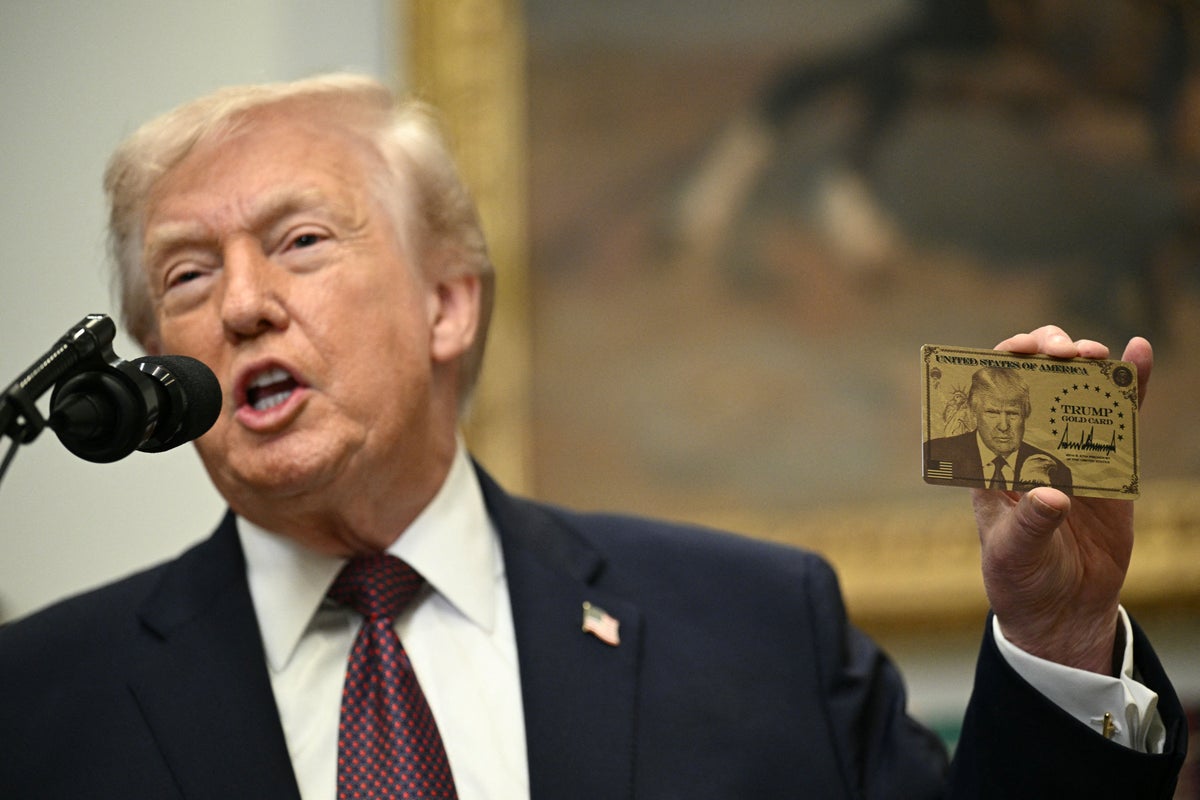
Donald Trump’s “gold card” visa program has struggled to gain traction, with only a handful of applications submitted in recent months. Immigration lawyers are increasingly cautioning potential applicants against pursuing this initiative.
The Washington Post reported that several immigration attorneys, particularly those specializing in high-net-worth clients, are advising against participation in the program. Many are opting to decline representation for clients interested in applying. This sentiment includes Michael Wildes, the attorney who facilitated First Lady Melania Trump’s entry to the United States in 1996 under an H-1B visa.
Wildes and other legal experts have expressed concerns that the program lacks a solid legal foundation, stating that it would be unethical to assist clients in submitting applications. They highlight that the gold card initiative does not stem from Congressional legislation that would authorize a new visa category; rather, it leverages existing visa classes, raising questions about its viability.
The Trump administration has already faced legal challenges, including a lawsuit by the American Association of University Professors, contesting the Gold Card program’s legitimacy. Critics assert that the plan infringes upon existing visa statutes, potentially rendering it illegal.
The “gold card” program allows successful applicants to sidestep certain eligibility criteria for the E-B1 and E-B2 visa categories in exchange for a $1 million investment in the U.S. government. Under current U.S. immigration law, visa applications must be processed sequentially within annual limits, which complicates the implementation of this program.
As President Trump’s administration simultaneously intensifies efforts to deport undocumented immigrants, his pursuit of affluent newcomers to the U.S. stands in stark contrast. Recently, a high-profile immigration enforcement operation in Minneapolis resulted in civilian casualties, underscoring the administration’s confrontational approach to immigration policy.
According to a recent court filing, fewer than 60 individuals have submitted applications to the Department of Homeland Security since the program’s inception in June of last year. Alarmingly, only one visa has been granted to date, with the identity of the recipient remaining undisclosed. One DHS official noted in a memorandum that the volume of applications for the Gold Card initiative is notably low.
The Trump administration launched the gold card program with promises of expedited legal residency for applicants who successfully pass a background check and pay substantial fees, including a $15,000 initial charge alongside the $1 million government contribution. Trump has voiced his intentions for the program, asserting it aims to retain international talent who must otherwise leave the country upon completing their studies.
In recent comments, Trump emphasized the unnecessary loss of skilled individuals, suggesting that businesses would benefit from such talent remaining in the U.S. Meanwhile, Commerce Secretary Howard Lutnick claimed in April that extensive interest in the program exists, insisting that it had undergone thorough scrutiny.
Nonetheless, immigration legal authorities remain skeptical, emphasizing that without Congressional endorsement, the program’s legal standing is tenuous. George Fishman, a former Homeland Security official, echoed this sentiment, indicating significant doubts regarding the administration’s ability to operationalize the program without legislative approval.
