


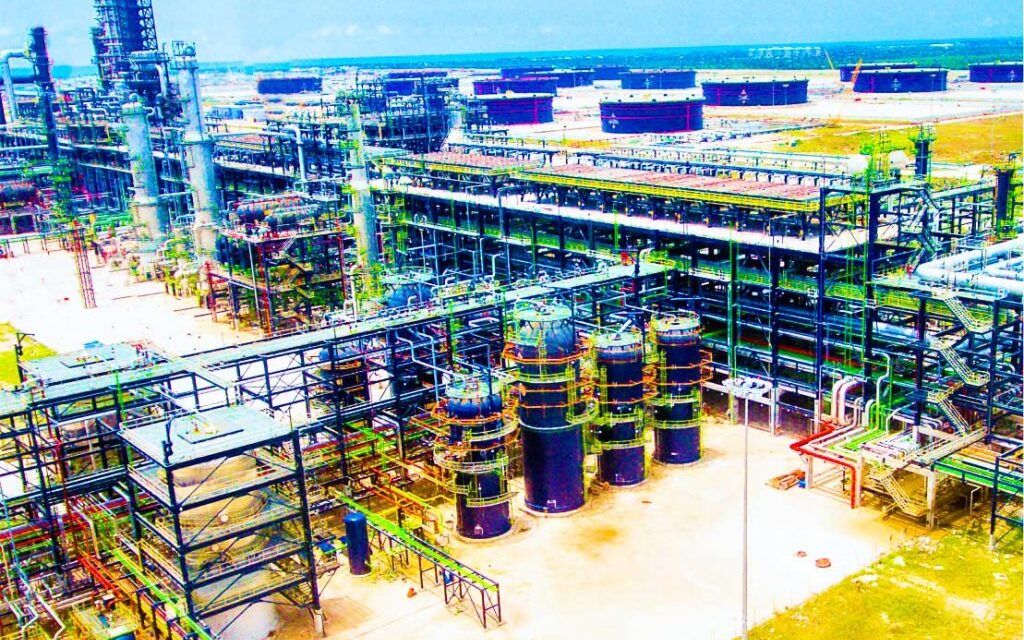
Dangote Oil Refinery Increases Jet Fuel Exports Significantly
Between April 2024 and April 2026, the Dangote oil refinery is projected to export an impressive 57 million barrels of jet fuel, based on Kpler data shared during Channels Television’s Business Morning show on Thursday. This data indicates a notable increase in exports, surging from approximately 20,000 barrels per day in April 2024 to an estimated 65,000 barrels per day by year-end, ultimately reaching a peak of around 160,000 barrels per day during the reporting period.
Strengthening Nigeria’s Energy Sector
These figures underscore the growing significance of refined petroleum exports within Nigeria’s energy landscape, particularly in the domain of aviation fuels. The country is actively working to enhance its local refining capabilities, aiming to diminish its reliance on imported fuels.
During the broadcast, Mr. Dumebi Oluwole, Manager of Financial Derivatives Company Limited (FDC), emphasized the milestone this development represents for Nigeria’s energy sector. He noted that such growth in refined product exports is crucial for bolstering the nation’s external balance, representing a significant advancement for the oil and gas industry.
Economic Impact of Refined Petroleum Exports
Oluwole also pointed out that refined petroleum products hold greater economic value compared to crude oil exports, as they directly cater to industrial and household needs. “In our daily lives, refined products are in high demand. Without the addition of value to our natural resources, Nigeria risks a notable decline in export revenues,” she stated.
Ongoing Aviation Fuel Crisis
The surge in exports coincides with ongoing challenges in Nigeria’s aviation sector concerning the rising prices of Jet A1 fuel. PREMIUM TIMES has extensively reported on the mounting pressures domestic airlines are facing, as soaring fuel prices threaten their operations and could lead to service interruptions.
Airlines such as Air Peace, United Nigeria Airlines, and Ibom Air have voiced concerns over the increasing cost of Jet A1, claiming it places substantial strain on their operations and disrupts flight schedules. The situation became urgent enough to prompt intervention from Aviation and Aerospace Development Minister Festus Keyamo, who highlighted that skyrocketing fuel prices could jeopardize the survival of multiple airlines.
Call for Comprehensive Refining Growth
While the performance of the Dangote refinery has been commendable, Oluwole cautioned that this single achievement should not be viewed as a panacea for Nigeria’s refining sector. “What the Dangote Refinery has achieved is remarkable, but the nation’s broader success in refining cannot solely hinge on one company,” she remarked.
Investors remain hesitant concerning Nigeria’s refining aspirations, largely due to historical failures in refinery rehabilitation and the underperformance of state-owned facilities. Sustained production and comprehensive industry reforms will be critical for unlocking the full economic potential of domestic refining, according to Oluwole.
Potential for Increased Economic Contributions
If Nigeria can advance its refining capacity, exports of refined petroleum products could significantly enhance the petroleum sector’s contribution to the national economy. Oluwole noted that these products might become increasingly vital to Nigeria’s export earnings in the long term if domestic processing capacity expands successfully.
Regarding the broader oil market, Oluwole indicated that geopolitical tensions, particularly between Iran and the United States, are likely to keep oil prices volatile in the short term. She warned that unless there is substantial progress in ceasefire negotiations or a de-escalation of conflicts in the Middle East, Brent crude prices could linger around $100 to $105 per barrel.
