


Significant Drop in Applications for State Student Aid in California
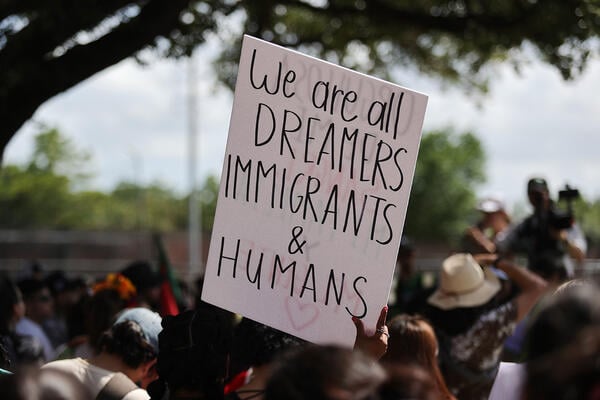
California has witnessed a dramatic reduction in federal student aid applications among students from families with undocumented parents. Recent data from the California Student Aid Commission (CSAC) highlights a troubling trend, revealing a drop of 3,000 applications—or 8 percent—from this demographic compared to the previous year. Even more concerning, applications for the California Dream Act, which offers state aid to eligible undocumented students, plummeted by an alarming 41 percent. In contrast, applications for the Free Application for Federal Student Aid (FAFSA) increased by 8 percent across the state, according to federal statistics.
Fears Over Immigration Enforcement Impacting Aid Applications
The drop in applications is attributed largely to apprehensions among students regarding immigration enforcement and how their application information may be utilized by the federal government. Nicole Kangas from CSAC expressed these concerns during a media roundtable, stating that the ongoing debate surrounding immigration policy is discouraging students from seeking the assistance for which they qualify. Despite federal law prohibiting the sharing of student data by the Education Department, fears linger, especially in light of recent deportation efforts by the administration.
College Access Crisis for Mixed-Status Families
Kangas emphasized that many students are now forced to weigh their educational aspirations against their family’s safety. This situation has created what she termed a “college access crisis,” with implications that exacerbate existing inequities for immigrant families. Currently, California is home to approximately 3.3 million students from mixed-status households, a demographic vital to the future of the state’s educational landscape and workforce.
Call for a Collaborative Campaign to Address Declining Applications
In response to this pressing issue, CSAC is advocating for a coordinated outreach campaign involving K-12 educational institutions, universities, and community organizations. The aim is to encourage eligible students to apply for state and federal financial aid. Officials reiterated that the California DREAM Act Application is a secure avenue and reinforced the existence of legal protections surrounding student data.
Fear Over Education Access May Spiral into a Lost Generation
According to Kangas, California has long promoted higher education as a pathway to opportunity. However, for many immigrant students and mixed-status families, this promising narrative has collided with an unfortunate reality—fear. She warns that this trepidation is reshaping college application behaviors in California, and urgent action is essential to prevent the loss of a generation of capable students who simply lack knowledge about the California DREAM Act and its associated safety measures.
Concerns About Federal Data Usage Remain Prevalent
Since the Trump administration assumed office, federal officials have pursued various data sources to identify undocumented immigrants, including public housing applications and records from the Supplemental Nutrition Assistance Program. Nonetheless, federal regulations assert that the Department of Education is prohibited from using student information for purposes beyond administering financial aid.
Advising Mixed-Status Families on Aid Application Risks
Justin Hurst from CSAC noted that even with robust privacy protections in place, misinformation often proliferates more rapidly than assurances can be communicated, particularly through social media and peer networks. As a result, many individuals perceive not applying for financial aid as the safest course of action. The National College Attainment Network is also encouraging organizations to inform mixed-status families about the potential risks and benefits associated with federal aid applications based on their unique circumstances.
