


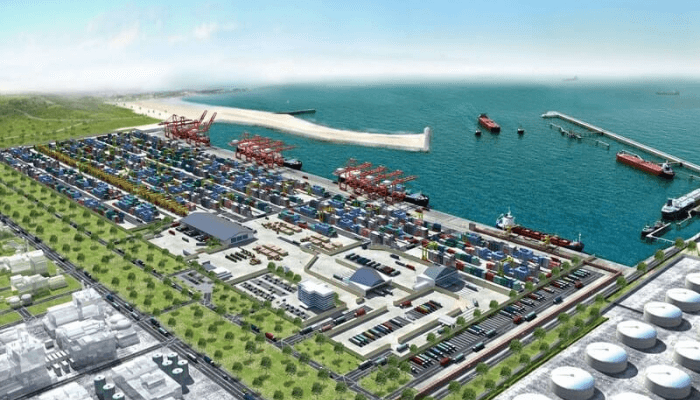
Concerns Emerge Over Ibaka Deep Sea Port Project in Nigeria
For over twenty years, the Ibaka Deep Sea Port has been crafted as one of Nigeria’s most ambitious marine infrastructure undertakings, as well as a significant project for the Gulf of Guinea region. Initially conceived during Victor Attah’s governorship, the port was envisioned as a cutting-edge, natural deep sea facility, strategically situated in Ibaka, Mbo Local Government Area, within the coastal expanse of Oron Nation in Akwa Ibom State.
This original vision was more than mere political ambition; it was a meticulously planned marine project designed to leverage the natural hydrographic benefits of the Atlantic coastline and adjacent waters. The initiative promised to strengthen Nigeria’s position as a maritime and logistics hub, while simultaneously fostering industrialization, creating job opportunities, boosting exports, and enhancing regional economic integration throughout the South-South region.
However, current stakeholders are increasingly concerned that the project has diverged significantly from its foundational concept. There are growing apprehensions that the existing implementation strategy has shifted away from the original Ibaka deep-sea port vision in favor of the more contentious dugout canoe port model. This alternative model is tied to the Liberty Free Trade Area Agreement and reportedly deviates from the historically established offshore design of the initial proposal.
The original design for the Ibaka Deep Sea Port aimed to capitalize on Ibaka Bay’s natural channel depth, offering advantageous navigational access with less dependence on costly coastal engineering. The project was part of an overarching economic strategy that included establishing a free trade zone and industrial city encompassing several local government areas, including Ibeno, Esit-Eket, Mbo, Oron, Udun-Uko, Okobo, and Ulueofon-Oluko. With projections for significant technical backing from federal approvals and international investments, the port was designed to accommodate neo-Panamax vessels.
By 2013, discussions around financing from China had gained momentum, with the China Civil Engineering Construction Corporation engaging as an initial contractor under a federal agreement. The economic rationale for the port was well-founded, as it utilized existing resources rather than relying heavily on artificial modifications to the coast.
In contrast, dugout canoe ports necessitate substantial artificial excavation to form harbor basins and shipping channels. Such projects often entail ongoing dredging, shoreline reclamation, and significant alterations to the surrounding coastal environment. Globally, these types of ports represent one of the most expensive and environmentally sensitive forms of marine infrastructure, raising concerns about their long-term sustainability.
The Niger Delta’s coastline is one of Africa’s most ecologically vulnerable areas. Large-scale excavation has dire implications for wetlands, mangrove systems, and coastline integrity, prompting critics to question whether a thorough environmental impact assessment (EIA) has been conducted and made public for the proposed dugout model. Environmental experts have cautioned that improper coastal engineering in sensitive ecosystems can cause irreversible damage, leading to long-term economic repercussions that may outweigh the project’s anticipated benefits.
In addition to environmental issues, concerns regarding fiscal sustainability cannot be overlooked. While natural deep-sea ports generally face lower maintenance costs, dugout ports incur significant expenses from ongoing dredging and sediment control, creating a financially burdensome operational model over time. Observers urge the Akwa Ibom State Government to address critical questions, including who will shoulder the costs of long-term maintenance, what sediment transport studies justify the proposed site, and whether climate resilience assessments have been completed.
Investor confidence is also at risk; international maritime financing is predicated on technical certainty and institutional transparency, not merely political assurances. Any substantial shifts in project scope or execution can erode trust among potential investors. Reports of discomfort among early investors regarding the changing conceptual framework of the project are particularly troubling, as contradictions can signal instability in global infrastructure finance.
A particularly sensitive issue lies within the Oron community’s perception that the dugout initiative could strategically marginalize them from the project’s economic core, which is historically linked to their coastal lands and maritime resources. Critics argue that the revised project framework may lead to their economic disenfranchisement and could devastate their local environment, rendering the pristine Ibaka Bay unusable.
Concerns about outdated infrastructure logistics are also being raised. Critics point to revised alignments that rely on previously narrow access routes, like the former Uniene route in Mbo, which many believe cannot support modern heavy industry and maritime logistics. Successful modern deep-sea ports necessitate a comprehensive transportation system, including robust road networks, rail connections, and industrial evacuation routes.
Governance issues are now at the forefront of this ongoing debate. Fundamental questions include: Was the original Ibaka Deep Sea Port concept legally altered by federal authorities? Has a new environmental impact assessment been conducted for the dugout model? Were local communities adequately consulted? These issues transcend ethnic or political lines, representing crucial matters of public responsibility, environmental law, and institutional governance.
Overall, deep sea ports constitute some of the most complex infrastructure projects globally, dependent on precise channel accuracy and environmental sustainability. The need for independent technical reviews and stakeholder engagement is more pressing than ever; these steps are vital for ensuring transparency and trust. If the original natural deep sea port model remains the most viable option, the public deserves a candid explanation of any proposed changes. Likewise, if the dugout concept proves superior, comprehensive scientific justification must be made available for independent scrutiny. Until transparency is achieved, suspicions surrounding the strategic direction of maritime projects will surely persist.
©Emem Benson, Esq. is a legal practitioner and public relations analyst
