


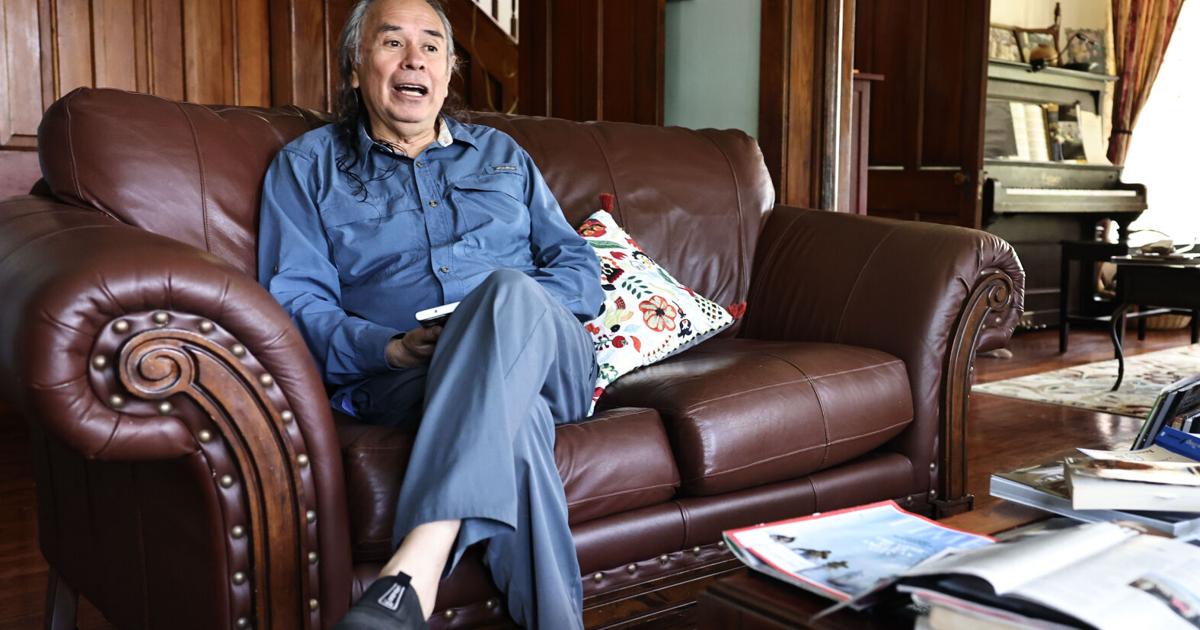
Ricardo Diaz’s Journey and Community Impact
Ten years ago, we asked Ricardo Diaz, a prominent immigration advocate in the CU area, to complete this thought: “This area would be an even better place to call home if it were…” He vividly responded, stating, “It’s a welcoming center,” emphasizing the town’s high turnover of residents and the need for direct engagement. He suggested creating personalized tours to help newcomers navigate recreational opportunities, volunteer options, medical care, and local interactions.
Two years later, Diaz’s vision materialized with the opening of the New American Welcome Center at the University YMCA, which he would eventually direct. As a dynamic figure, he is actively involved on the boards of the Welcome Center as well as the CU Immigration Forum, in addition to advocating for immigrants through his role as president of XPenn Consultants.
Diaz himself is an immigrant, having moved to the United States from Chihuahua, Mexico, at age 12 with his mother and five siblings. He began his academic journey at New Mexico State University, later transferring to BYU and the University of Pennsylvania, where he met his wife, Lisa. His career took a transformative turn at age 33 when he decided to expand his contributions to society.
In 2021, Diaz received the prestigious James R. Burgess Jr. Susan Freiburg Humanitarian Award during the Dr. Martin Luther King Jr. All-County Celebration. He recently sat down for an interview with Editor-in-Chief Jeff D’Alessio, sharing insights during the 332nd edition of the weekly magazine that spotlights influential leaders across various sectors.
Personal Insights and Philosophies
Diaz believes in the importance of dedicating time to read and stay informed, often leveraging podcasts while engaged in other activities. He expressed a deep-seated need to return to Mexico at least once a year to reassess his perspectives on food, family, and resilience.
Describing himself, he hopes his staff views him as open, thoughtful, and caring. For Diaz, the most challenging aspect of leadership lies in navigating decisions based on limited feedback. Although he values personal observations, he often refrains from sharing them prematurely for fear of appearing biased.
His most rewarding moments stem from witnessing the positive impact he has on others’ lives. Notably, during a rally in 2006, he received a call from a senator’s office, indicating their acknowledgment of his advocacy efforts.
Reflections on Leadership and Personal Growth
Diaz’s workspace is adorned with books, mementos, and notes that reflect his eclectic interests. He cites Stephen Covey as a professional role model, recalling how Covey’s affordable early seminars eventually led him to seek more costly guidance, re-evaluating the investment as a worthwhile bargain.
Pragmatic in his approach, Diaz often examines the distinction between need and want. He believes in sustainable practices like reusing and recycling, asserting that clutter can often be preferable to wasteful spending.
He encourages open dialogue in the workplace, emphasizing that silence equates to agreement. When interviewing potential candidates, he poses the question: “What is your purpose in life?” challenging them to reflect on their motivations beyond mere career aspirations.
Culinary Preferences and Personal Traditions
For lunch, he enjoys leftovers from previous dinners, highlighting his belief that the most exceptional food is often found in humble establishments, rather than upscale venues. His post-work routine includes tending to his indoor and outdoor plants while enjoying enriching podcasts.
Reflecting on recent experiences, Diaz described a family trip to Taipei, South Korea, and Japan, where cultural immersions prompted meaningful conversations about development and global perspectives. He also shared insights from his academic journey, noting that a macroeconomics class inspired him profoundly, igniting a passion for economic theory and its real-world implications.
Currently, he is re-engaging with Erich Fromm’s book, “The Anatomy of Human Destruction,” questioning the balance between hope and reality. His commitment to fitness is on the rise again as he incorporates gymnastics into his daily routine, adapting to his changing physical capabilities by limiting running and including more walking and jump rope exercises.
Diaz recalls his early entrepreneurial spirit, selling his grandmother’s bread and polishing shoes as a child. This foundation laid the groundwork for his future endeavors, albeit he humorously cites his least enjoyable job in college as one where aesthetic values overshadowed the essence of meaningful work, leaving him feeling restricted in his creativity.
