


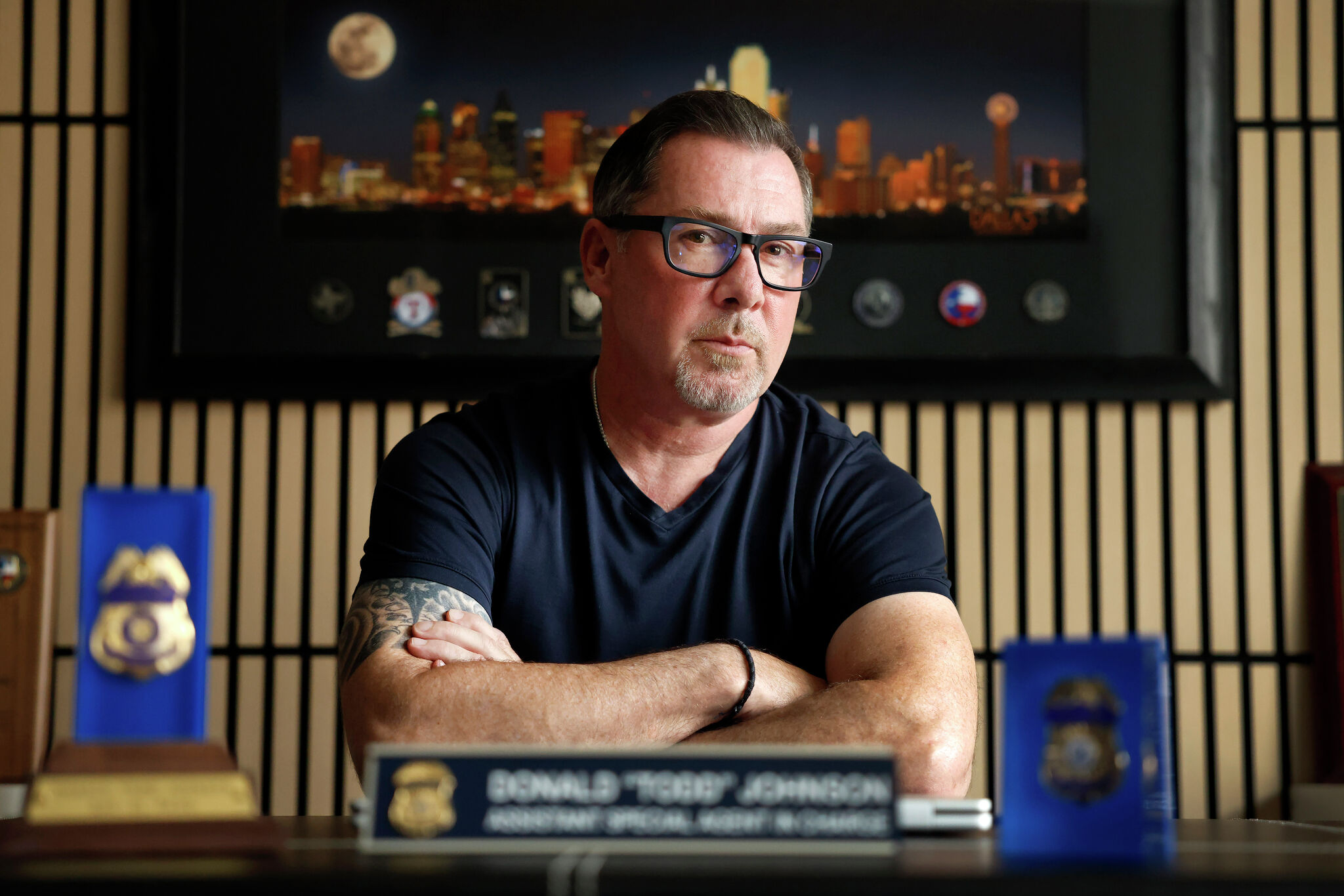
From Chaos to Reflection: Inside the Dallas ICE Office
Upon arriving at the Dallas Immigration and Customs Enforcement (ICE) field office, Todd Johnson was met with a harrowing scene marked by bullet holes in the walls and bloodstains on the floor. The aftermath of a tragic incident last September, in which a sniper killed two detainees in a transport van, left a profound impact on Johnson, prompting him to reevaluate his career in federal law enforcement.
Forced to Rethink His Career
With 30 years of experience in federal law enforcement, Johnson took on the challenging role of overseeing complex criminal investigations within ICE’s Homeland Security Investigations division. However, the shooting incident compelled him to make a difficult decision. Just a month following the tragedy, he resigned, citing the toll the job was taking on him both professionally and personally.
Pushing Beyond Original Missions
Johnson, now 57, has become increasingly vocal about how the department’s mission has shifted. Under the administration of former President Donald Trump, he noted a notable focus on immigration enforcement that diverged from ICE’s foundational goals. “I believe we have gone off track by going after so many non-criminal illegal aliens,” he remarked, highlighting his concerns over the evolving priorities within the agency.
Rapid Shifts in Immigration Policy
In conversations with The Dallas Morning News, Johnson detailed the swift changes in immigration policy, from the more lenient approach taken under President Joe Biden to Trump’s aggressive stance advocating for mass deportations. He described how these adjustments reflect in real-time on the ground, providing an authentic insight into the practices of government agencies whose directives resonate in local communities.
Resource Allocation and Strategic Realignment
Joining ICE in Dallas in 2009, Johnson eventually rose to an executive supervisory role by 2020, working on matters such as drug trafficking, human exploitation, and money laundering. He explained that the agency’s resource allocation frequently alters with successive presidential administrations. Johnson observed that the Trump administration prioritized arrest rates, often sacrificing the depth of investigations essential for addressing more significant public safety risks.
Challenges of Expectations and Arrest Quotas
Describing the environment during Trump’s presidency, Johnson noted an ongoing expectation to meet deportation goals that included the daunting target of removing one million individuals. While administration officials denied imposing strict quotas, Johnson highlighted the practical pressure felt by agents to achieve certain numbers. This often led to efforts focused on less complex targets rather than high-stakes investigations, which have been the hallmark of effective law enforcement.
The Impact of Raids and Community Relations
Over the past year, Johnson witnessed an increase in joint operations across various federal agencies, leading to arrests conducted in public spaces, sometimes resulting in chaos with injuries reported among protesters and detainees alike. He expressed frustration at the nuance lost in public discourse and criticized overzealous language used by officials, particularly following high-profile incidents. Concerns about how these approaches might impact community trust and safety continue to weigh heavily on him.
Investigative Integrity in the Face of Political Pressure
Ultimately, Johnson advocates for the traditional investigative functions of HSI, emphasizing the importance of sustained commitment to tackling criminal threats. He recalls overseeing significant cases, including the prosecution of cartel leaders, which necessitates a balance of resources and long-term strategic planning that can be undermined by politically charged operational shifts. As Johnson reflects on his career and the ongoing changes in immigration and enforcement policy, he remains dedicated to upholding the integrity of federally mandated investigative roles.
