


Charleroi Faces Uncertainty as Supreme Court Considers TPS for Haitian Immigrants
Charleroi, Pennsylvania, has emerged as a focal point of concern during the 2024 election, especially after President Donald Trump directed negative remarks toward the town’s growing Haitian population. As the national conversation shifts, the spotlight now turns to the U.S. Supreme Court, which is preparing to determine the future of “temporary protected status” (TPS) for Haitian immigrants.
TPS is designated for individuals from nations deemed too hazardous for safe return. For over 15 years, Haiti has been engulfed in crisis, with violence, political instability, and natural disasters compounding the challenges faced by its citizens.
“Ending TPS would be catastrophic for Haiti,” warned Gealine Joseph, the executive director of the nonprofit advocacy group Haiti Bridge Alliance. Despite multiple attempts by the Department of Homeland Security to eliminate TPS for Haitians since President Trump took office, these efforts have repeatedly been blocked by lower courts. The upcoming Supreme Court session will address not only the situation in Syria but also the critical TPS dispute concerning Haiti, with oral arguments scheduled for April 29.
In the meantime, the Haitian community in Charleroi grapples with uncertainty regarding their status. “It’s disheartening to see families living month-to-month amid the TPS decision,” shared Sharon Woomer, pastor of Hope Community Church located in a repurposed bank building on McKean Street.
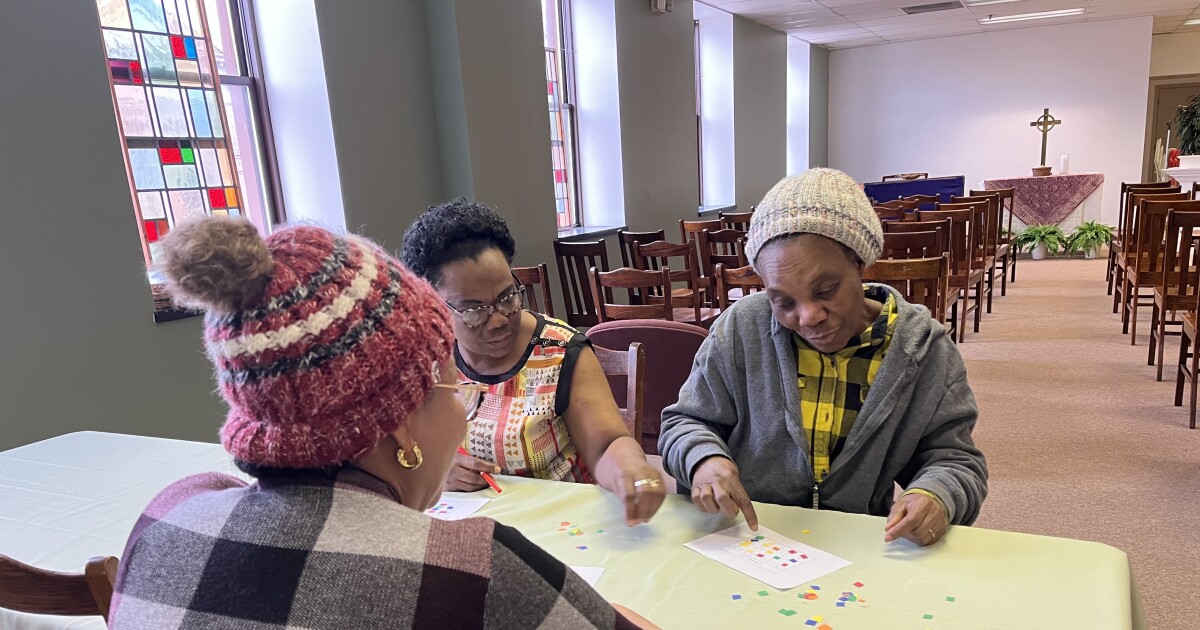
At the church, a small group of Haitian immigrants recently participated in English lessons while others sought assistance with asylum applications—a potential avenue for securing residency in the U.S. even if TPS is revoked. Woomer noted that two-thirds of her congregation are Haitian, many of whom have relied on TPS to remain in the country.
The TPS program has included Haitians since 2010, following a devastating earthquake that resulted in the deaths of up to 300,000 individuals and the displacement of countless others. The situation in Haiti has further deteriorated with events such as a cholera outbreak, the assassination of President Jovenal Moise in 2021, and ongoing violence led by gangs amid government instability.
Woomer recalled addressing her congregation about the potential end of TPS during a Sunday service in February when former Homeland Security Secretary Kristi Noem moved to revoke Haiti’s status. “We prepared our community for the worst possible outcomes, discussing how to make plans if ICE become involved,” she reflected. A federal judge intervened last minute, blocking the revocation just hours before it was set to take effect.
The Supreme Court is expected to render its decision in late June or early July, which could either ease or exacerbate the community’s uncertainties. Jimmy Alexandre, founder of the Haiti Resource Center in Charleroi, emphasized the need for a favorable outcome for immigrant communities. “No decision is the worst outcome,” he stated, highlighting the ambiguous nature of potential TPS termination and its implications.
Joseph, from the Haiti Bridge Alliance, noted that the U.S. State Department continues to classify Haiti with a Level 4 “Do Not Travel” advisory—a designation shared with conflict zones like Ukraine, Iraq, and Iran. The local community’s sentiments remain divided since Trump’s comments, with Charleroi residents differing on their perspectives toward the immigrant population. Councilor Christine Hopkins expressed hope for an extension of TPS, arguing that this would be a humane choice given Haiti’s dire circumstances.
