


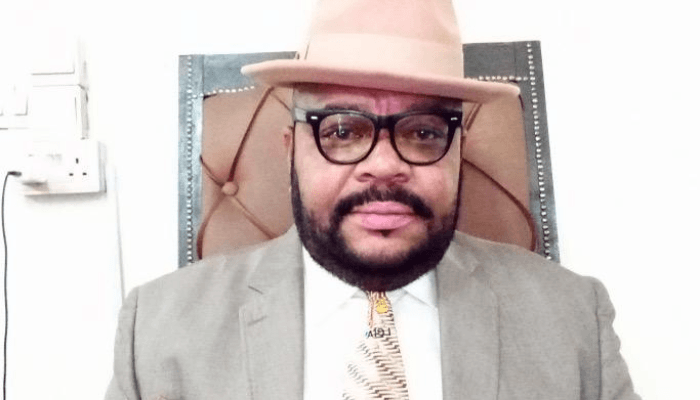
Civil Rights Activist Discusses Political Landscape Ahead of Rivers Elections
Mr. Opunabo Inko Talia, a prominent civil rights activist from Port Harcourt, Rivers State, previously served as the Special Adviser on Information to the Minister of the Federal Capital Territory (FCT), Nyesom Wike, during Wike’s tenure as Governor of Rivers State. In an interview in Port Harcourt, Inko Talia offered insights into the political dynamics and tensions surrounding the upcoming general elections in Rivers State, highlighting concerns about Governor Siminalai Hubala’s aspirations for a second term and the potential for election-related violence.
Implications of Nomination for George Kelly
The President recently emphasized that state governors are the leaders of the APC (All Progressives Congress) and that any lawmaker aiming for reelection should consult them. Reports indicate that Wike has nominated George Kelly as a potential successor for the governorship. This development raises questions about the future for Governor Siminalai Hubala.
The Role of Leadership in Political Parties
According to Inko Talia, the President’s directives are reflective of an evolving power structure in Nigerian politics. He notes that prior to 1999, party chairpersons held significant sway, but the return to democracy has shifted leadership dynamics, placing governors and the President at the helm of political parties. He asserts, “If the President directs that those seeking support must approach the governor, it underscores a realignment of political power that was anticipated.”
The Challenge of Incumbent Ambitions
Inko Talia does not shy away from discussing the animosity present between Wike and Hubala, indicating that Wike is determined not to support Hubala’s reelection efforts before 2027. He expresses confidence that should a fair electoral process occur, Hubala would prevail against Wike, emphasizing that the latter’s leadership style has garnered widespread disdain among the populace in Rivers State.
Concerns Over Leadership Style
Critiques of Wike’s governance extend beyond Rivers State. While some argue that he has performed admirably, Inko Talia claims Wike’s authoritarian approach has alienated many. He contends that true development requires investment in human capital, yet under Wike, civil servants did not see salary increases or incentives like Christmas bonuses. Instead, substantial resources have been directed toward infrastructural projects, leading him to characterize Wike’s approach as a means to exhaust the state’s finances.
Future Election Dynamics
The dynamics surrounding the upcoming elections are tense, with Inko Talia asserting that Wike’s faction will do everything possible to obstruct Hubala’s return. He remains skeptical about the likelihood of a peaceful election. However, he believes that if Hubala were to face any candidate, including Wike himself, he would emerge victorious, attributing this to a grassroots support base that does not rely on financial incentives.
The Unpredictability of Political Outcomes
Inko Talia acknowledges that while organic support for Hubala exists, potential conflict orchestrated by Wike’s faction cannot be ignored. He warns that such factions might attempt to declare a state of emergency or create instability as elections draw near. Nonetheless, he expresses optimism regarding the President’s awareness of the intricate political landscape in Rivers State, indicating that miscalculations by Wike’s camp could ultimately backfire.
