


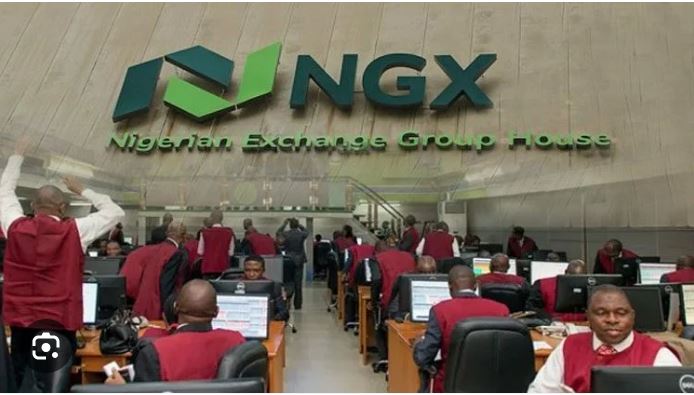
Market Experiences Decline Amid Regulatory Changes
The stock market concluded the day in negative territory on Thursday, as investors faced a substantial loss of N1.92 trillion. This downturn was primarily attributed to declines in banking and cement stocks, reacting sharply to new regulatory guidelines introduced by the Central Bank of Nigeria (CBN) regarding overseas subsidiaries of banks.
Capitalization Decrease Following Market Drop
The market capitalization fell from N155.78 trillion to N153.858 trillion, marking a decrease of 1.23% or N1.922 trillion. The All Share Index (ASI) also mirrored this trend, declining by 1.23%, equivalent to 2,994.90 points, down from the previous record of 242,729.51 to close at 239,734.61. Year-to-date (YTD) returns have now slowed to 54.82%.
Expert Insights on Investor Reaction
Commenting on this development, investment banker and stockbroker Tajudeen Olinka noted that the decline stemmed from investors’ responses to the new CBN directive concerning banks’ overseas subsidiaries. Under the new guidelines, banks are required to limit investments in such subsidiaries to 10% of their own capital or shareholder funds.
Mandatory Divestment for Banks Above Threshold
Olinka indicated that the CBN has mandated banks currently exceeding this threshold to initiate divestment from their foreign subsidiaries. He explained that this regulatory move is perceived as an effort to consolidate earnings and reserves of banks operating internationally into their existing regulatory capital, which may ultimately restrict these institutions’ ability to make future payments tied to their growth trajectories.
Impact on International Bank Stocks and Cement Sector
The investment banker also highlighted that these developments have led to a notable increase in prices of international bank stocks, which in turn affected other high-cap stocks, particularly within the cement sector. Consequently, shares of several international banks have experienced a significant decrease in value, impacting highly capitalized listed companies.
Temporary Setback for Affected Banks
Despite the negative outlook, Olinka characterized the current situation as temporary, asserting that the affected banks continue to demonstrate strong fundamentals and remain undervalued. He suggested that the downside potential for these banks is considerable, implying that those selling their stocks now may be overlooking significant future gains. “The industry is strong and highly regulated,” Olinka affirmed, emphasizing there is no substantial loss of liquidity.
Mixed Market Activity with Advancers and Decliners
Interestingly, market breadth concluded positively, with 42 stocks advancing compared to 30 decliners. CAP and FTN Cocoa Processors led the gainers, rising by 9.99% to close at N212.50 and N8.04 per share, respectively. Conversely, Berger Paints, Zichis Agro Allied Industries, and Meyer saw declines of 9.97%, settling at N98.75, N30.33, and N17.10 per share, respectively.
Increased Trading Activity Sees Key Players Stand Out
On the downside, University Press topped the losers chart with a 10% drop to N4.50, while Red Star Express and Skyway Aviation Handling Company followed, with losses of 9.59% and 8.63%, closing at N25.45 and N130.75 per share, respectively. Market activity saw an uptick, with total trading volume increasing by 29.34% to 1.83 billion shares, valued at N72.17 billion across 81,131 transactions. NEM Insurance led in trading volume with 360.56 million shares, representing 19.70% of total trading activity, while Seplat Energy topped in value with transactions amounting to N12.98 billion, accounting for 17.99% of the overall trade value.
