


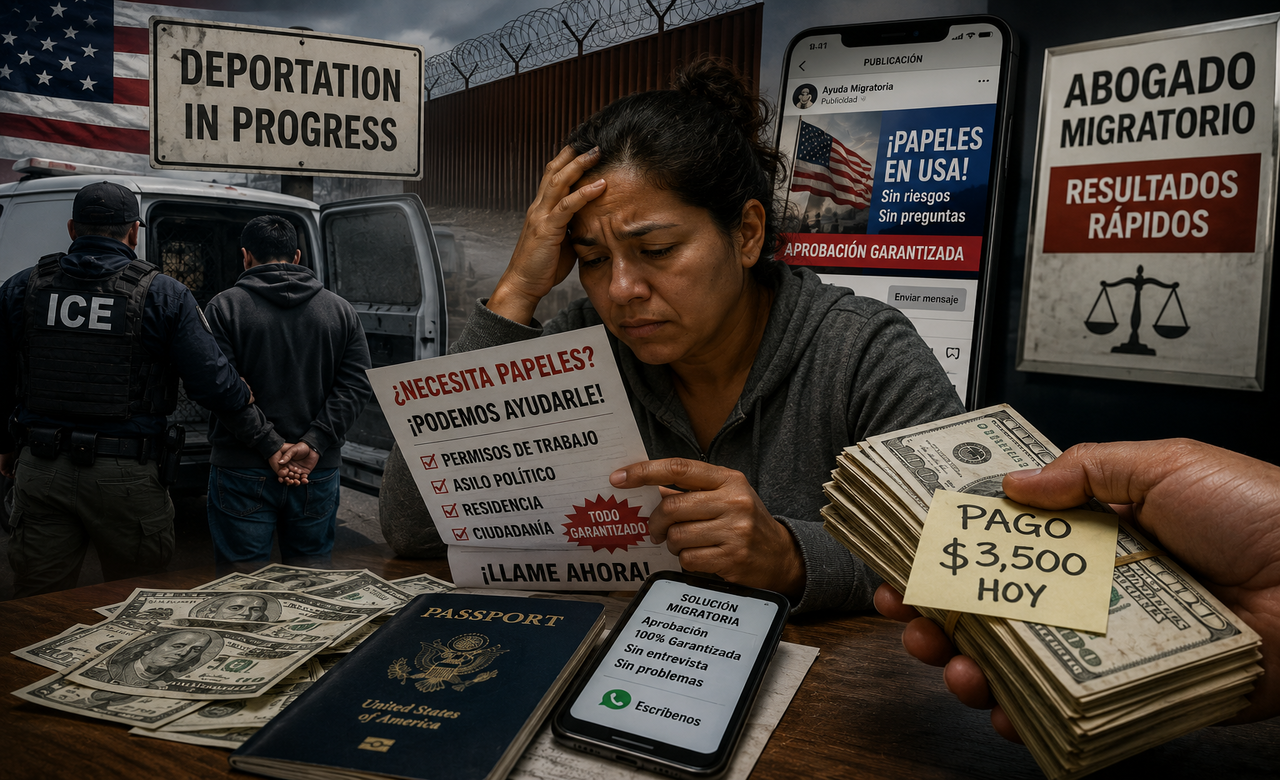
Escalating Fear Fuels Underground Fraud Markets Targeting Undocumented Immigrants
The tightening of immigration policies and increased deportations have given rise to a burgeoning underground market that exploits the desperation of millions of undocumented immigrants. Across the country, these individuals are increasingly looking for help, only to fall victim to fraudulent schemes that promise quick solutions.
Growing Conversations Around Fraudulent Immigration Services
In various urban settings—from small apartments in Houston to construction sites in Los Angeles and Latino neighborhoods in Chicago—conversations about dubious immigration assistance are becoming more prevalent. Immigrants report receiving suspicious phone calls from people posing as immigration officials, encountering fake lawyers who guarantee rapid processing, and receiving unsolicited messages claiming to stop deportations. Many have found themselves paying hefty sums for non-existent immigration procedures, as fear has transformed anxiety into a multi-million dollar industry.
Impact of New Immigration Policies
Under President Donald Trump’s administration, immigration policies have not only increased pressure on undocumented immigrants but also generated an environment ripe for legal and financial exploitation. Many immigrants now confront the double threat of detention and deportation while facing scams that prey on their heightened fears. This landscape creates an ecosystem where vulnerable individuals are consistently targeted.
Legal Community’s Alarm Over Rising Scams
Legal experts, advocacy organizations, and state prosecutors have observed a significant uptick in these fraudulent activities, particularly since late 2025, when border security measures intensified. The heightened focus on deportation and stringent administrative restrictions related to asylum and temporary stays have led many immigrants to feel increasingly vulnerable, prompting them to seek quick solutions from questionable intermediaries.
How Fear and Misinformation Enable Scammers
Fear acts as a breeding ground for scams, as demonstrated by recent reports from the Federal Trade Commission (FTC). There has been a marked increase in complaints surrounding immigration fraud, particularly against impostors posing as lawyers or notaries and fraudulent websites pretending to be federal agencies. These operations often follow a recognizable pattern, where unscrupulous individuals claim connections to immigration offices and offer to expedite approvals or halt deportation orders, preying on the desperation of victims.
Legal Risks and Economic Exploitation in Immigrant Communities
The environment of fear discourages victims from reporting these crimes. Advocacy groups in states such as California, Texas, and Florida note that many immigrants hesitate to come forward after being scammed, fearing repercussions from immigration authorities. This silence highlights a deeper issue within American immigration policy, as recent crackdowns have sowed fear even among established immigrant communities. Increased workplace raids and pressure on sanctuary cities have further weakened the legal standing of long-term residents, escalating their vulnerability to exploitation.
The Role of Social Media in Spreading Misinformation
The prevalence of social media exacerbates this situation. Platforms like TikTok, Facebook, and WhatsApp are rife with accounts promoting “immigration tricks” and fast-track permits, garnering significant attention before being taken down. The rapid spread of misinformation often outpaces efforts by government agencies to disseminate accurate information, despite campaigns by USCIS and the Department of Justice warning immigrants about fraud. For those caught in a bind, these messages frequently arrive too late to be effective.
Underground Economies and Exploitation of Fear
Civil rights advocates warn that strict immigration enforcement breeds an even more hidden form of economic exploitation. In many urban areas, fraud schemes have become parallel markets that thrive on the anxiety and uncertainty permeating immigrant communities. While the Trump administration advocates for firm measures to bolster border security, the unintended consequences appear to be increased secrecy, diminished trust in institutions, and greater susceptibility to criminal networks.
New Dangers for Undocumented Immigrants
For the millions of undocumented immigrants, the risks extend beyond deportation. They now face the potential loss of family savings, the threat of sharing sensitive information with deceptive actors, and the looming reality of falling victim to fraud specially designed to exploit their plight. The emergence of this situation underscores a troubling truth: when fear is a driving factor in immigration policy, it inevitably fosters avenues for exploitation and abuse.
