


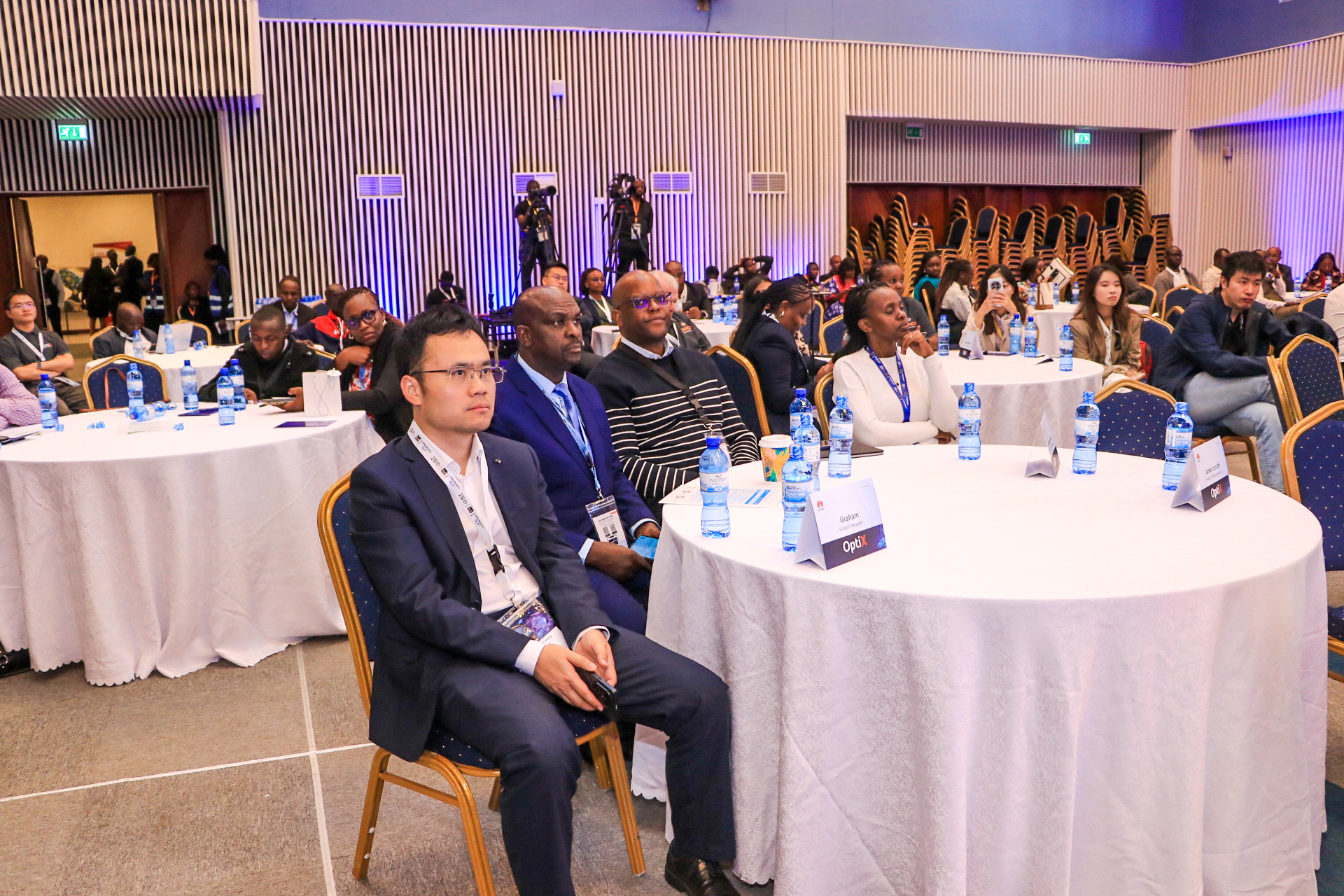
Industry Experts Advocate for Accelerated Investment in Optical Networks
During the All-Optics side event at the Connected Africa Summit 2026, leaders from various sectors emphasized the urgent need for increased investment in all-optical networks (AONs). They underscored the critical role that fiber optic infrastructure plays as a foundational element of Africa’s AI-driven future and digital economy.
Future-Proof Fiber Connectivity in the Age of AI
The All-Optical Summit 2026, themed “Future-Proof Fiber Connectivity in the Age of AI,” brought together stakeholders who reiterated that advancements in AI, 5G, cloud computing, and future 6G technologies hinge upon high-capacity, low-latency, and ultra-resilient connectivity.
All-Optical Networks: A Solution for Growing Digital Demands
Participants at the summit noted that all-optical networks facilitate end-to-end fiber transmission, allowing data to travel as light with minimal electronic conversion. This architecture is emerging as a highly efficient and scalable solution to meet increasing digital demands.
Infrastructure’s Role in AI Power
The Secretary-General of the African Telecommunications Union set a striking tone by highlighting that the effectiveness of AI is directly tied to the quality of infrastructure that supports it. He stated that advanced algorithms and extensive datasets rely on robust connectivity, making fiber optic infrastructure essential for a thriving digital economy.
Collaboration Needed for Expanding Access
Dr. Fiona Asonga, CEO of the Kenya Technology Service Providers Association, emphasized the importance of industry coordination to expand internet access. She called for stronger collaboration among service providers and the establishment of industry standards to ensure high-quality fiber deployments while minimizing costs.
Global Standards and AI Demands
The urgency of enhancing network capacity is increasing globally, with Marcus Brunner of the World Broadband Association pointing out that AI-driven applications are pushing the need for faster network speeds across both residential and enterprise segments. He affirmed that high-capacity networks are crucial for interconnecting data centers and mobile base stations, which must conform to strict latency and reliability requirements.
Innovation in Wireless Connectivity
Dr. Crane Yang discussed how wireless innovation complements fiber infrastructure, stating that improvements in WLAN performance regarding security, latency, coverage, and bandwidth are vital for enhancing user experiences. This optimization also enables service providers to cut costs and tap into new revenue streams.
Shifts in Network Priorities
From a carrier’s perspective, Safaricom outlined how evolving usage patterns are transforming network priorities as Kenya advances toward a content creation economy. The company highlighted ongoing investments in backbone and metro optical networks to support 5G growth, increased residential broadband demand, and improved data center interconnectivity.
Public-Private Partnerships for Digital Expansion
Kenya’s Digital Superhighway initiative was further detailed by Thomas Bweili, Director of Programs and Standards at the Kenya ICT Authority, who pointed out opportunities for public-private partnerships and co-investment models aimed at expanding fiber deployment across public institutions.
Collaborative Efforts in Optical Network Implementation
Industry insights were also shared by Elvis Chirchir, Technical Manager at Vilcom Networks. He spoke about the benefits of industry collaboration on end-to-end optical networks across core, aggregation, and access layers, which has facilitated rapid growth in fiber-to-the-home (FTTH) and enterprise networking.
Focus on Accelerating Fiber Deployment in Africa
The summit attracted over 100 leaders from international organizations, government agencies, carriers, ISPs, and enterprises, all focused on accelerating fiber deployment and improving connectivity outcomes across Africa. Participants agreed that all-optical networks are crucial for advancing national digital agendas, such as Kenya’s Digital Superhighway, by providing scalable and reliable infrastructure that bridges the digital divide and opens up new economic opportunities.
Achieving Inclusive and Sustainable Development
Stakeholders reiterated the need for enhanced cooperation across the ecosystem, prioritizing the harmonization of standards, cost reductions, joint investments, and strengthening technical capacity. As Africa continues its digital growth, they emphasized that sustained investment in all-optical networks is vital to ensuring the continent remains competitive in the global digital economy while maximizing AI’s potential for inclusive and sustainable development.
