


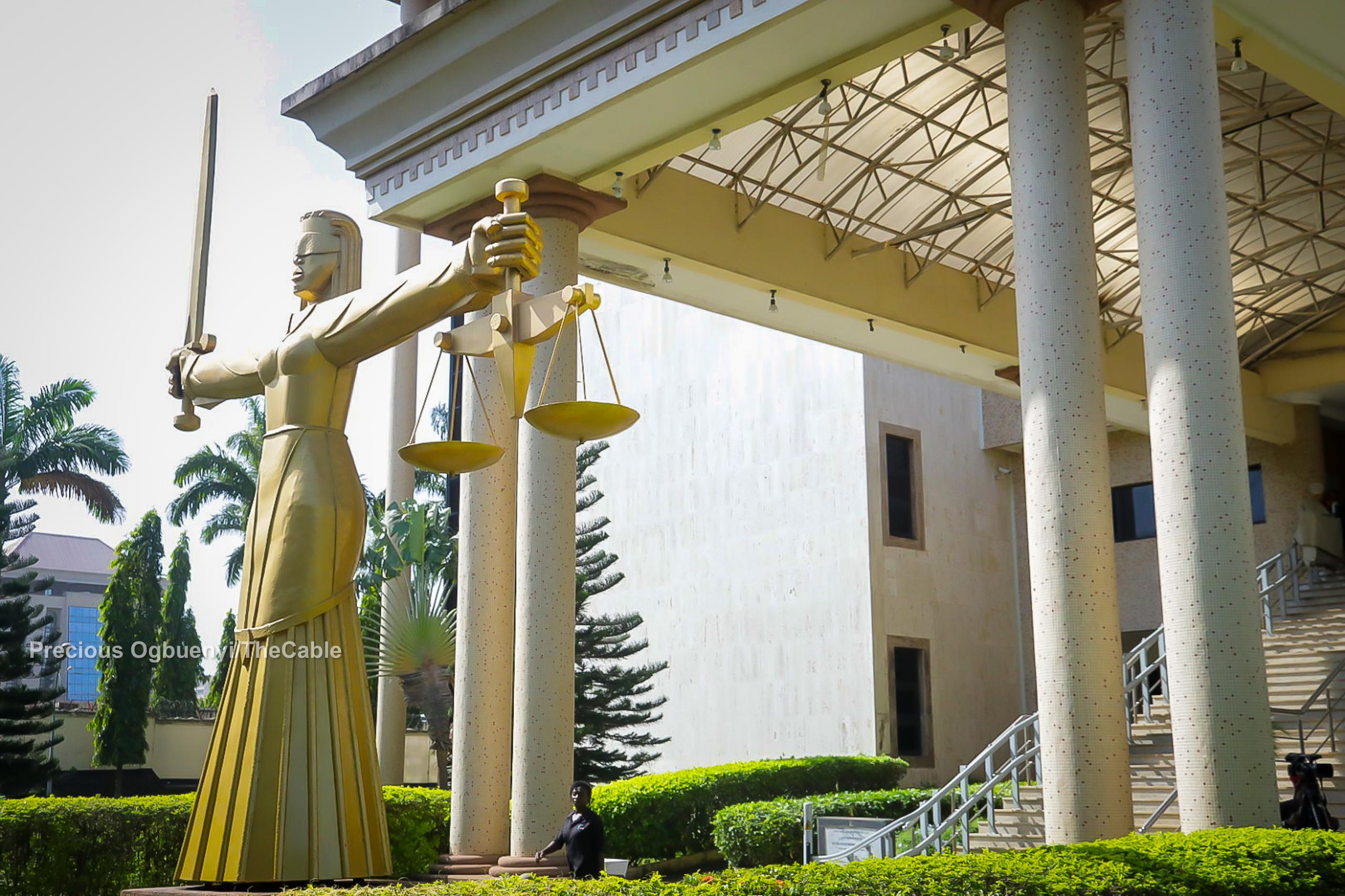
Legal Challenge Against Elections Act 2026 Filed in Abuja
Human rights attorney Nkelwem Akpan has petitioned the Federal High Court in Abuja to annul the newly established Elections Act 2026, asserting that it conflicts with Nigeria’s constitutional stipulations on the falsification of credentials by political candidates.
Constitutional Violations Alleged
In his initial filing, Akpan argues that Articles 66(1)(i), 137(1)(j), 182(1)(j), and 107(1)(i) of the Nigerian Constitution explicitly prohibit any individual who submits a forged certificate from seeking election to the positions of President, Governor, or as a Member of National and State Legislatures. He claims that the provisions outlined in Article 138 of the Constitution are not applicable in this context. The 2026 Elections Act, by removing grounds for challenging elections, is said to be unconstitutional and undermines the foundational legal framework.
Details of the Legal Filing
Akpan, representing himself as a Nigerian citizen, has cited various articles from both the 1999 Constitution and the recent 2026 Elections Act. He is asking the court to clarify the interpretation of relevant constitutional provisions as they pertain to the electoral process. The National Assembly and the Independent National Electoral Commission (INEC) have been included as defendants in this case, primarily due to ongoing ambiguities surrounding electoral law interpretation.
Request for Judicial Clarification on Constitutional Supremacy
Referencing Section 138 of the Elections Act 2026, Akpan is seeking the court’s interpretation regarding Article 1(3) of the Nigerian Constitution. This article asserts that the Constitution takes precedence over any conflicting legislation, declaring that any such inconsistent laws shall be rendered null and void.
Demands for Future Electoral Integrity
Akpan aims for a declaration that, in determining the eligibility of candidates for upcoming elections, INEC cannot legally override the clear stipulations of Articles 66(1)(i), 137(1)(j), 182(1)(j), and 107(1)(i) of the Constitution. These articles prohibit individuals who have submitted forged certificates from holding positions such as the President, Governor, or Legislators in both the National Assembly and State Legislatures. He believes that the forthcoming resolutions from Parliament should align with the mandates of Article 138 of the 2026 Elections Act.
Seeking Damages and Accountability
In his legal action, Akpan is seeking general damages amounting to Five Million Naira from the first defendant, the National Assembly. He also requests additional exemplary and punitive damages, as deemed appropriate by the court.
Calls for Public Apology and Cost Recovery
In addition, Akpan has demanded that the National Assembly cover his legal costs due to what he describes as “a blatant abuse of the oath of allegiance.” He insists on a public apology to Nigerians, to be published in at least 20 national newspapers and on their respective websites.
Hearing Scheduled
Justice Obiora Egwatu has set the hearing date for this significant case for June 22, as the legal community and the public await the court’s decision on these crucial electoral issues.
