


Massachusetts Senate Approves Comprehensive Immigrant Protection Legislation
BOSTON — In a significant move for immigrant rights, the Massachusetts Senate passed the Protection Act on Thursday afternoon, following a lengthy debate that extended into the evening. The legislation garnered overwhelming support, passing with a vote of 37-3, primarily along party lines, around 6:40 p.m.
Proponents hailed the bill as a major achievement, emphasizing that it surpasses a similar version passed by the House in March. Maroni Minter, political director for the Massachusetts Immigration and Refugee Advocacy Alliance (MIRA), expressed optimism about the Senate’s progress. “If we can get it across the finish line, we will be very happy,” he stated.
The Senate version introduces critical provisions, notably preventing federal agents from making arrests of immigrants on or near courthouse grounds. Additionally, individuals would gain the ability to sue in state courts if their civil rights are infringed upon by federal officials. The next step involves conference committees to reconcile the differences between the Senate and House versions of the bill.
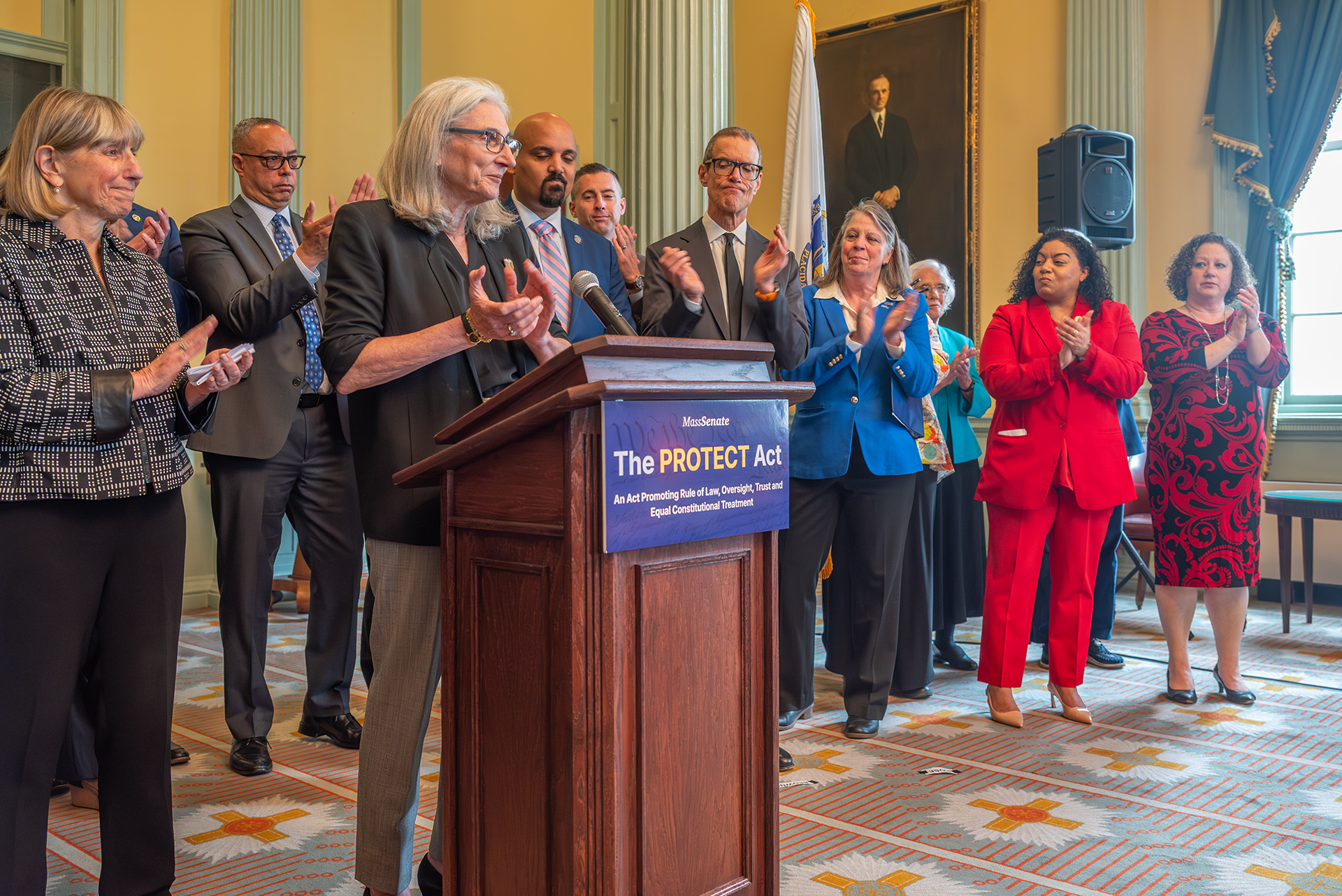
Framing the legislation as a response to what they describe as civil rights violations during the Trump administration, Senate Democrats have positioned themselves as defenders of immigrant rights. Senate President Karen Spilka remarked at a pre-vote press conference, “Today, we will use the power of Congress to protect immigrants in our state. These are real protections against Donald Trump and ICE officers’ abuse of power.” In the early months of Trump’s administration, over 7,000 people were arrested in immigration enforcement actions in Massachusetts, with only about half facing convictions or charges, based on analysis by WBUR using data from the Deportation Data Project.
Recent reports indicate that federal agents detained 75 individuals in the New Bedford area as part of an immigration crackdown, with many having no prior felony convictions. Notable arrests include two men apprehended by ICE agents in New Bedford, one of whom was on his way to trial, stirring community concern.
Sen. Cindy Friedman (D-Arlington) commented on the bill’s potential to enhance state tools for safeguarding residents from potential abuses by the Department of Homeland Security. During the debate, Sen. Vanna Howard shared her personal connection to the legislation, drawing parallels between her past as a genocide survivor and current events. “The PROTECT Act is that light,” she asserted, referencing the law’s promise for a more equitable future.
Key Provisions of the PROTECT Act
The Senate bill incorporates several enhancements relative to the House version. MIRA’s Minter praised the new measures, which clarify how various community institutions such as clinics and schools should handle immigration enforcement activities, alleviating fears among many immigrants about seeking necessary services. Both the House and Senate versions include important provisions to assist immigrant victims of serious crimes who cooperate with law enforcement, simplifying the process of obtaining documentation for federal visa protection programs.
Sen. Mark Montigny (D-New Bedford) emphasized the importance of these provisions in enabling victims of human trafficking to report crimes without fear. “No one should be afraid to report violent crimes to the police. Feeling empowered to do so makes our communities safer,” he noted. The Senate bill distinctly limits local law enforcement’s ability to cooperate with federal immigration authorities, particularly around schools, health care facilities, and places of worship, adding protections for vulnerable populations.
Republican Concerns and Reactions
Despite some Republican support, including Minority Leader Bruce Tarr, there has been vocal opposition. Initially, Tarr filed a motion to suspend Senate rules for a constitutional review of the bill, mindful of the complex interplay between immigration enforcement and states’ rights. “As we seek to protect the Constitution, it is important to recognize that our first duty is not to violate it,” he argued.
The Senate ultimately rejected his motion with a 35-5 vote. Sen. Lydia Edwards (D-Boston) countered Tarr’s sentiments, asserting that the legislation is fundamentally about how Massachusetts can engage with the federal government. The bill’s passage—which caught some observers by surprise, including Tarr, who ultimately voted in favor—underscores a significant shift in the state’s approach to immigration policy.
As the legislative process progresses, stakeholders eagerly await the final outcome of the PROTECT Act, which promises to reshape the landscape of immigrant rights in Massachusetts. The extensive debate surrounding this legislation reflects broader national conversations about immigration, justice, and civil rights.
