


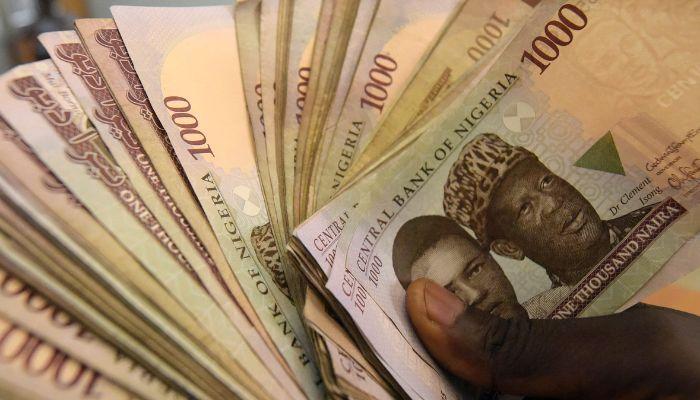
Naira Shows Signs of Recovery in Foreign Exchange Market
The naira made a notable recovery in the official foreign exchange (FX) market on Wednesday, breaking a week-long streak of declines due to improved liquidity conditions. This recent upward trend reflects the currency’s resilience amidst ongoing economic challenges.
Central Bank Data Highlights Currency Appreciation
According to the Central Bank of Nigeria (CBN), the naira appreciated by 1.65 against the dollar, rising from 1,379.46 to 1,377.81 in the Nigerian Foreign Exchange Market (NFEM). This marks a modest increase of 0.09%, demonstrating a shift in market dynamics.
Intraday Trading Reflects Market Activity
Intraday trading revealed fluctuations in the naira’s value, with dealers observing the currency reach as high as N1,365 and dip to N1,386 within the NFEM framework. Such volatility underscores the evolving nature of Nigeria’s foreign exchange landscape.
Parallel Market Stability and Rate Discrepancies
In the parallel market, commonly referred to as the black market, the naira remained stable at N1,400 to the dollar. This resulted in a widening gap of N21 between the official and parallel market rates, compared to the N20 disparity noted the previous day.
Foreign Exchange Reserves Continue Decline
Meanwhile, Nigeria’s foreign exchange reserves have shown a continuous moderate decline, dropping by 3.29% from a peak of $50.02 billion on March 11, 2023, to $48.37 billion as of April 28, 2023. These reserves are critical for the CBN’s ability to support the naira and maintain market stability.
CBN Governor Addresses Reserves and Market Dynamics
Addressing the decline in foreign exchange reserves, CBN Governor Olayemi Cardoso stated that fluctuations are expected and should not be a cause for alarm. He emphasized that the country’s reserves still significantly exceed international benchmarks, covering approximately 13 months’ worth of imports, well above the minimum recommended by the International Monetary Fund.
Future Outlook and Market Confidence
Cardoso noted that Nigeria’s current exchange rate framework is markedly different from previous years when central banks wielded significant control over currency values. As investor confidence grows, liquidity improvements allow the market to operate more autonomously. He acknowledged public sensitivity to short-term fluctuations but reinforced that these movements are often exaggerated in relation to actual changes.
Liquidity Levels and Market Functionality
Cardoso pointed out that increased market liquidity reduces the centrality of reserve levels in determining currency strength compared to previous years when liquidity constraints were more pronounced. He asserted that the market has sufficient liquidity to function effectively, urging stakeholders to view modest fluctuations in reserves as part of a stabilization process rather than indicators of underlying weakness.
