


Written by Lizzy Chakupi
After nearly thirty years of repeated turnaround maintenance (TAM) initiatives with minimal lasting results, Nigeria’s struggling refinery sector is once again under scrutiny. Since 1999, over $5.3 billion has been allocated to recovery efforts, yet the country remains heavily reliant on fuel imports.
The Nigerian National Petroleum Company Limited (NNPCL) has recently inked new memorandums of understanding (MoUs) with two Chinese firms, reigniting concerns about transparency, accountability, and whether this time will see genuine change.
New Partnerships and Lingering Doubts
On April 30, 2026, in Jiaxing, China, Mr. Basil Bayo Ojulari, Group Chief Executive Officer of NNPCL, signed agreements with Sanjiang Chemical Co., Ltd. and Xingcheng (Fuzhou) Industrial Park Management Co., Ltd. These agreements propose a technology-equity partnership aimed at rehabilitating the Port Harcourt and Warri refineries.
This move is being touted as a renewed effort to enhance Nigeria’s refining capacity, yet skepticism remains due to the historical context of failed reconstruction ventures.
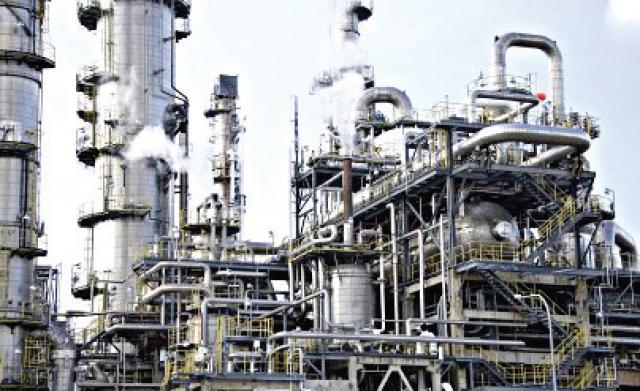
Built between the 1960s and 1980s, Nigeria’s major oil refineries in Port Harcourt, Warri, and Kaduna have undergone numerous costly repairs over the decades, yet none have achieved sustained productivity.
Massive Financial Investments with Minimal Returns
Since 1999, successive Nigerian administrations have invested billions of dollars in an attempt to restore the refineries. Under Olusegun Obasanjo’s administration (1999-2007), over $800 million was allocated, yet operational stability remained elusive. Spending surged to more than $1.6 billion during the tenures of Umar Musa Yar’Adua and Goodluck Jonathan (2007-2015). In 2012, authorities claimed a capacity utilization rate of 60%, a figure widely contested as breakdowns persisted. The Muhammadu Buhari administration (2015-2023) spent over $2.9 billion on Port Harcourt, along with $1.5 billion and $1.48 billion for Warri and Kaduna, respectively.
Despite these substantial investments, results have been disappointing. The Port Harcourt refinery was declared operational in November 2024 but ceased operations within six months. Similarly, the Warri refinery has failed to produce significant quantities of fuel.
Under President Bola Tinubu, the trend persists, with an additional $2.39 billion in recent expenditures alongside a new partnership with China. To date, a staggering total of more than $5.3 billion has been spent on refinery rehabilitation, not accounting for indirect or unspecified costs.
A Repetitive Cycle of Promises
This recent memorandum is not the first of its kind. Over the years, NNPC (now NNPCL) has formed multiple agreements with both local and international partners, each labeled as a transformative achievement. However, the outcomes have consistently fallen short.
Ojulari emphasized that this new agreement is a significant milestone as it encompasses refining, petrochemical, and gas-based industries aimed at ensuring long-term viability. Nonetheless, industry specialists advocate for a cautious approach.
Issues of Transparency and Accountability
Mining industry expert Faith Nwadisi expressed concerns over how this latest agreement differs from past initiatives. She noted her curiosity about the MoU with China, particularly given the extensive history of turnaround maintenance and unmet timelines, where promises often failed to translate into reality.
Nwadisi acknowledged that the proposed technical-capital partnership may signify a change in methodology. This arrangement suggests that the Chinese companies will actively participate in both repairs and ongoing operations of the Port Harcourt and Warri refineries, rather than merely exiting after initial repairs.
However, she emphasized that such optimism must be measured against the backdrop of past failures. Nwadisi criticized NNPCL’s reluctance to adhere to the Freedom of Information (FOI) requests, arguing that, despite the company’s classification as private, it manages resources belonging to the Nigerian populace and is obliged to maintain transparency.
She called for full disclosure regarding the terms of the agreement, urging clarity on Nigeria’s contributions under this equity arrangement and how these contributions are being valued to avoid past pitfalls where crude oil extraction resulted in scant refined product returns, further disadvantaging the nation.
Public vs. Private Ownership: A Stark Contrast
The ongoing challenges faced by government-owned refineries often invite comparisons to the privately-funded Dangote refinery, which is emerging as a viable alternative. This juxtaposition raises pressing questions: If privately funded refineries can succeed, why does the government continue to struggle despite pouring billions into its refineries?
Many experts contend that the issue transcends mere funding. Aging infrastructure, ineffective management, and a lack of accountability perpetuate a cycle of inefficient, costly, and repetitive repairs. Some critics argue that ongoing maintenance could even exceed the cost of constructing new facilities, sparking widespread discontent regarding the handling of resources.
A Broader Governance Challenge
Nigeria’s refinery crisis is no longer solely an issue of aging equipment; it signifies deeper systemic problems related to governance, transparency, and execution. Despite decades of expenditures, the reliance on fuel imports persists, triggering growing public dissatisfaction.
Although the latest memorandum may signal an intent to reform, many Nigerians perceive it as another cycle of grand investments paired with empty promises and underwhelming results. The pressing question remains not about whether the refinery can be revived, but rather if Nigeria is finally prepared to adopt a different approach that has eluded success for nearly three decades. Without a shift, the cycle may simply endure.
