


First African Digital Asset Summit Highlights Growing Concerns Over Inclusivity
The inaugural African Digital Asset Summit, which took place in Nairobi, Kenya, on April 30, concluded with organizers celebrating its significant success. However, the keynote speaker delivered a critical message about the potential for rapid advancements in digital systems to render the continent’s most vulnerable populations ‘invisible.’
Organizers of the summit articulated its objective of uniting investors, regulators, innovators, and policymakers to accelerate Africa’s digital economy, transitioning from policy discussions to real economic prosperity. This initiative aims to foster collaboration and understanding within the region’s burgeoning digital landscape.
Reported initially by ACI Africa, a sister service of EWTN News in Africa, the summit was themed “Ethical Management for the Love of the Poor.” It was hosted at the Catholic University of East Africa (CUEA) with a focus on exploring how digital innovation can be harnessed to serve humanity effectively.
Eddie Cullen, one of the summit’s organizers, drew inspiration from Pope Leo XIII’s apostolic exhortation on caring for the poor, “Direxi Te,” which was distributed to attendees as a guide. Karen, the CEO of Crescite Innovation Corporation, which sponsored the event, deemed it a resounding success, echoing the sentiments of the organizing committee.
Keynote Address Addresses Ethical Implications of Technology
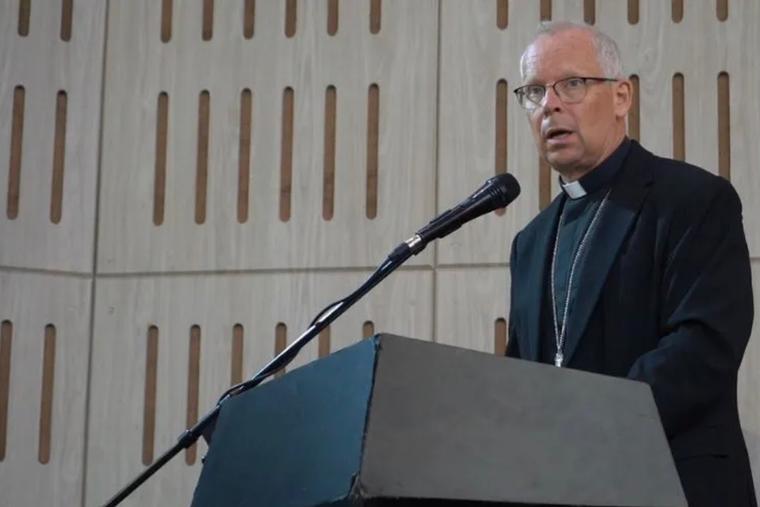
Archbishop Bert van Meeghen, the former Apostolic Nuncio to Kenya, delivered a compelling keynote address that centered on the intersection of faith, ethics, and technological development. He warned that while modern financial and technological infrastructures offer the promise of inclusion, they risk sidelining vulnerable communities unless they are intentionally designed with these populations in mind.
In his address, Archbishop van Meeghen emphasized the moral dimensions of technological advancements. He highlighted how systems like artificial intelligence and digital identity frameworks are not mere tools; they increasingly govern access to essential resources, from credit and healthcare to mobility and citizenship itself. He raised concerns that exclusion is now cloaked in complexity, saying, “In previous eras, exclusion was visible, but today it is increasingly encrypted.”
The Archbishop articulated a more profound danger: beyond disappointing the poor, technology could perpetuate their exclusion while masquerading as neutral or efficient. He referenced Direxi Te’s call for evaluating technological systems through the lens of Christian love, asserting that this principle should serve as the benchmark for fairness and inclusivity. He argued that societies prioritizing speed and efficiency often marginalize those in need.
Addressing the Risks of Digital Abstraction
Archbishop van Meeghen observed that many economically disadvantaged individuals lack stable digital identities or formal financial histories, complicating their interaction with algorithmic systems. “The poor are the privileged recipients of the Gospel,” he stated, expressing concern that they risk being present in society but not reflected in the data that drives decision-making. His comments underscored the dual challenge of exclusion and deliberate invisibility faced by these populations.
He illustrated this point by discussing how AI-driven credit systems interpret irregular income as a risk and perceive participation in the informal economy as instability. “Poor people are not explicitly excluded; they are silently excluded,” he remarked, shedding light on the subtle yet pervasive issues embedded within contemporary financial systems.
Challenging the Notion of Technological Neutrality
The Archbishop challenged the commonly held belief that technology is neutral, asserting that this idea is misleading. He insisted that technology, shaped by human choices—what to measure, prioritize, and optimize—cannot be passive. He cautioned that those with access to technological knowledge and resources might hold significant advantages, which could exacerbate existing inequalities.
Van Meeghen pointed out that when essential services are mediated through digital platforms, control over these systems becomes a form of social authority. He stressed that concentrated authority not only maintains but deepens social inequities, leading to a society where access to vital resources is unequally distributed.
Advocating for Structural Ethics in Digital Design
During his address, the Archbishop called for a paradigm shift towards “structural ethics” in technology design. He argued that ethical responsibilities must inform the systems created, emphasizing that today’s ethics must transition from individual morality to institutional frameworks. To support vulnerable populations, technology must prioritize their needs, retain non-digital alternatives, and build accountability measures.
He interconnected these principles with Catholic social teachings, such as human dignity and the common good, proposing that the design of digital systems should revolve around those who are most vulnerable rather than the most profitable users.
Encouraging Catholics to Shape the Future of Technology
Vatican diplomats urged the Catholic community to take a proactive stance in shaping the landscape of emerging technologies. Van Meeghen emphasized that the Church must not only critique the system but also propose constructive solutions. He articulated the need for an ethical framework that protects vulnerable individuals and fosters leaders capable of merging faith, ethics, and innovation in technological development.
He underscored the moral implications of technological advancement, stating, “We are not just building technology; we are constructing the moral architecture of the future.” Ultimately, the key question remains: “Do we recognize the poor, or do we render them invisible?” Archbishop van Meeghen insisted that the answer lies not solely in algorithms but within our collective conscience.
Cullen expressed a desire to broaden the faith-driven technology initiative across Africa, inspired by the principles of Direxi Te, aiming to propagate the message of Christ’s love throughout the continent.
