


Calls for Budget Reform in Nigeria’s Economic Framework
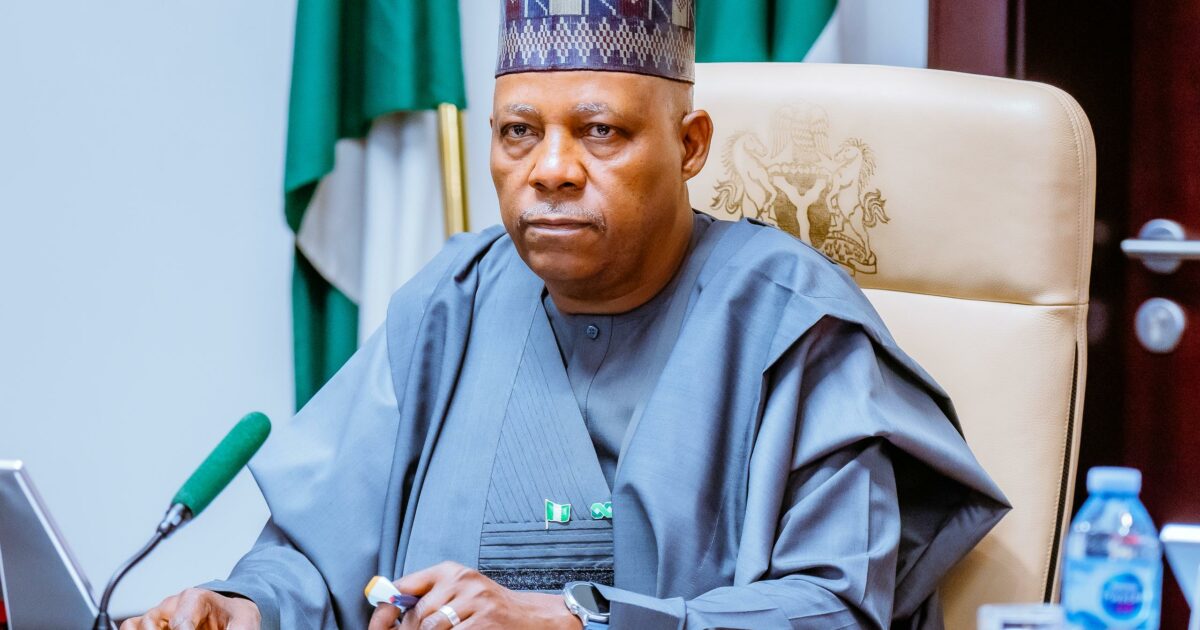
Vice President Kassim Shettima and former budget director Ben Akabueze have emphasized the urgent need for significant reforms within Nigeria’s budgeting framework. During a National Policy Dialogue in Abuja, they warned that the current budgetary system requires a more pragmatic, disciplined, and development-oriented approach.
The dialogue, organized by the Parliamentary Joint Committee on National Planning and Economic Affairs, focused on the theme of establishing a national development plan to enhance budgeting effectiveness and ensure sustainable economic growth in Nigeria. Shettima, represented by his Special Assistant for Economic Affairs, Tope Fasua, noted the critical timing of the discussion amidst the ongoing reform initiatives under President Bola Tinubu’s administration.
“This discussion aligns closely with the President’s agenda, which is vital not just for today but for the foreseeable future,” Shettima remarked. He stressed the necessity of connecting budget priorities to national development goals, highlighting the need for budgets that foster sustainable growth, reduce poverty, and increase per capita income.
He further stated that the current budget must expand beyond its existing limits. Recently, the 2026 budget was adjusted to an ambitious N10 trillion, raising the total budget to N68 trillion. Shettima rejected proposals for a leaner national budget, insisting that fiscal plans should be both forward-looking and highly ambitious.
Recent policy changes, such as tariff adjustments on essential goods, aim to boost productivity and ease the economic burden on citizens. Shettima explained that reducing tariffs on critical raw materials and eliminating them on medicines and manufacturing equipment exemplify the government’s commitment to supporting the Nigerian populace and fostering economic resilience.
Underpinning these reforms is the belief that economic planning is a national duty. Shettima highlighted the administration’s goal of embracing a more sophisticated, data-informed approach rather than a rigid, outdated economic model. Nigeria’s budget process should adhere to both the Medium-Term Expenditure Framework and the National Development Plan, yet he acknowledged there remains significant potential for improvement in sustainable development outcomes.
Abandoned Projects Highlight Fiscal Coordination Issues
In a stark address, Mr. Akabueze illustrated the grave consequences stemming from inadequate fiscal coordination. His presentation, titled “Bridging the Budgeting-Planning Nexus and Implementation Gap in Nigeria,” highlighted that Nigeria’s budget serves as a mere snapshot of an annual development plan, yet a persistent disconnect persists between planning and actual implementation, adversely affecting development results.
Currently, an estimated 56,000 projects lay abandoned across Nigeria, a telling indicator of the failure to integrate budgeting with long-term development goals. “Our budgets should act as a compass to allocate resources toward development priorities,” Akabueze stated, emphasizing the need to shift focus from merely spending to achieving concrete developmental outcomes.
He pointed out the structural weaknesses embedded in the legal and institutional framework that directs Nigeria’s budgeting and financial processes. With decades of criticism for being politicized and poorly aligned with national development strategies, the budget generally encounters delays, significant alterations by the legislature, and partial execution.
Moreover, the disconnect between multi-year strategic plans, such as the Economic Recovery and Growth Plan, and annual budgets complicates effective implementation. Akabueze further noted that systemic failures and a lack of a comprehensive institutional budget law hinder progress, as these laws should define timelines, roles, and enforcement for budget adherence.
Tensions between the executive and legislative branches over budgeting responsibilities continue to complicate proceedings. The recent appeals from Shettima and Akabueze highlight a growing concern that the current disconnect between planning, budgeting, and implementation jeopardizes public spending and its ability to achieve meaningful development outcomes.
