


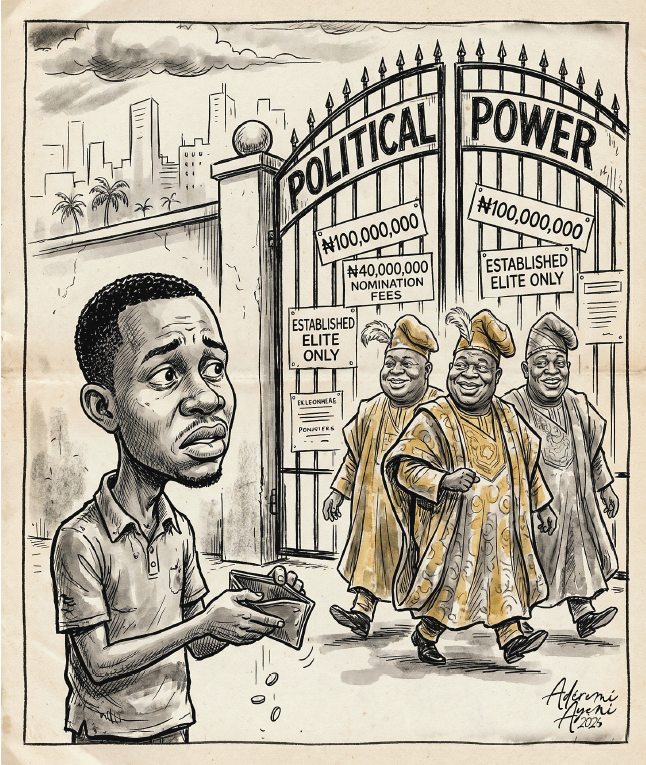
Potential of Nigerian Youth Challenges by Political Exclusion
Many young Nigerians grow up hearing the phrase, “You are the leaders of tomorrow.” Demographically, this promise seems attainable; Nigeria boasts one of the youngest populations globally, with a median age around 18 years and over 60 percent of its residents under 25. Legally, the path appears clear following the Not Too Young to Run Act, enacted on May 31, 2018, which reduced the minimum age for presidential candidates from 40 to 35. However, in reality, Nigeria’s political landscape remains economically restrictive, creating significant barriers for aspiring leaders despite the legal framework designed for inclusivity.
Minimum Wage and Economic Realities
As of July 2024, Nigeria’s national minimum wage was raised to 70,000 Naira monthly, totaling approximately 840,000 Naira annually. Yet, the Nigeria Consumer Outlook Report 2025 from SEID reveals that fewer than 1% of Nigerians earn above 1 million Naira per month. The majority earn under 100,000 Naira, or lack steady income altogether, particularly among the youth. High rates of unemployment and underemployment compound these challenges, further straining the ambitions of young Nigerians.
The Impact of Poverty on Political Participation
Poverty exacerbates the barriers to political involvement, with the World Bank estimating that more than 60 percent of Nigerians live below the national poverty line. For many youth, saving money is a rarity, and access to capital is nearly non-existent—both of which hinder their ability to engage politically. In this context, the costs associated with political participation become staggering.
High Costs of Nomination and Accessibility Issues
During the 2023 election cycle, major political parties set exorbitant prices for presidential nomination forms, with the All Progressives Congress charging 100 million Naira and the Peoples Democratic Party demanding 40 million Naira. Smaller parties also required millions, albeit at reduced costs. Nomination fees for governorship and legislative positions follow similar trends, further alienating young Nigerians from meaningful political participation.
Barriers to Self-Financing and Dependency on Patrons
For a young Nigerian earning 100,000 Naira monthly, amassing 100 million Naira would take decades—without factoring in living expenses, campaign costs, logistical needs, and the intricate web of political patronage known as godfatherism. This reality creates a harsh filtering system that favors those with wealth or elite connections, turning political competition into a matter of privilege rather than capability. Consequently, young aspirants often find themselves reliant on political patrons, who secure loyalty in exchange for financial support.
Local Level Obstacles and the Need for Structural Change
This issue extends beyond national offices, permeating local governments where participation should ideally be more accessible. Local governance often leans on political appointments and patronage over open electoral competition, despite ongoing reform efforts aimed at enhancing autonomy. Positions in wards and city councils—often viewed as stepping stones for young leaders—are frequently absorbed into more extensive political structures, further limiting independent access.
Integrating Youth into Governance Beyond Demographics
The discourse around youth inclusion is often framed in demographic contexts, presuming that younger populations inherently yield younger leaders. However, the conversation should focus not just on age but also on integrity and capability. Young leaders possess unique insights into the pressing issues of Nigeria’s future, including unemployment, digital transformation, and educational inequality. Nevertheless, youth does not automatically equate to effective governance. Without organizational strength, political savvy, and independence from patronage, younger leaders risk perpetuating the systemic failures of those before them.
Global Examples and the Need for Reform
Historical instances of youth leadership in Nigeria, such as Yakubu Gowon’s rise to power at 31 through a military coup, highlight that age has never been the sole barrier to leadership. Globally, leaders like Finland’s Sanna Marin and Austria’s Sebastian Kurz have shown that youth can thrive in politics, but in systems that promote intraparty mobility and regulate campaign financing. Nigeria, by contrast, operates within a heavily monetized framework that drives political outcomes. Addressing these systemic issues demands intentional reform aimed at making political participation equitable.
Reforms to Achieve Political Inclusivity
Key reforms should include setting reasonable caps on nomination fees to foster accessibility across all political offices, transitioning to more transparent political financing models that support public elections, and ensuring open and competitive intraparty processes. Monitoring and enforcing campaign finance regulations will be critical for preventing symbolic reforms. Moreover, strengthening the leadership pipeline through mentorship and development programs will empower young candidates to navigate the political landscape without relying solely on patronage. While lowering age requirements was an essential first step, the more profound challenges of economic and structural barriers remain to be addressed.
