


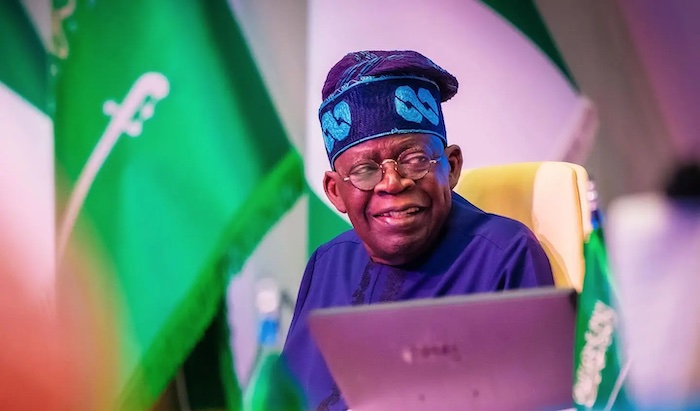
Tinubu Seeks Senate Approval for Major Loan to Finance Key Expressway Project
President Bola Tinubu has requested the Senate’s approval for $516.33 million in foreign loans aimed at financing essential sections of the Sokoto-Badagry expressway project. This initiative is a cornerstone of his administration’s “New Hope” agenda, designed to enhance infrastructure across Nigeria.
In a formal communication presented to the Senate, Tinubu urged lawmakers to pass a resolution that would allow for the acquisition of syndicated loan facilities necessary for sections 1, 1A, and 1B of the expressway. He cited sections 16 and 21 of the Debt Management Authority (Establishment) Act, 2011 as the legal basis for this request.
The President specifically outlined a loan package totaling $516,333,007 from Deutsche Bank and emphasized its inclusion in the federal government’s pre-approved borrowing plan. He noted that the 1,000-kilometer superhighway will stretch from Ilera in Sokoto State, traversing Kebbi, Niger, Kwara, Oyo, and Ogun States, eventually reaching Badagry in Lagos State, thereby unlocking significant economic potential for the region.
According to Tinubu, “The Sokoto-Badagry expressway is envisioned as a strategic national asset that will strengthen connectivity between geopolitical zones, reduce transportation costs, and improve the movement of agricultural and industrial products.” Upon completion, he believes this vital corridor will bolster food security, facilitate trade, and enhance national cohesion by linking production hubs directly to major markets and export routes.
As part of the financing structure, the deal will be backed by a partial risk guarantee from the Islamic Investment and Export Credit Insurance Corporation (ICIEC). Tinubu characterized this arrangement as a “structured and sustainable financing model” that aligns with the government’s framework for fiscal responsibility. Additionally, he announced that the federal government will allocate N265.54 billion for land acquisition, compensation, and other related infrastructure needs.
The proposed loan features a nine-year term, which includes a grace period of up to three years, with an interest rate set at the Secured Overnight Financing Rate (SOFR) plus 5.3%. “The Federal Executive Council has already approved the funding structure and terms,” he reiterated, urging swift consideration from the Senate “in the overriding public interest.”
Following Tinubu’s presentation, the Senate referred the matter to the Internal and External Debt Committee, mandating a report within a week. Senator Adam Ariello from Kebbi Central expressed his support for the proposal, asserting that the project had been long overdue and that previous administrations had failed to bring it to fruition. He noted that parts of the highway are already under construction and highlighted the modern standards being applied, such as reinforced concrete pavement and solar-powered lighting.
Regarding the project’s economic implications, Ariello stated, “Once completed, this road will reduce travel time between Sokoto and Lagos from approximately 13 hours to about six hours. This reduction will significantly enhance commerce, logistics, and regional integration.” He emphasized the necessity of legislative support, urging his colleagues to approve the committee’s report upon submission.
Senate President Godswill Akpabio echoed these sentiments, describing the superhighway as a transformative investment that transcends mere transportation infrastructure. “This is not just a road project; it is an economic corridor that will save lives, create jobs, and elevate productivity throughout the country,” he asserted. He defended the external funding approach by stating that borrowing for critical infrastructure is warranted when it promises long-term economic benefits and enhances the country’s repayment capacity.
Akpabio assured that the Senate would act promptly on the request and revealed that he had directed relevant committees to expedite their review process to facilitate a timely and informed decision. The Senate leadership has expressed strong legislative support for the project, which is broadly regarded as having the potential to revolutionize Nigeria’s transportation and economic landscape.
