


Top Choices in Nigerian University Admissions Reflect Changing Preferences
The competition for university admissions in Nigeria is becoming increasingly fierce, highlighting a select group of institutions that consistently attract candidates from the Unified Tertiary Matriculation Examination (UTME). As economic and educational landscapes shift, students’ preferences are evolving, influenced by factors such as academic reputation, affordability, accessibility, and employment prospects.
Analyzing the Popularity of Leading Universities
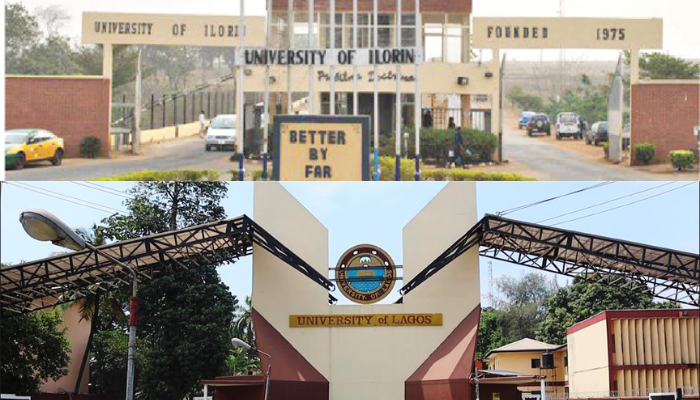
Over the last five years, data from the Joint Admissions and Matriculation Board (JAMB) reveals that the University of Ilorin (UNILORIN), Lagos State University (LASU), and the University of Lagos (UNILAG) rank as the most sought-after universities in Nigeria. These institutions have captured the interest of millions of prospective students, indicating trends that reflect broader societal values surrounding education.
Lagos State University (LASU) Continues to Attract Applicants
Established in 1983 under the administration of Lateef Jakande, Lagos State University (LASU) has consistently been a top choice for UTME candidates. In 2026, LASU topped the applicant charts with 70,080 candidates, despite experiencing fluctuations in its ranking in previous years. The university offered a total of 79,000 applications in 2025, but saw a decline to second place in 2024 behind UNILORIN, while in 2023 it ranked third with 55,964 applicants. Popular disciplines at LASU include law, medicine, nursing, and accounting, reflecting a strong interest in professional fields.
University of Ilorin (UNILORIN) Remains a Leading Institution
For the past five years, UNILORIN has claimed the title of the most popular university among UTME applicants. In 2026, it placed third with 56,758 applicants, mirroring its standing from 2025. Notably, however, UNILORIN led the rankings in 2024 and the two preceding years with figures reaching as high as 78,466 applicants. Founded in 1975, UNILORIN boasts one of the largest campuses in Nigeria, offering a wide range of sought-after courses such as medicine, engineering, and law.
University of Lagos (UNILAG) Maintains Strong Demand
The University of Lagos, established in 1962, remains a competitive player in attracting students, with 58,645 candidates applying in 2026. This figure secured its position as the second most popular university after LASU. Despite fluctuations, UNILAG consistently ranks among the top institutions, demonstrating a resilient demand for disciplines like medicine, engineering, and mass communication. Its reputation as a first-generation university has established it as a prominent educational institution in Africa.
Shifting Preferences Towards Stability
Jessica Osuere, CEO of RubiesHub Educational Services, highlights a growing trend among students and parents favoring timely graduation and stable academic schedules. UNILORIN’s success can largely be attributed to its uninterrupted academic calendar, remaining strike-free since 2001. Similarly, LASU’s decision to continue operations during nationwide strike actions showcases a commitment to maintaining educational consistency, which has increasingly become a deciding factor for applicants.
Factors Influencing Admission Choices
As competition for university placements escalates, priorities among prospective students are shifting. The appeal of institutions now extends beyond mere prestige to encompass assurance of academic continuity and prospective employability. Notably, parental guidance is leaning towards choosing schools that promise graduates who can complete their education within standard timelines, addressing concerns over prolonged academic disruptions.
Prospective Students Seek More than Prestige
In this evolving educational landscape, the reputation of universities is being redefined. Factors such as infrastructure quality, financial viability, safety, and career success are playing a vital role in student decision-making. As these trends continue to manifest, the rankings of Nigerian universities are likely to adjust, responding to the urgent need for academic stability and the pursuit of improved career outcomes for graduates.
