


Nigeria’s National Cancer Control Plan Marks a New Era in Cancer Treatment
The launch of Nigeria’s National Cancer Control Plan (NCCP) represents a significant shift in the nation’s approach to cancer management. Traditionally, cancer treatment has been concentrated in hospitals, often leading to more complex, costly, and less effective care due to late-stage diagnoses. This new initiative aims to redefine the country’s strategy for tackling cancer, integrating a broader societal response that goes beyond medical institutions.
Comprehensive Strategy Aimed at Societal Engagement
Unveiled on February 4, 2026, by the Honorable Minister of State and spearheaded by Dr. Uchechukwu Nwoku, the NCCP 2026-2030 initiative was unveiled to coincide with World Cancer Day. This multifaceted plan encompasses a holistic approach that includes community engagement and aims to address the rising incidence of cancer, which currently leads global mortality rates. In 2025 alone, there were approximately 20 million new cancer cases and over 10 million related deaths worldwide.
The Challenge of Cancer Burden in Nigeria
By 2050, the annual incidence of cancer cases is projected to surpass 30 million, placing immense pressure on countries like Nigeria, which already face a disproportionate burden. Frequently, patients present to healthcare facilities at advanced stages (III or IV), severely limiting their chances of survival due to factors like delayed diagnoses, expensive treatments, and inadequate access.
Seven Pillars Driving the NCCP
The NCCP confronts these challenges with an ambitious strategy built on seven key pillars: prevention, diagnosis and treatment, survivor support and palliative care, digital innovation, advocacy and funding, research and monitoring, and coordination and partnership. Notably, this plan seeks to extend its focus beyond clinical care to incorporate the social, economic, and behavioral elements that significantly influence health outcomes.
Community-Centric Engagement and Collaboration
Professor Folakemi Odedina, Chair of the NCCP Technical Working Group, emphasizes the necessity of moving cancer control efforts beyond hospitals and into families and communities. By factoring in the social determinants of health—including income, education, nutrition, transportation, and living conditions—the NCCP acknowledges that medical outcomes extend beyond biological considerations.
The plan also aims to foster broader participation by engaging the Nigerian diaspora and soliciting public feedback through a national survey. This shift from a top-down governmental approach to a model of shared national responsibility aligns with best practices observed internationally, which indicate that effective cancer control relies on partnerships among governments, private entities, civil organizations, and communities.
Progress in Implementation and Preventive Strategies
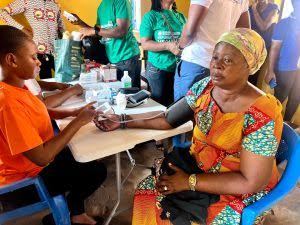
Encouragingly, the NCCP has already initiated several implementation measures, including the establishment of preventive oncology clinics in federal tertiary institutions. A national free screening program now covers various major cancers, such as breast, cervical, prostate, colorectal, and liver cancers. Additionally, new policies like the National Nuclear Medicine Policy are enhancing diagnostic and treatment capabilities, along with introducing patient navigation systems to streamline care.
Technology and Behavioral Change as Key Components
Prevention remains a focal point of the NCCP, which seeks to combat modifiable risk factors—such as smoking, alcohol consumption, diet, obesity, and environmental pollution—that are responsible for over 40% of cancer deaths. The campaign to eliminate cervical cancer by 2030 aims to vaccinate 90% of eligible girls and screen 70% of women. Technology plays a crucial role, with the integration of artificial intelligence and precision oncology enhancing diagnosis, treatment planning, and data-driven decisions.
Ultimately, the NCCP recognizes the vital importance of awareness and behavioral change alongside medical intervention. Historically, cancer communication in Nigeria has been inconsistent and largely urban-centric, often disconnected from the lived experiences of many citizens. The NCCP advocates for a sustained, culturally relevant, and human-centered approach to awareness that leverages storytelling, survivor experiences, and community engagement to compel action.
Partnerships are pivotal for the success of the NCCP, which collaborates with global stakeholders, including government agencies, civil society organizations, and the World Health Organization. This coordinated framework is essential for mobilizing resources, scaling interventions, and ensuring inclusivity as Nigeria embarks on this bold and necessary shift from hospital-centric care to a society-wide initiative in cancer control.
As Nigeria takes this decisive step forward, it is clear that overcoming the cancer crisis will require more than just medical resources. It demands an informed public, supportive communities, responsive systems, and unwavering political commitment. The path ahead may be challenging, but for the first time in years, Nigeria has articulated a clear roadmap and collective call to action, aiming to ensure early detection, effective treatment, and a future where cancer is no longer perceived as a terminal diagnosis.
