


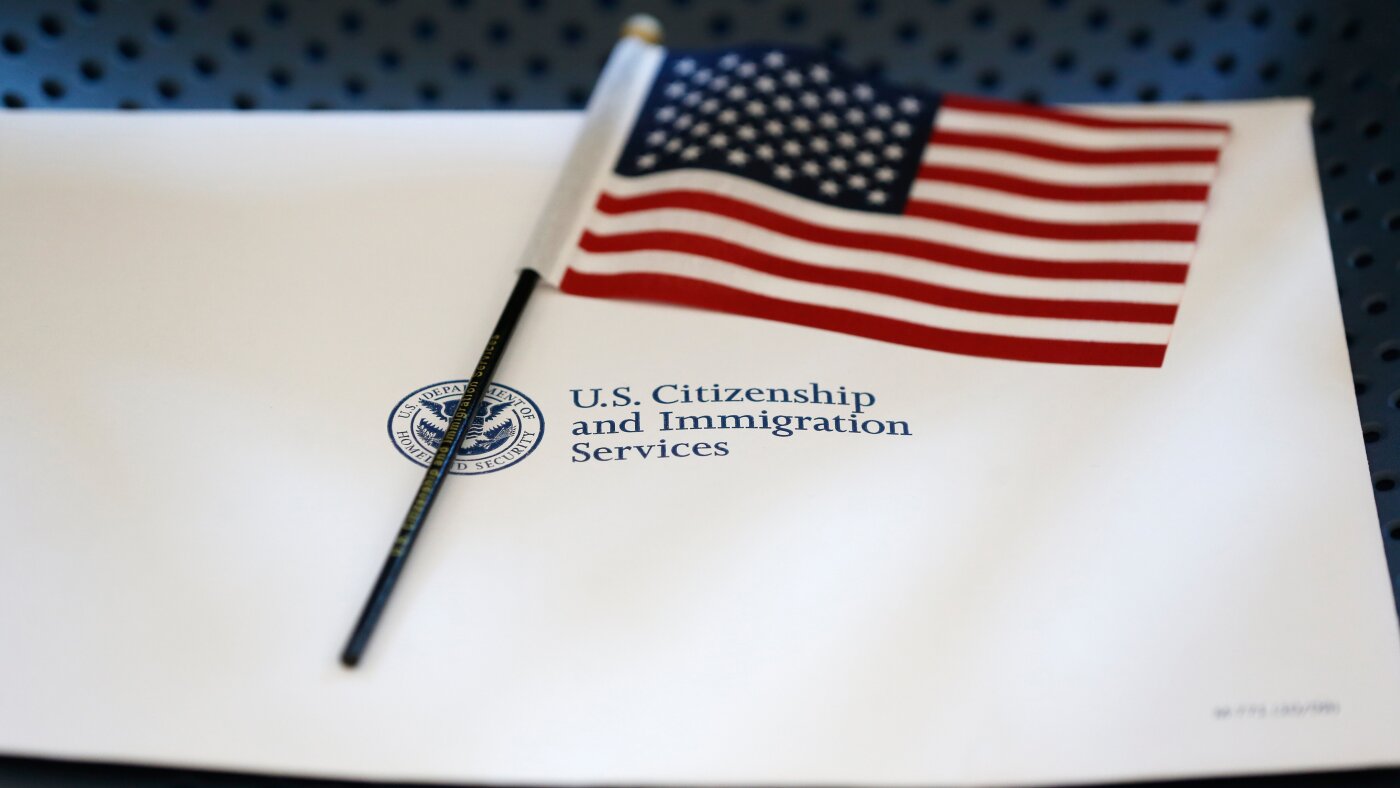
An information packet and the American flag are placed on a chair at the U.S. Citizenship and Immigration Services Miami Field Office in Miami, August 17, 2018. Wilfred Lee/AP
Wilfred Lee/AP
In a significant policy shift, the Trump administration announced that foreign nationals currently residing in the U.S. will now be required to leave the country to apply for green cards in their home nations. This unexpected decision has generated confusion and concern among aid organizations, immigration attorneys, and immigrants themselves.
For over 50 years, individuals with legal status, including those married to U.S. citizens and holders of work or student visas, have been able to apply for and complete the green card process within the United States. However, U.S. Citizenship and Immigration Services (USCIS) stated that applicants must now return home to apply, except in “special circumstances” that USCIS will evaluate on a case-by-case basis.
According to USCIS, the immigration system is primarily designed for nonimmigrants—like students, temporary workers, and tourists—who visit the U.S. for limited durations and are expected to return home afterward. This new directive marks an additional step by the Trump administration aimed at tightening immigration pathways for those within the U.S. and for prospective immigrants.
Doug Rand, a senior immigration official during the Biden administration, highlighted the intentions behind this policy shift, noting that the administration has expressed a desire to reduce the number of individuals obtaining green cards, as this often leads to citizenship. Approximately 600,000 people apply for green cards from within the U.S. annually, underscoring the policy’s potential impact.
While USCIS has not specified when the new regulations will take effect, or how they will affect individuals currently pursuing green card applications, they noted that those contributing to the economy or fulfilling national interests may be exempt from leaving the country. In contrast, many others may face challenges in returning to their homelands to apply.
Critics are alarmed by the implications of this policy, with immigration attorneys and advocacy groups warning that asking individuals to return to unsafe regions or nations lacking functional embassies could lead to prolonged family separations. For instance, the U.S. embassy in Afghanistan remains closed following the withdrawal in August 2021.
Amidst this upheaval, many organizations that assist immigrants report an increase in inquiries from worried clients seeking clarification on the policy’s applications. Legal experts suggest the new guidelines could have a chilling effect, deterring individuals from applying amid uncertainty surrounding their immigration status and future prospects.
