


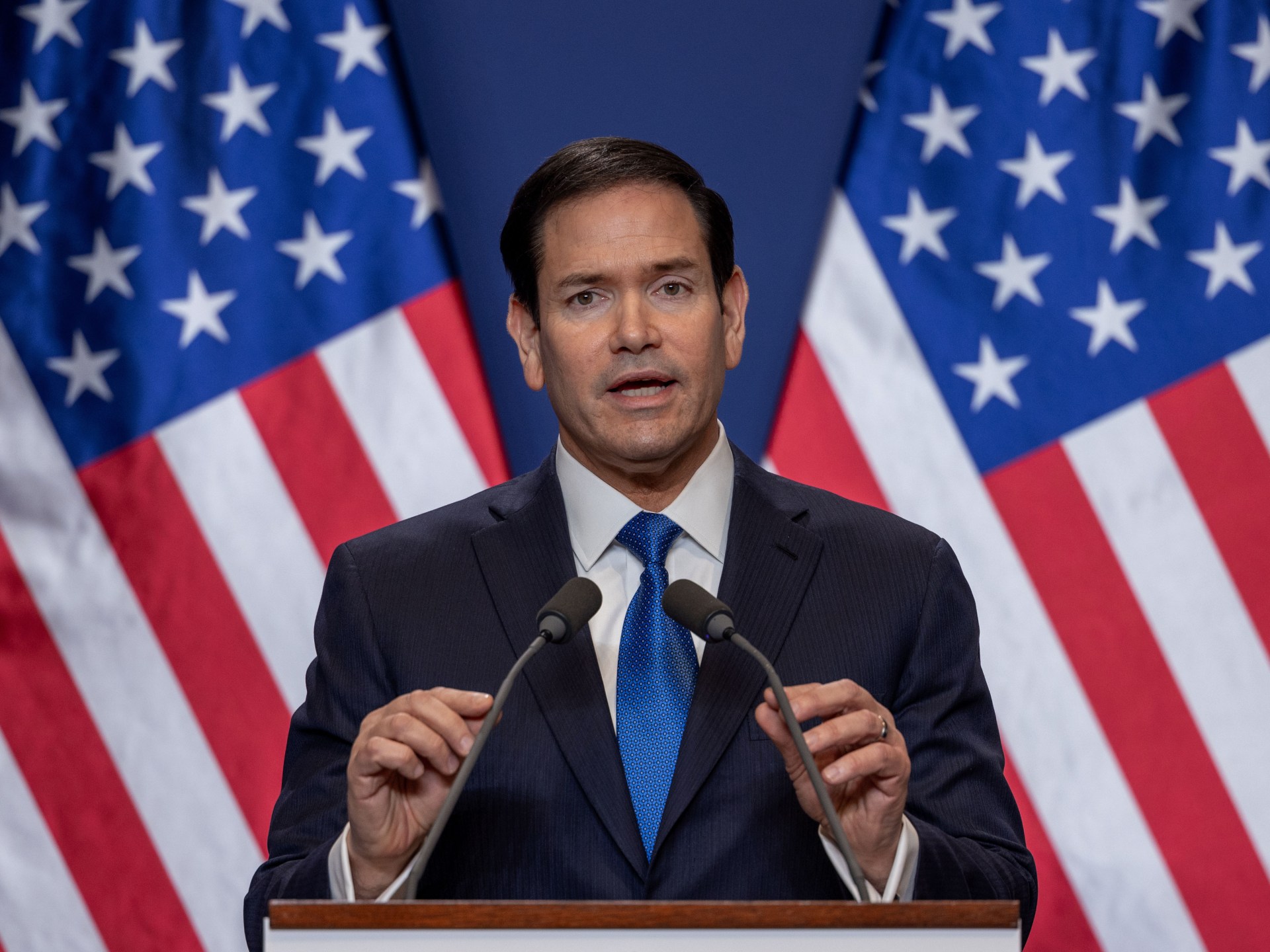
The U.S. State Department has declared new visa restrictions targeting individuals from countries in the Western Hemisphere who are believed to support adversaries undermining American interests in the region. This announcement underscores a proactive stance reflecting the current administration’s foreign policy priorities.
According to the recent statement, 26 visas have already been revoked as part of this initiative, signaling an escalation in the government’s approach to international relations.
State Department’s New Policy and Its Implications
This move aligns with President Donald Trump’s broader strategy to reinforce U.S. influence throughout the Americas, a plan he refers to as the “Don Roe Doctrine,” a nod to the historic Monroe Doctrine. Since beginning his second term, Trump has adopted a more aggressive posture towards combating drug trafficking across the region, employing economic sanctions and military action as potential measures against offenders.
Additionally, the administration is focused on counteracting China’s growing presence in Latin America, as more nations in the region forge stronger ties with the Asian superpower. This dual approach aims to protect U.S. interests and addressing perceived threats to regional stability.
The new visa restrictions are designed to penalize individuals who “knowingly direct, authorize, fund, or provide significant support” to entities considered adversarial to American interests. Activities that might invoke these penalties include facilitating an adversary’s control over key resources or engaging in operations that undermine U.S. economic interests and national sovereignty.
Despite the specificity of the proposed actions, the framework remains vague, notably failing to explicitly reference initiatives against China or confrontations with drug trafficking organizations. However, the trend of revoking visas for political adversaries—including foreign critics—continues to be a hallmark of the Trump administration’s broader policy agenda.
For instance, last year, U.S. officials sought to cancel visas for pro-Palestinian protesters, arguing that their presence could influence U.S. foreign policy. Most recently, the administration revoked entry visas for at least seven individuals linked to the Iranian government stemming from the 1979 Iranian revolution.
Expansion of Visa Cancellations
Details regarding the 26 individuals whose visas have been restricted have not been disclosed, but the State Department referenced authority under the Immigration and Nationality Act similar to that used last year against pro-Palestinian student protesters. This legal framework allows for the restriction of foreign nationals whose actions may adversely affect U.S. foreign policy.
While deportation efforts against some individuals have reportedly stalled, two targets—Mahmoud Khalil and Badar Khan Suri—still face deportation proceedings. Across Latin America, several political figures have seen their visas revoked due to tensions with the U.S. July saw Brazilian officials involved in the prosecution of former President Jair Bolsonaro stripped of their visas, including Brazilian Supreme Court Justice Alexandre de Moraes.
In another instance, Colombian President Gustavo Petro faced visa revocation after criticizing U.S. policy during his address at the United Nations General Assembly. The State Department condemned Petro’s remarks as “reckless and inflammatory,” despite later inviting him to the White House to ease diplomatic tensions.
These visa limitations are part of President Trump’s overarching strategy to exert pressure on foreign entities and tighten immigration policies. Earlier in the year, the administration imposed immigrant visa bans targeting dozens of countries, invoking national security concerns and perceived strains on social services as justification.
Labeling the entire Western Hemisphere as the United States’ “neighborhood,” Trump has adopted a militaristic approach towards governments perceived as unfriendly. Notably, earlier this year, U.S. forces targeted Venezuela, leading to the eventual capture of Nicolás Maduro and implementing an ongoing fuel blockade against Cuba.
Tragically, some of these actions have had fatal consequences, with numerous casualties reported in Venezuela following military operations. Furthermore, the administration has recently engaged in at least 51 targeted strikes on suspected drug-smuggling vessels, resulting in a death toll of at least 177 individuals, prompting human rights advocates to denounce these operations as extrajudicial killings. In light of these developments, the administration has classified various drug cartels as “foreign terrorist organizations,” alleging that they destabilize the United States through their illicit activities.
