


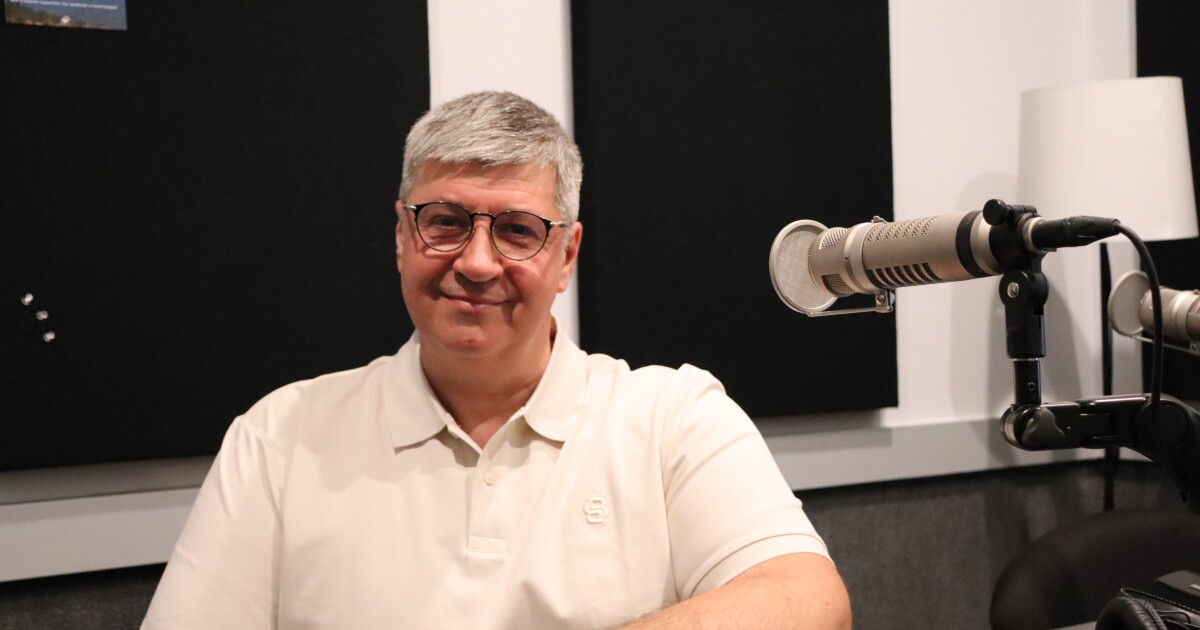
From Kharkiv to North Carolina: A Ukrainian Entrepreneur’s Journey
When Russia initiated its full-scale invasion of Ukraine in 2022, Kirillo Gencho found himself in Kharkiv, the country’s second-largest city, situated close to the Russian border. Before the outbreak of war, Gencho owned a garment factory and enjoyed a stable, contented life.
Suddenly, everything changed. “At first, I was just shocked,” Gencho recounted in English, a language he started learning after relocating to the United States. “I couldn’t grasp the reality of the war, especially since I had been to Russia frequently and had friends there.”
The Chaos of War
Gencho described the early days of the invasion as a relentless storm of explosions and sirens. He endured a living nightmare for eight months. Shortly after the conflict escalated, he saw a Russian bomb strike his factory, resulting in total destruction. “It’s completely broken,” he lamented. “We lost our business, our equipment, and were utterly devastated.”
A New Life Through Humanitarian Parole
Faced with an uncertain future, Gencho decided to flee and applied to the “Unite for Ukraine” program, designed to allow Ukrainians to enter the United States on humanitarian parole. This initiative created a pathway for those escaping war, enabling them to stay in the U.S. for up to two years, provided they have a local sponsor.
After receiving parole, beneficiaries can apply for employment permits. A friend who had experienced a similar journey during the 2014 Luhansk conflict connected Gencho with a U.S. sponsor in Asheville, North Carolina. “He found a family for me. The woman was Ukrainian, and her husband was American,” Gencho shared. “They were also Christians, so we started talking, and they ended up sponsoring me.”
Arrival and Challenges in the U.S.
Gencho secured humanitarian parole and arrived in the United States in November 2022, bringing only a guitar, a backpack, and a suitcase. Unite for Ukraine was launched as a robust initiative for Ukrainian nationals fleeing Russian aggression to enter the country legally. After residing in the U.S. for a designated time, individuals can also apply for Temporary Protected Status (TPS).
While both humanitarian parole and TPS grant work authorization, they differ in their acquisition timeline: parole is secured prior to entry, while TPS is obtained after establishing residency. Humanitarian parole, however, does not lead to citizenship or legal permanent residency. It is time-sensitive, expiring two years after the individual’s initial admission.
Life in North Carolina and Ongoing Uncertainty
Upon arriving in Asheville, Gencho was invited to volunteer at a local recovery center by the president of a nonprofit called Freedom in Christ. He eventually began working there and received accommodation on site. Gencho is among approximately 2,000 Ukrainians who have settled in North Carolina, according to data from the North Carolina Department of Health and Human Services.
However, Gencho’s long-term prospects remain uncertain as his humanitarian parole is set to expire again in 2024. Upon taking office in 2025, President Donald Trump issued several executive orders, including one that signaled an end to categorical humanitarian parole programs like Unite for Ukraine. With his parole ending in November and his TPS application still pending, Gencho faces a daunting future.
Impact of Immigration Policy Changes
The apprehension surrounding Gencho’s visa situation is shared by many Ukrainian nationals waiting on their immigration status, as noted by Seth Hershberger, director of the Carolina Lutheran Services New Americans Program. “Their ability to work legally in the U.S. is intrinsically linked to their immigration status,” he explained. “Without humanitarian parole or TPS, they are effectively at a crossroads, with limited pathways for securing legal employment.”
Hershberger reports that many clients have reapplied for humanitarian parole or TPS and are experiencing extensive delays, with estimates suggesting that up to 40% may be affected. This uncertainty not only disrupts lives but also complicates the process of obtaining valid work authorization.
Legislative Efforts and the Path Forward
Since the program’s inception, challenges have persisted, according to Julia Gelatt, deputy director of the U.S. Immigration Policy Program at the Migration Policy Institute. “The drawback is that humanitarian parole has always been intended as a temporary solution,” Gelatt said. Various initiatives to create a path to permanent residency for Ukrainians have made little progress in Congress.
Despite bipartisan efforts to introduce the Ukraine Adjustment Act—a measure aimed at providing green cards for Ukrainian nationals—progress has stalled. Passed in 2025, the One Big Beautiful Bill Act further complicated matters by raising visa application fees, increasing the cost of reapplying for parole from around $600 to approximately $1,000.
With the Unified Program for Ukraine halting new applications in January 2025, and TPS extensions only temporary, Gencho is currently awaiting another parole reapplication this month. He retains hopes for his TPS application approval, aiming to continue building a future in the U.S. and perhaps finding a partner to share his new life.
