


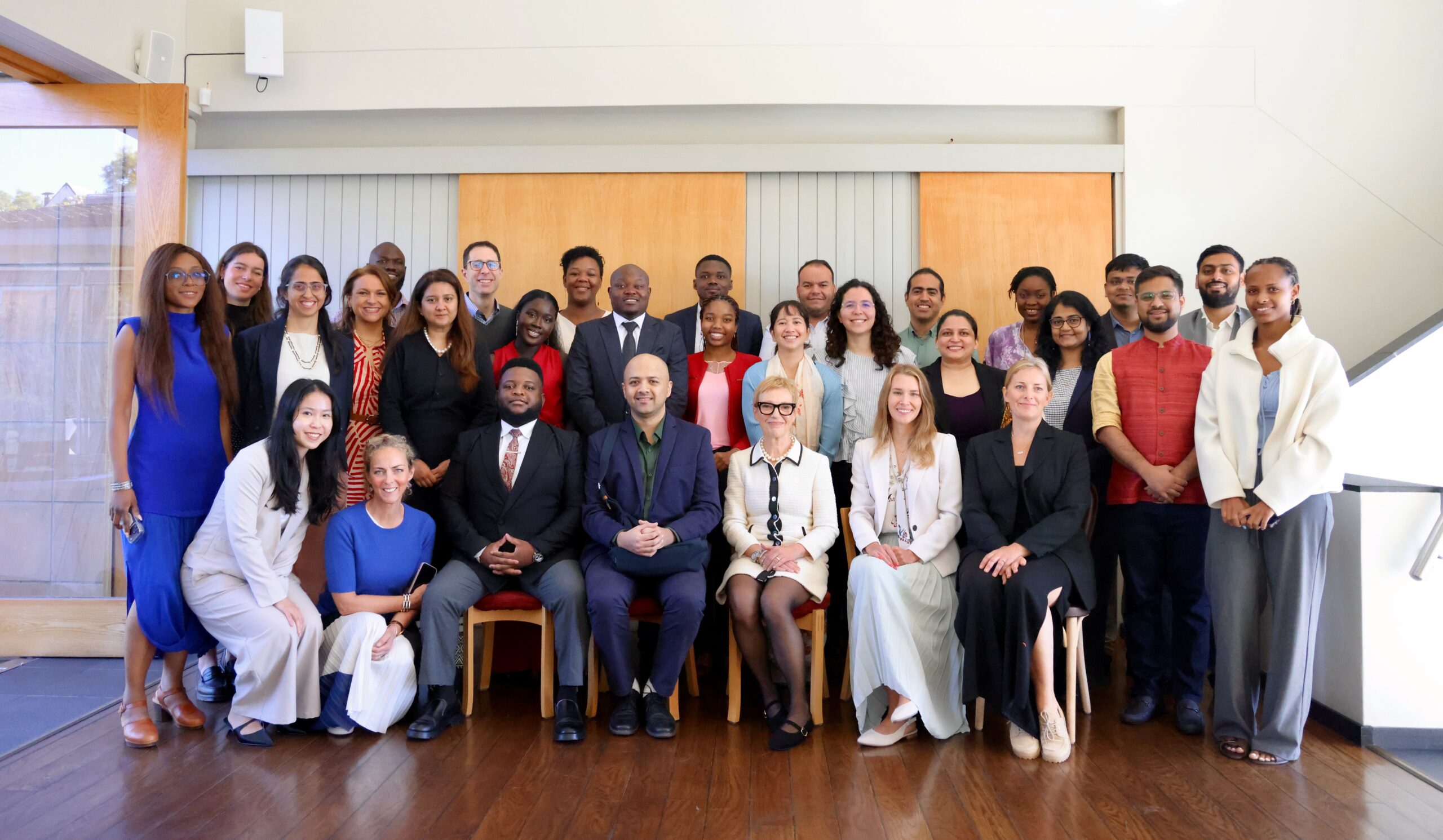
UNICEF Launches First Femtech Ventures Cohort in South Africa
This week, Pretoria, South Africa, is hosting the inaugural cohort of UNICEF Femtech Ventures, a five-year accelerator initiative supported by the Swedish government and Temasek Foundation. Swedish Ambassador to South Africa, Anna Karin Eneström, welcomed technology start-ups focused on enhancing the sexual and reproductive health and rights of women and girls—an endeavor that impacts half of the global population.
Innovative Start-ups Uniting for Women’s Health Solutions
The event brings together a diverse group of technology start-ups from Africa and Asia, converging in one of Africa’s most developed markets for addressing critical health issues. The participants aim to create impactful and scalable solutions that leverage artificial intelligence (AI), data science, and blockchain technology. These innovations will target areas such as maternal care, reproductive health, safe mobility, and financial inclusion, while addressing gender-based violence. The selected initiatives emerged from a pool of over 1,100 applications spanning 85 countries, with more than half originating from Africa. An impressive 89% of the 151 shortlisted start-ups are female-led.
Empowering Local Entrepreneurs to Champion Change
According to Thomas Davin, Global Director of the UNICEF Innovation Directorate, “The innovations that matter most to women and girls are already being built by entrepreneurs closest to the challenges.” UNICEF Femtech Ventures aims to provide these innovators with the necessary capital, technical support, and partnerships to transition local solutions into scalable, accessible resources.
Addressing Access Gaps in Healthcare and Economic Opportunities
Despite the growing focus on women’s health, many girls and women still face significant barriers to accessing quality care and reliable health information. The launch of this cohort marks a strategic pivot from merely documenting the existing capital gap to actively empowering entrepreneurs to bridge it.
Financial Support and Tailored Mentorship for Start-ups
Participating start-ups can expect up to $100,000 in non-dilutive funding, alongside personalized business mentorship and a year of customized technical assistance aimed at refining and scaling their solutions. This comprehensive support model combines equity-free capital with intensive technical guidance, designed to reduce investment risks and catalyze local innovation.
Promoting Local Solutions to Global Challenges
Ambassador Eneström emphasized the importance of investing in local founders. She stated, “This is how innovations built in Africa and Asia can grow, scale, and tackle some of the world’s most persistent sexual and reproductive health issues.” Ultimately, improving outcomes for women and girls not only has profound individual benefits but also contributes to broader socio-economic advancements.
Diverse Start-ups Tackling a Range of Issues
The inaugural cohort features 11 start-ups from Africa and Asia, each addressing unique challenges across various market dynamics and technologies. With a nearly balanced representation, the group includes five Asian and six African start-ups. Some notable initiatives include:
- Dotoh (Benin): Focuses on leveraging low-bandwidth telehealth solutions to improve access for underserved populations.
- Civic Data Lab (India): Develops data analytics tools that enhance women’s health decision-making.
- Doto (India): Offers a maternal health monitoring system tailored for low-income environments.
- SafeRide (Kenya): Provides safety solutions in public transport through an offline privacy assistant for women.
- HLlama (Togo): An open-source WhatsApp chatbot that aids maternal health and civil registration through multilingual support.
UNICEF Femtech Ventures aims to support these initiatives by continuously sharing progress updates and building a portfolio that aspires to impact millions of women and girls globally, laying the groundwork for a second recruitment round anticipated in Q4 2026.
